
Scientific Name
Other Names
Life Form
Family
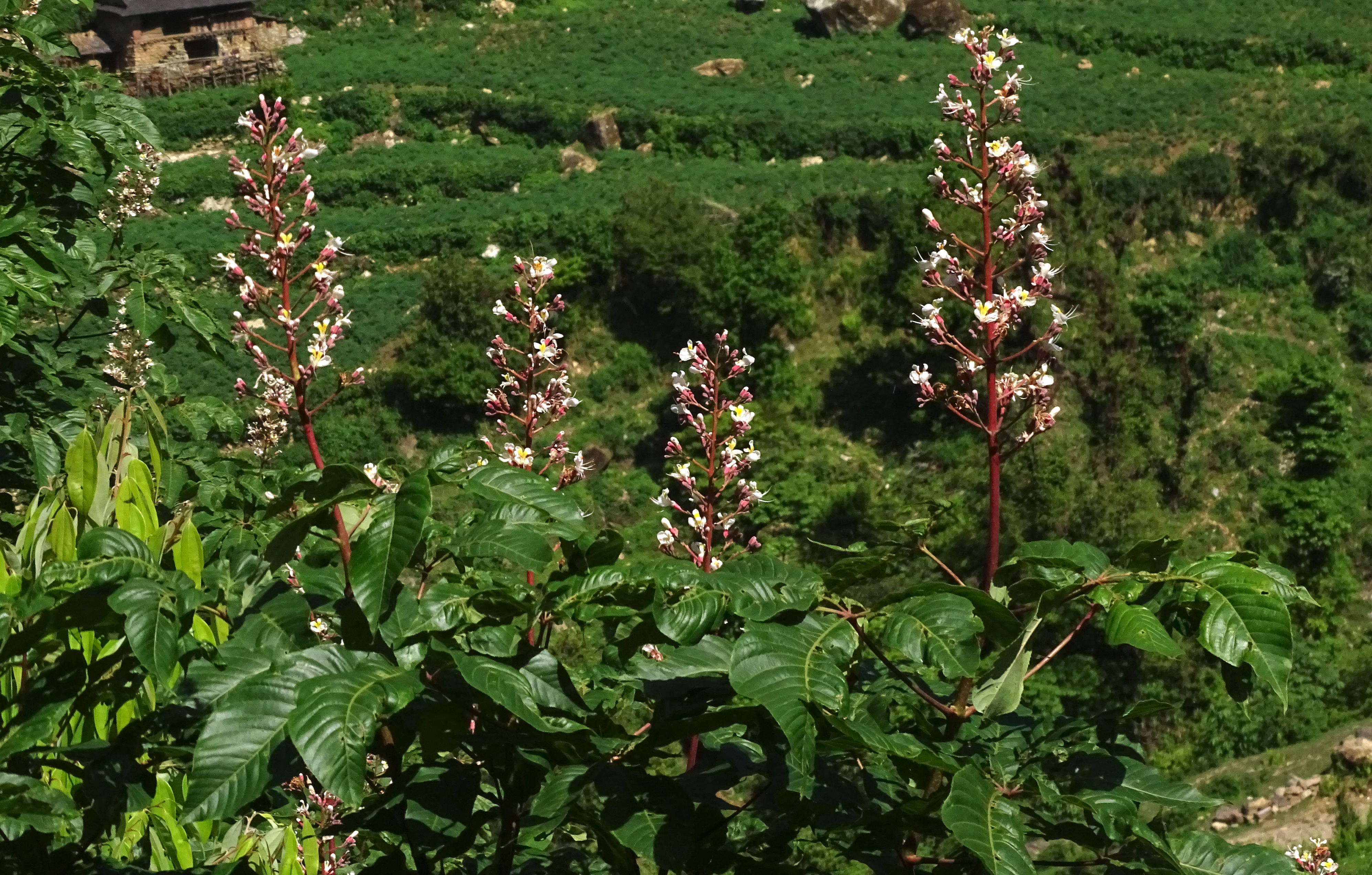
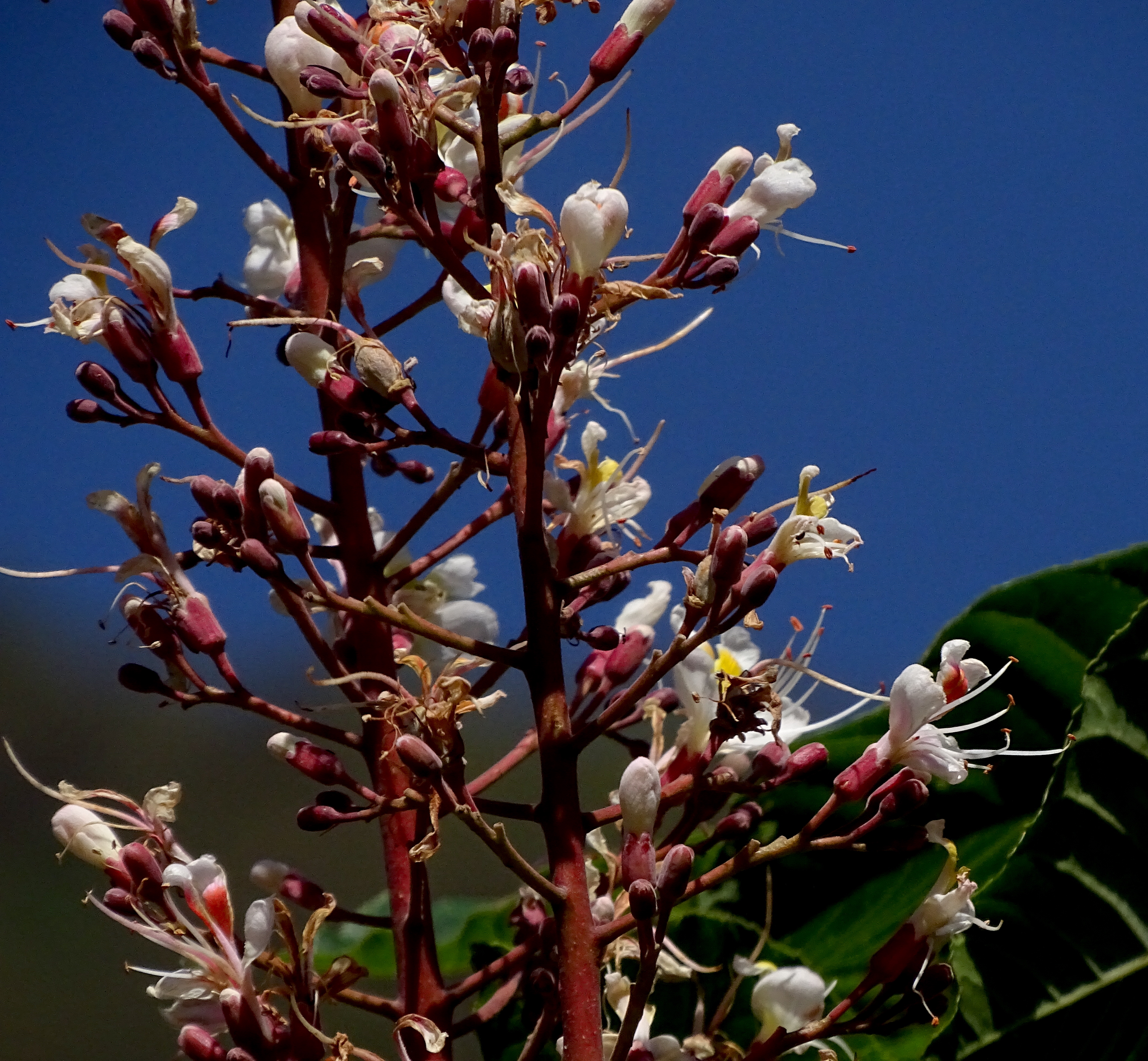
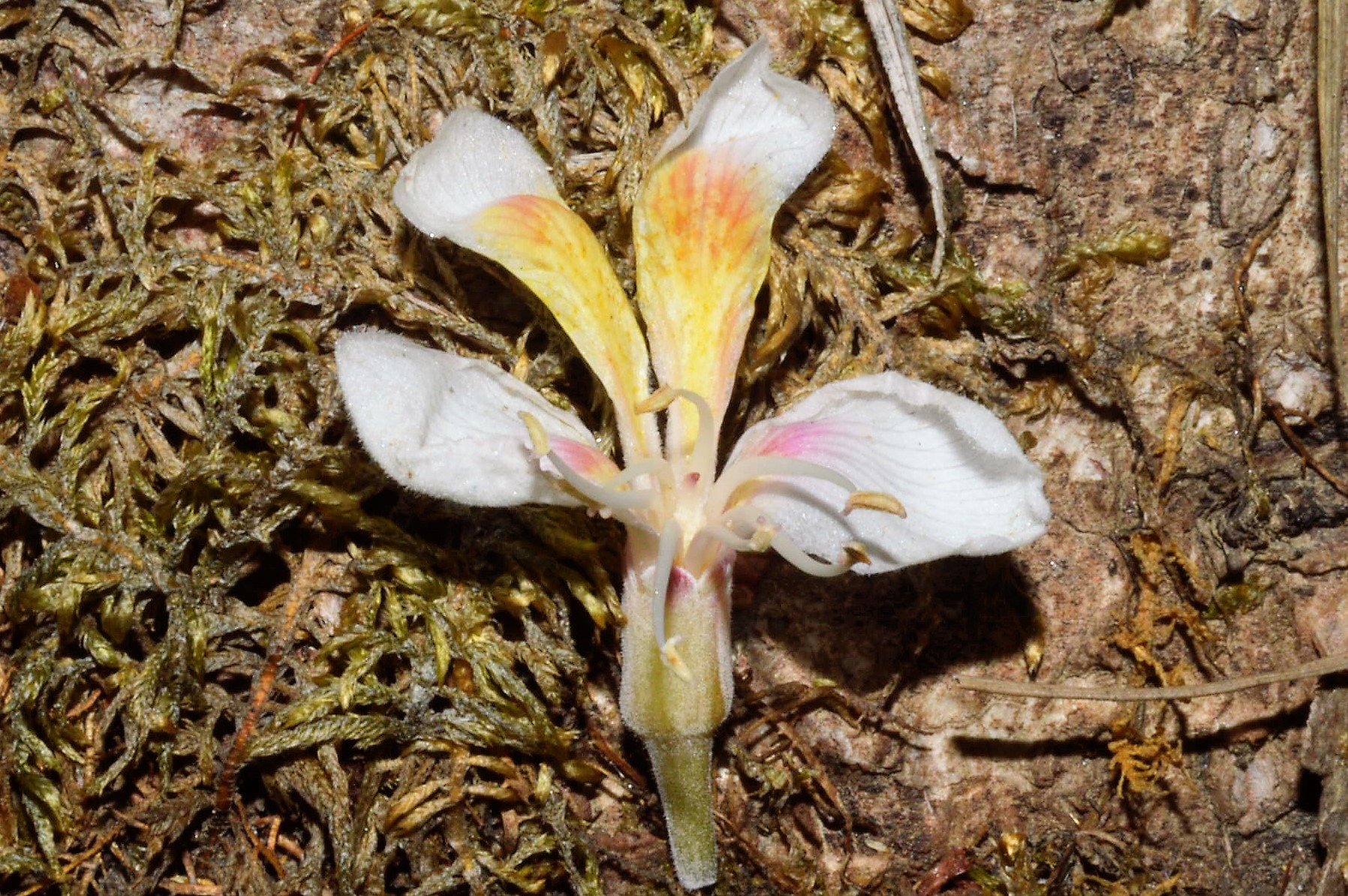
Medicinal-The bark is astringent and used as a tonic and febrifuge. The fruit is applied in rheumatic pains. Food-The seeds can be eaten. Fodder- The leaves are used as fodder.
Bhutan, India, Nepal, Pakistan
It is one of the dominant trees of deciduous forests, growing alongside oaks, maples, birches and laurels at altitudes of 1200-3300 m asl.

Its flowers change color from yellow to pink after pollination, signaling insects to avoid them
It is a tall reaching up to 22 m, deciduous, spreading, shady tree.
It has a straight trunk, girth reach up to 1m and branches in whorls. Its bark peels off upwards in narrow strips.
It has glossy leaves, typically with seven leaflets emerging from a single point on reddish stalks. Tree sheds its leaves in winter, with new growth beginning in the last week of March.
Tree produces upright spikes of buds, it is adorned with upright panicles of white flowers. The panicles, about 40 cm long, contain over 300 white, pinkish flowers.
Fruits spiny green and contain several brown seeds.
Flowering: April – May
Fruiting: October – November