
Scientific Name
Other Names
Life Form
Family
Medicine-Traditional Medicine for reating fever, colds, and headaches. It is also used as a natural insect repellent. Food- Makes herbal teas.
Bangaldesh, Bhutan, China, India, Myanmar, Nepal, Pakistan
Thrives in valleys with evergreen forests, mossy sites in evergreen forests by streams, open forests, roadsides, very dry open places in full sunlight or some shade , at an elevation of 1700-3500 m.

It is perennial herb forming a basal rosette of leaves grows 30-90 cm tall.
Stem is short and inconspicuous located at the base of the plant.
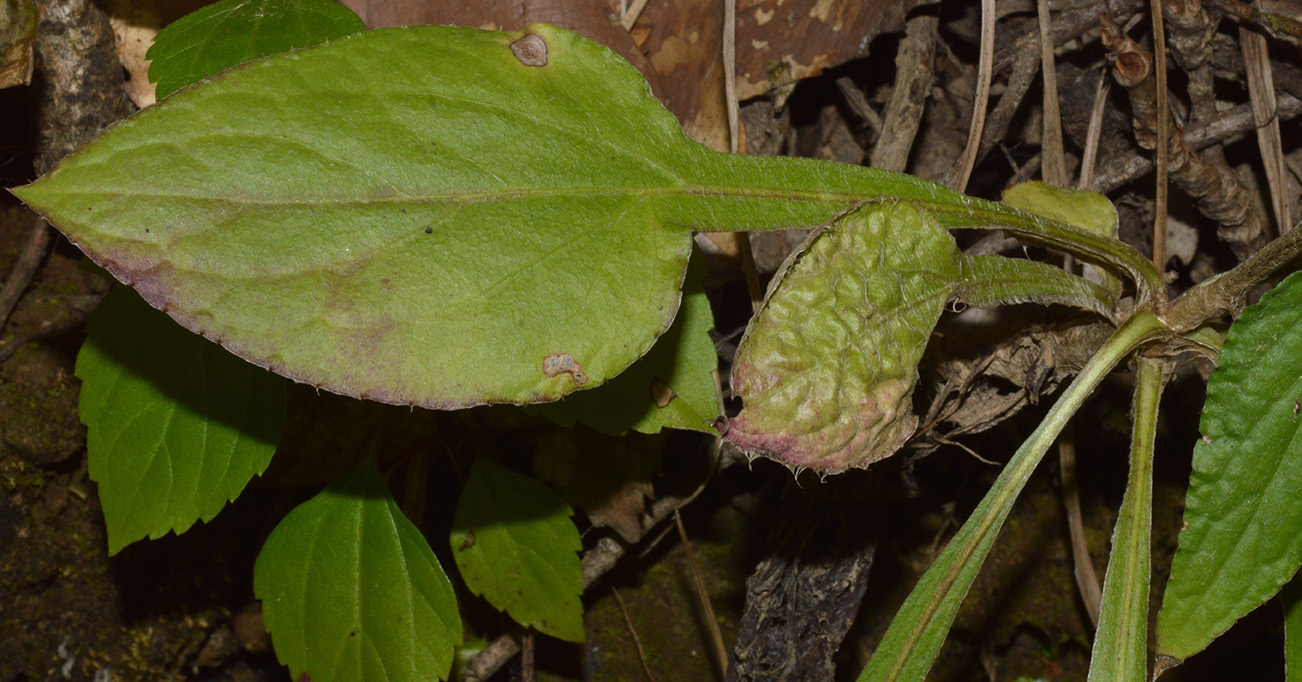
Leaves are in a basal rosette, leaf-stalk broadly winged, leaf blade ovate or narrowly ovate, 5-10 cm long and 3-8 cm wide, papery, palmate-pinnate veined, bristly on both surfaces with long straight trichomes, or more commonly slightly discolorous with lower surface bristly-woolly and upper surface sparsely bristly, base constricted and decurrent into leaf-stalk, margin callose-finely toothed and straight, tip blunt or pointed.
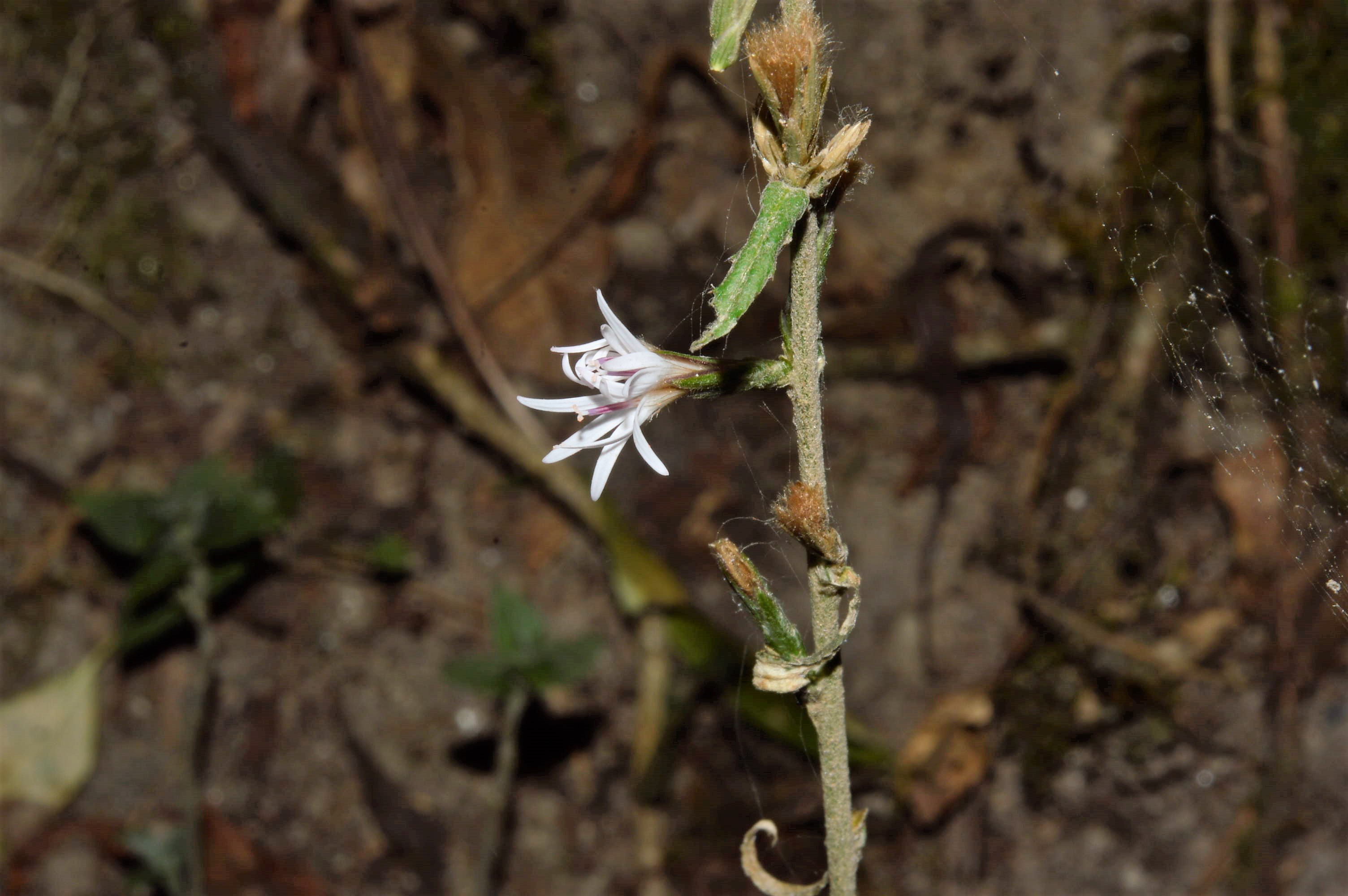
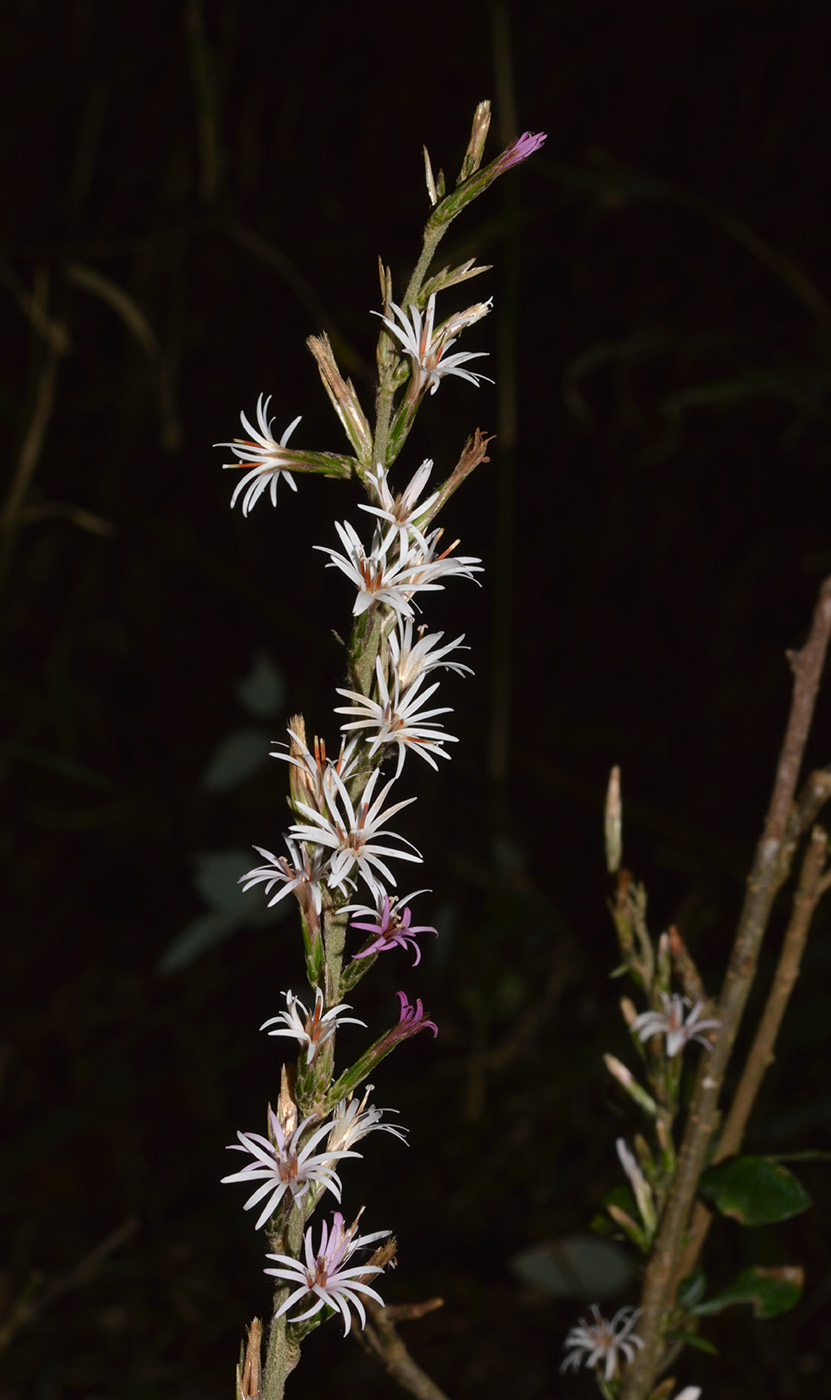
Flowers are borne in clusters of 1-4 on short stalks or nearly stalkless, arranged in spikes or panicles. Each flower head has 3 flowers. Involucre (structure surrounding the flower head) is cylindrical. Phyllaries (modified leaves around the flower head) are papery and arranged in 5 layers (series). Outer phyllaries are ovate while inner ones are elliptic. Florets are bisexual.
Fruit is developed into subspindle-shaped achene (single-seeded fruits), long and ribbed. Densely hairy with a brownish pappus (hair-like structure) that may be absent or present.
Flowering: year-round.