
Scientific Name
Other Names
Life Form
Family
Ornamental- Mainly used for ornamental purposes in shaded or woodland gardens. Medicine- The roots have been used as a vermifuge in cattle. The juice of the tubers is applied to the wounds of cattle in order to kill any parasites. The dried powdered tubers is applied to snake bites.
Bhutan, China, India, Myanmar, Nepal, Pakistan
Thrives in open areas within the Rhododendron forests, scrublands, and even alpine meadows, where it finds the cool, moist conditions it prefers.

It is a tuberous perennial emerges year after year from underground tubers and forms large impressive clumps over time.
Stem is thick, fleshy petiole (stalk) that can reach a remarkable height of 120 cm.
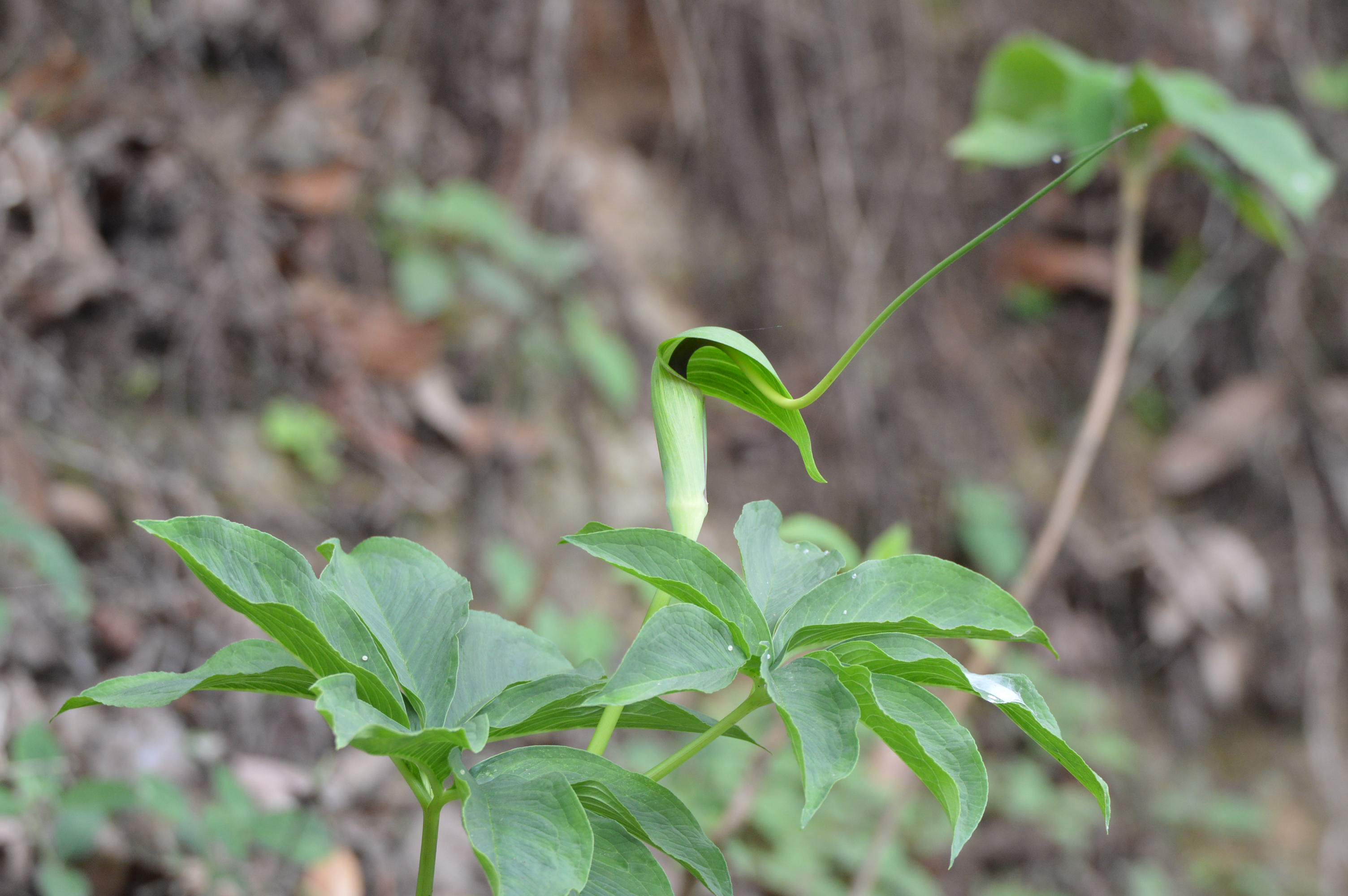
Leaves are two,stunning, palmate green leaves grace the upper part of the thick petiole. Their tropical appearance adds a touch of exoticism to the woodland.
Flowers are tucked inside a hooded spathe, whip-like spadix that emerges from the hood, resembling a cobra's tongue.
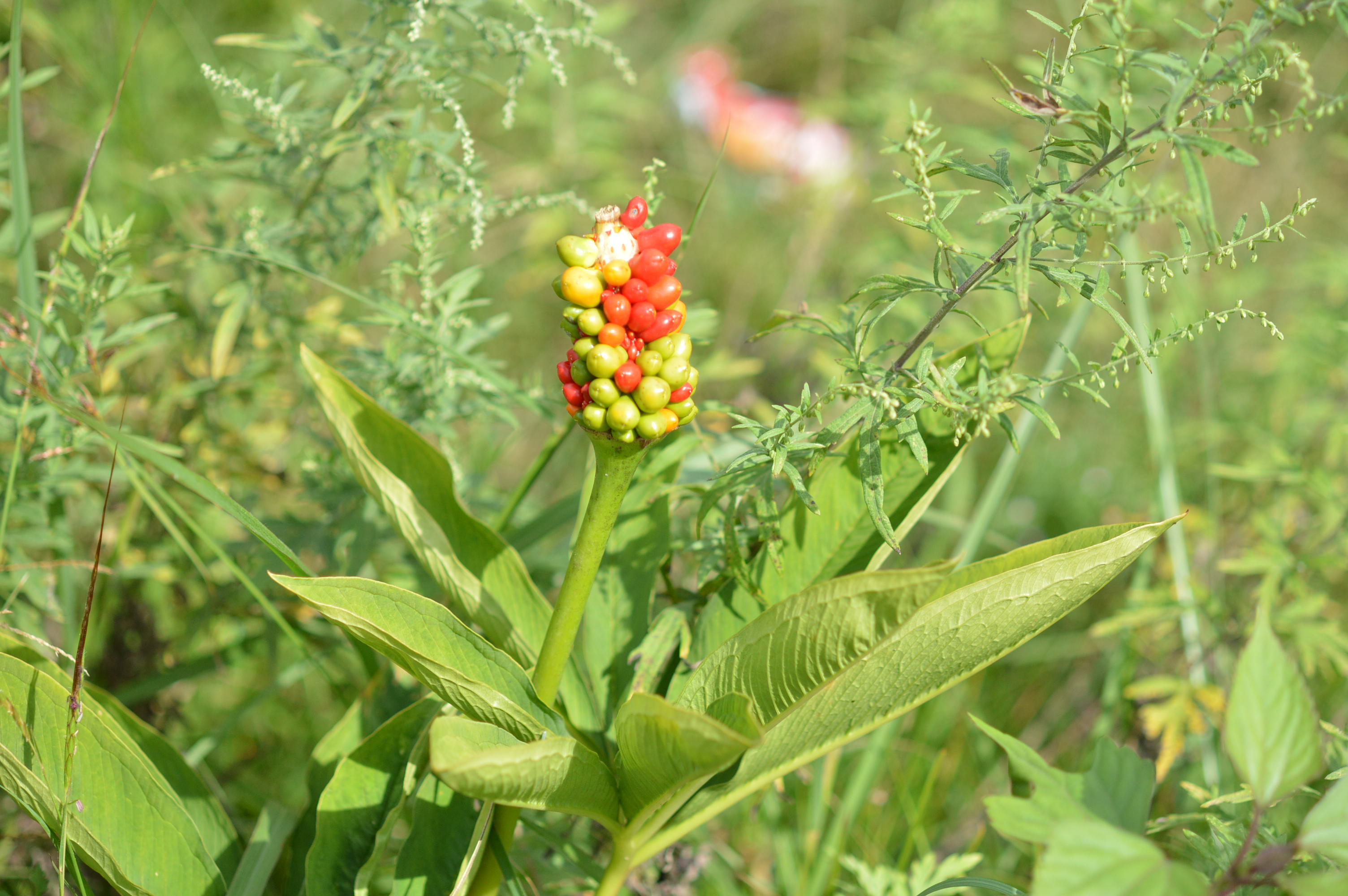
Fruit is in the form of clusters of bright red berries in autumn. These berries add a pop of color to the fading summer scene, especially on plants that have set seed.