
Scientific Name
Other Names
Life Form
Family
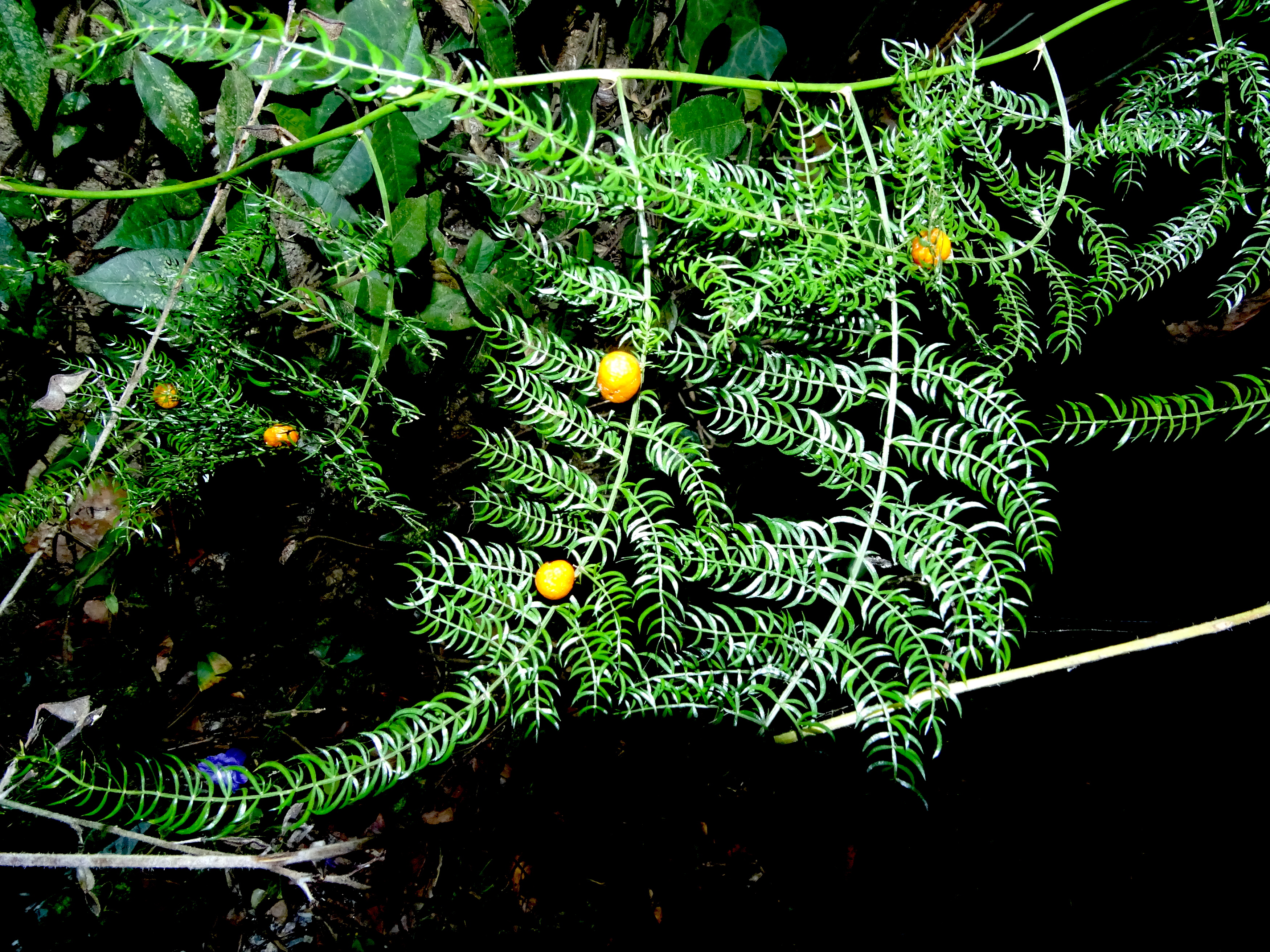
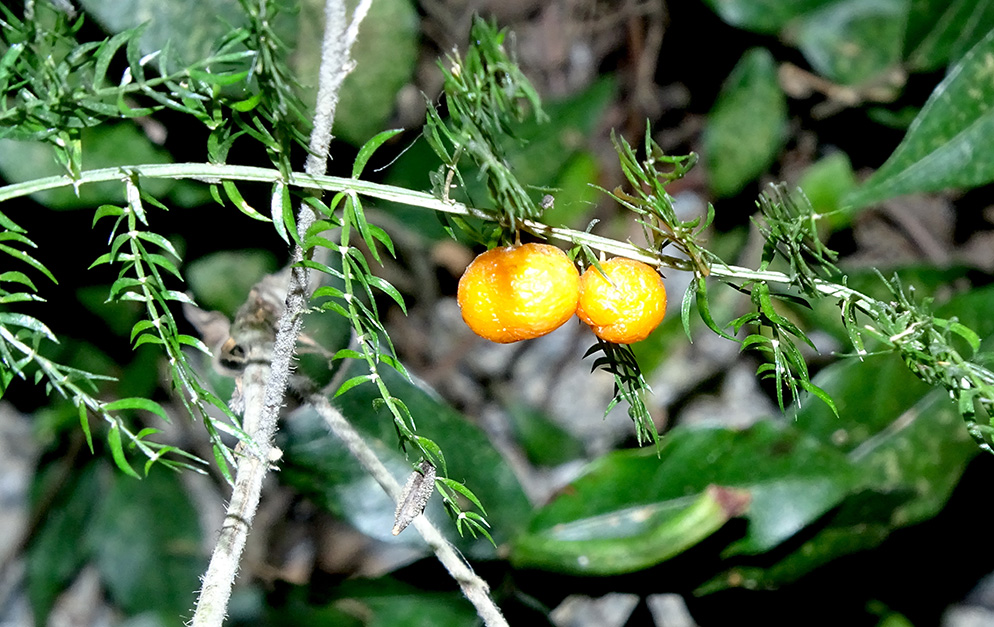
Food- Young shoots are cooked and consumed as a vegetable. Medicine-The dried root is antipyretic, antitussive, diuretic, expectorant, stomachic, nervous stimulant and tonic
Bhutan, China, India, Myanmar, Nepal, Pakistan
Thrives in cool, high-altitude habitats with good drainage, typically found in the Himalayas and parts of Southeast Asia, at an elevation of 1200-3000 m.

It is an erect herb with a short rhizome with fleshy swollen fasciculate roots up to 120 cm hairless grooved ridged.
Stem is erect, hairless, grooved, and ridged herbaceous stem.
Not true leaves, but flattened needle-like structures called cladodes. These occur in whorls of 4-6, are linear and sickle-shaped.
Flowers are either solitary or in pairs, grow in the middle or upper part of the stem from the axil of the cladode. The slender flower stalks are 1-2 cm long and are jointed, with the lower part slightly longer than the upper part. Male flowers have a perianth that is white, creamy, or greenish, measuring 0.25-0.35 cm. The filaments are 0.15-0.2 cm long and free, and the anthers are 0.05-0.1 cm long. Female flowers have a perianth that is 0.2 cm long, an ovary that is 0.08-0.2 cm long, and a trilobed style about 0.02 cm long.
Fruit is like berry, deep red-black and 0.5-0.6 cm in diameter.
Flowering: May-July.