
Scientific Name
Other Names
Life Form
Synonyms
Family
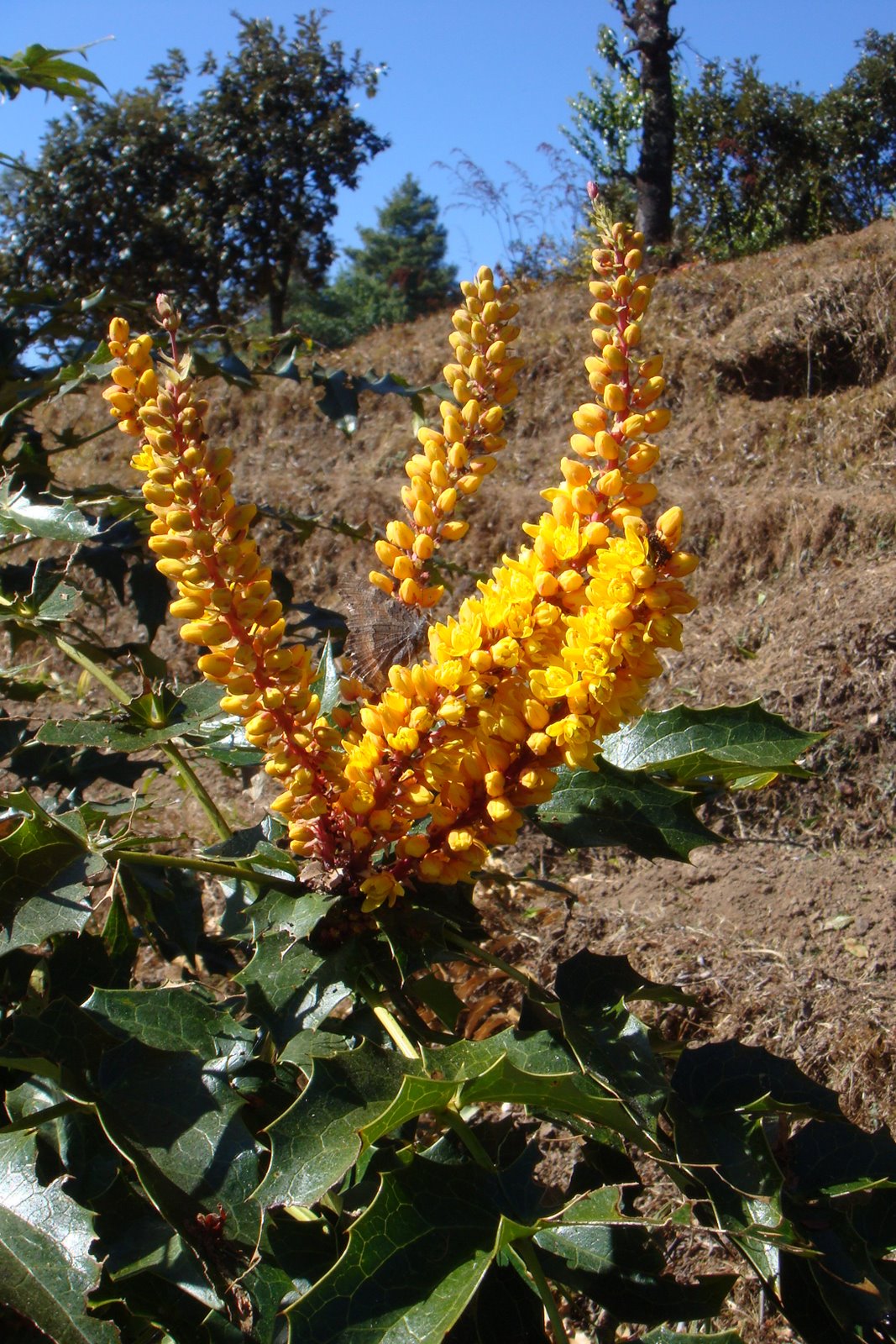
Food - Fruit is consumend raw or cooked. Medicine - The fruits are strongly antioxidant, diuretic and demulcent. A decoction of the bark is used as eye drops to treat inflammations of the eyes. A decoction of the root and stem is used in the treatment of dysentery, abscesses, conjunctival congestion, sore pain, periodontitis, acute pharyngolaryngitis, tuberculosis, and hemoptysis.
Bhutan, China, India, Myanmar, Nepal
It thrives in cool, moist forests with oak and rhododendron trees at altitude up to 2900 m asl.

The plant’s roots and stems are used to produce a natural yellow dye.
Evergreen shrub or a small tree that can grow from 1-7 m tall.
It has Profusely branched with soft, corky brown bark. Branchlets are leafy and glabrous (smooth).
Imparipinnate leaves (up to 45 cm) bear shiny green, spiny leaflets (5-11 cm) arranged on a central stalk. These leaflets widen at the base and taper to pointed tips, with toothed margins (4-7) and a paler underside compared to the glossy top.
Clusters of small, slightly fragrant, bright yellow flowers (6-10 mm) borne in racemose inflorescence. Arranged on short stalks, these fragrant blooms have six oblong petals and numerous yellow stamens in their center.
Round, purplish-black berries develop after flowering, dusted with a whitish waxy coating (pruinose). These fruits are about 9-12 mm long and contain seeds with a fleshy interior.
Flowering: November – December
Fruiting: January – April