
Scientific Name
Other Names
Life Form
Family
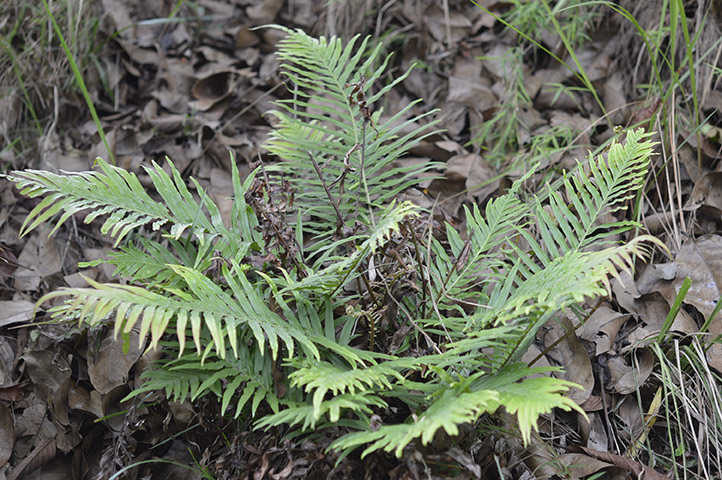
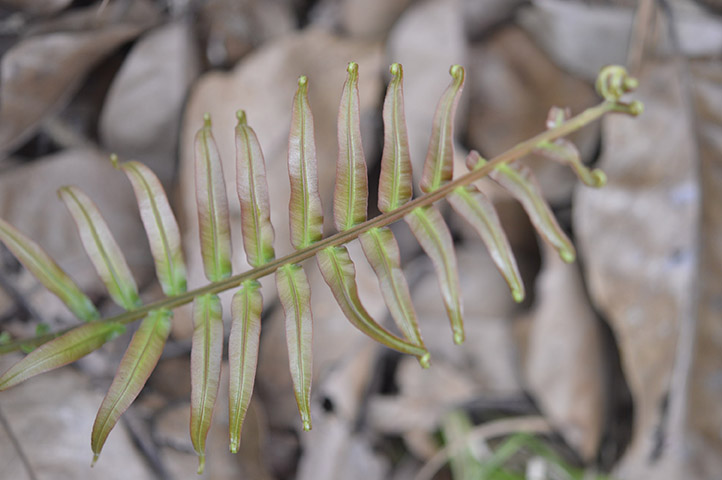
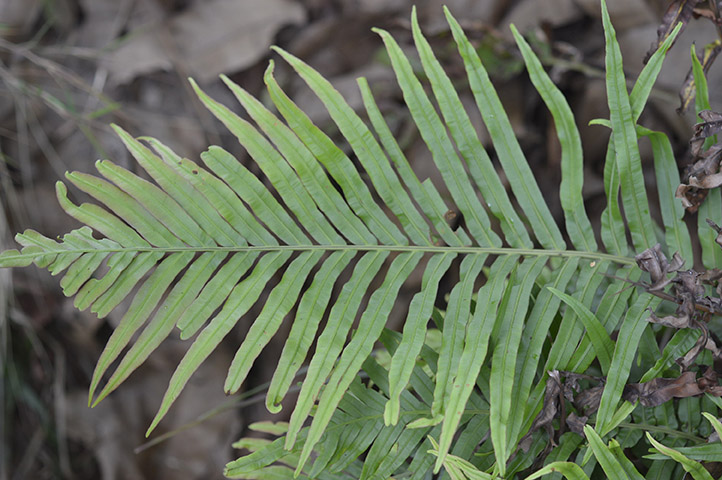
Ornamental - Blechnum orientale is used as an ornamental plant in gardens and parks. Eco-restoration - Grows on open slopes (such as road cuttings) in rain forests, often growing in colonies acts as a soil stabilizer and for erosion control. Medicine - The plant is anthelmintic, antiviral, contraceptive and tonic. It is used in the treatmenr of urinary complaints, impotence; boils in infants and older children and diarrhoea. A paste of the young fronds is applied topically to treat abscesses and fungal skin infections, esp ringworm, and also to stop bleeding.
Bangladesh, Bhutan, China, India, Myanmar, Nepal
Thrives in rainforests, open slopes, and other humid environments, at an elevation of 200-1000 m.

It is fern with an arching clump-forming growth pattern forms a cluster of long arching fronds emerging from a short thick rhizome.
Stem is upright stalk connecting the rhizome to the fronds, dark brown at the base, similar in color to the rhizome and covered with scales.
Leaves are large and arching, resembling a centipede due to the numerous leaflets. Imparipinnate, meaning the main rachis (central stalk) has leaflets arranged on either side with a single terminal leaflet at the tip. Monomorphic, meaning all the leaflets have a similar shape and size. Ovate-lanceolate in shape, with a leathery texture and reaching impressive sizes of 55-100 cm in length and 20-60 cm in width.
Flowers are small and inconspicuous, clustered on the underside of mature leaflets. Not a showy feature but essential for reproduction. Appear as brown dots or lines, protected by a flap of tissue.