
Scientific Name
Other Names
Life Form
Synonyms
Family
Wood is moderately hard and used mainly for making small timber. Leaves are used as fodder, and seeds and buds are eaten by several birds. It is used for making musical instruments, agriculture implements. The pulp obtained from its wood is suitable for manufacturing paper. Its bark is used as veterinary medicine.
Bangladesh, Bhutan, China, India, Myanmar, Nepal
It grows in woods and thickets on slopes, often in moist oak forests of higher montane zones as well as subtropical broad-leaved forests at altitudes of 1500-2700 m asl.

Named from Old English "horn" (hard) and "beam" (tree) for its tough wood historically used in tools
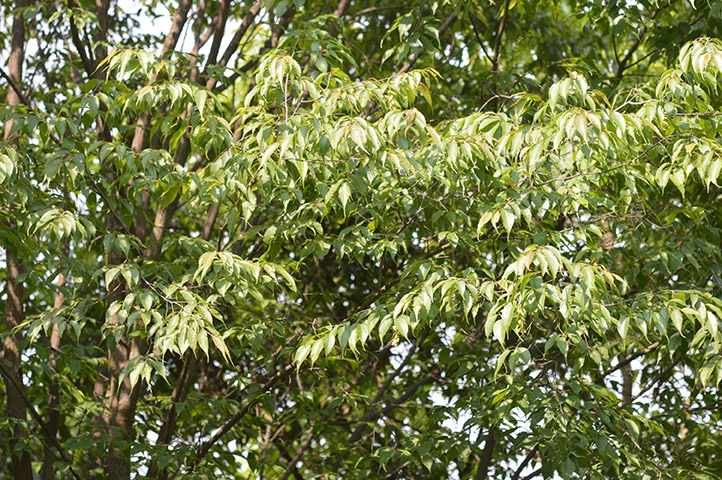
It is a deciduous shrub or a tree that usually grows around 10 - 20 m tall.
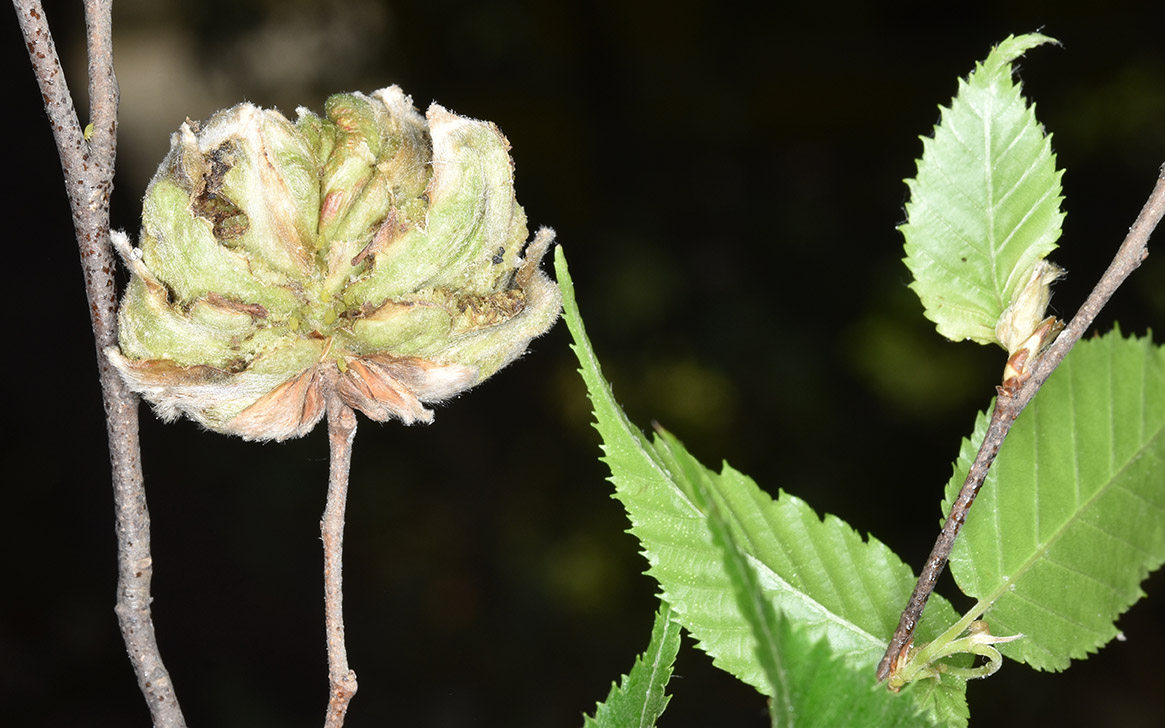
It has slender often drooping branches. Bark dark grey, mostly smooth. Twigs brown, glabrous.
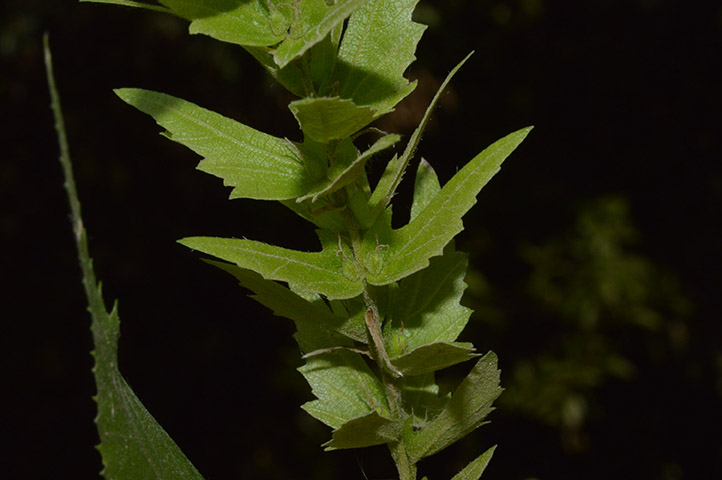
Leaves elliptic, oblong, or lanceolate - and measure 6-11 cm long by 3-5 cm wide. They have a distinctive pointed tip with jagged edges (doubly serrated). The upper surface is smooth, while the underside has some fine hairs, especially near the veins. Slender stalks (1.5-3 cm) connect the leaves to the branches.
Male catkins are drooping, up to 8 cm. borne on leafless branches. Bracts are triangular-ovate; stamens hairy. Stipules are oblong, soon falling.
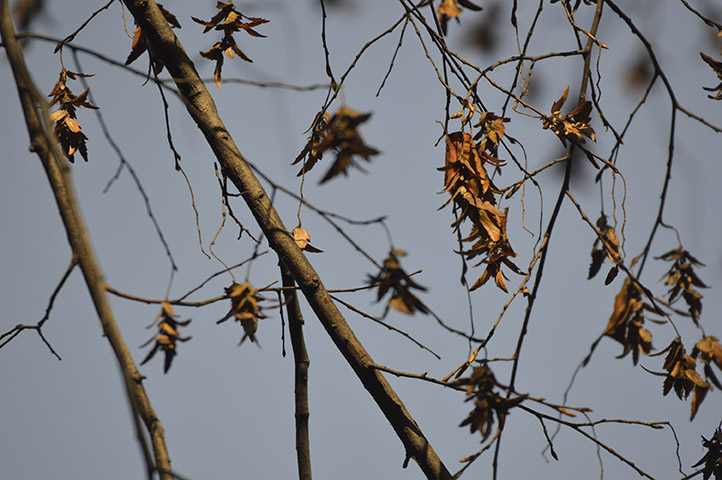
It produces clusters of tiny nutlets. Each nutlet is ridged and surrounded by a protective casing, about 2.5 cm long, shaped like a lance, and has small, pointed lobes at the base.
Flowering: March-April