
Scientific Name
Other Names
Life Form
Synonyms
Family
Wood - Construction: It is used for making utensils, building materials, and fuel. Fodder - Leaves are used a fodder.
Bangladesh, Bhutan, China, India, Myanmar, Nepal
Forests or thickets on mountain slopes or in valleys at altitudes of 1400-2000 m asl.

The name Japonica indicates the plant's origin in Japan. Is considered sacred in the Shinto religion.
It is an evergreen, dioecious tree, up to 12 m tall.
The stems are typically smooth and grayish-brown. The branching pattern is irregular, with branches spreading outwards from the main trunk.
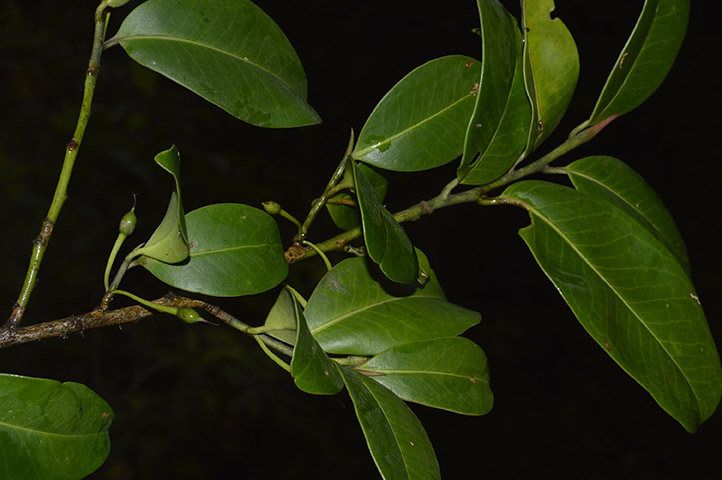
Leaves are alternate, petioled, glossy, and leathery. They are oblong-obovate or oblong-oblanceolate in shape with an acute base, entire margins, and an acuminate apex. Leaf size ranges from 6-15 cm long and 2-5 cm wide. The upper surface is glossy green and glabrous (hairless), while the lower surface is pale and glabrous.
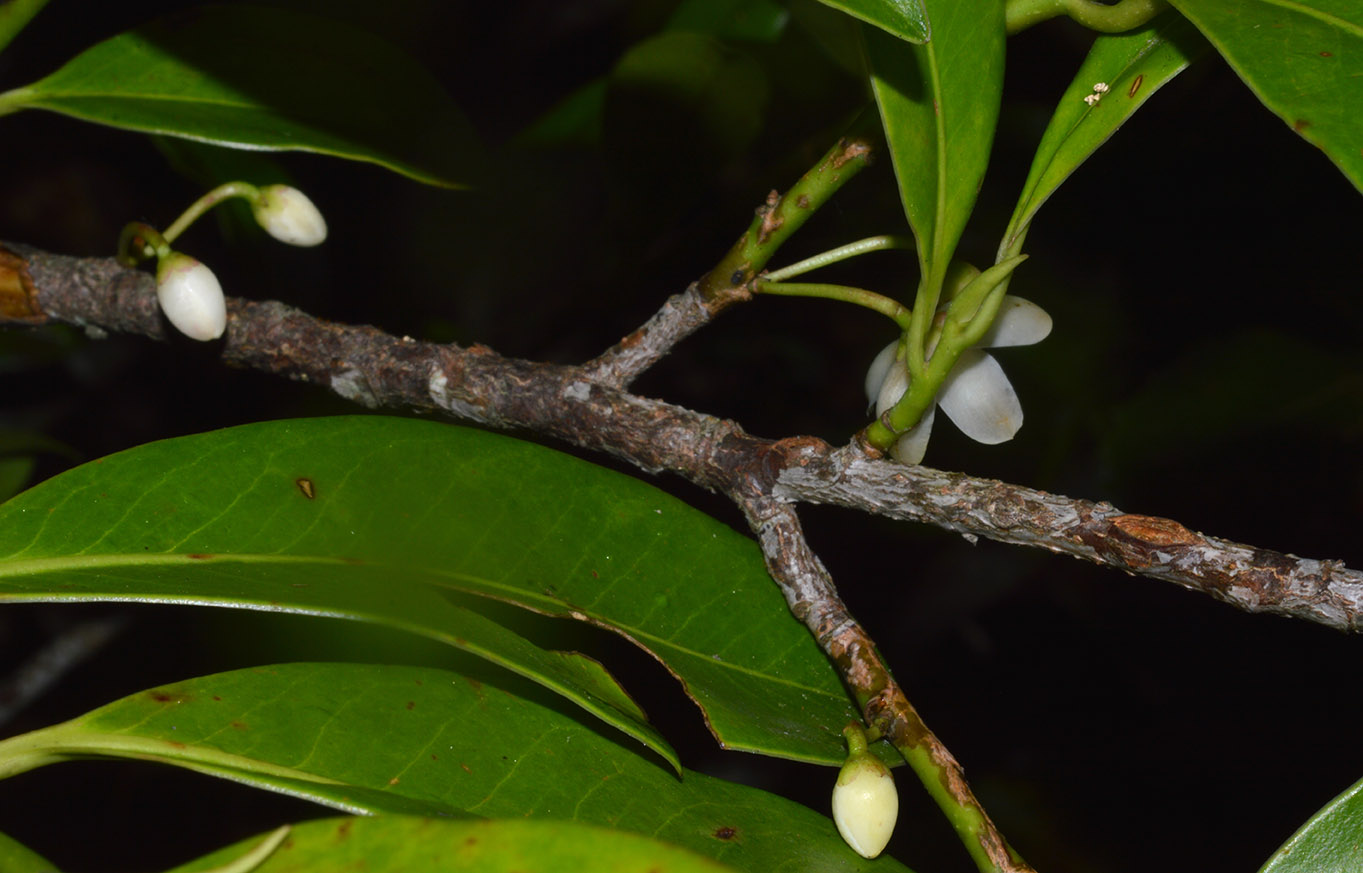
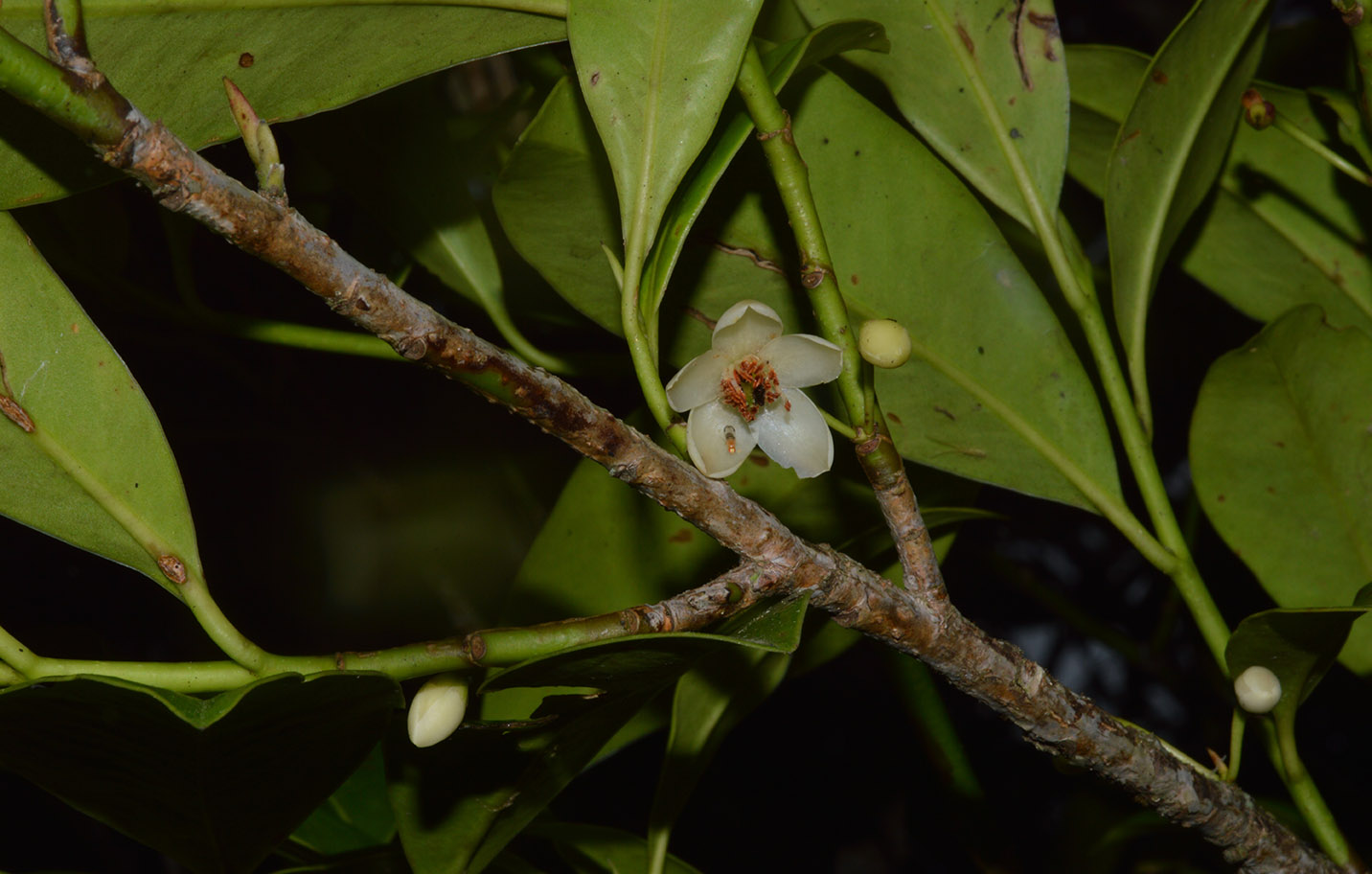
Flowers are white, fragrant, and appear in the leaf axils (axillary). They can be solitary or clustered (fascicled) with a peduncle up to 2 cm long. Each flower has five equal sepals (one-third the size of the petals) and five oblong petals. The male flowers have numerous stamens with orange anthers. The style (female reproductive structure) is subulate (awl-shaped) with three persistent lobes.
Fruit is a globose (round) berry, roughly 1 cm in diameter. It matures from green to a black color.
Flowering: May – June
Fruiting: September – October