
Scientific Name
Other Names
Life Form
Synonyms
Family
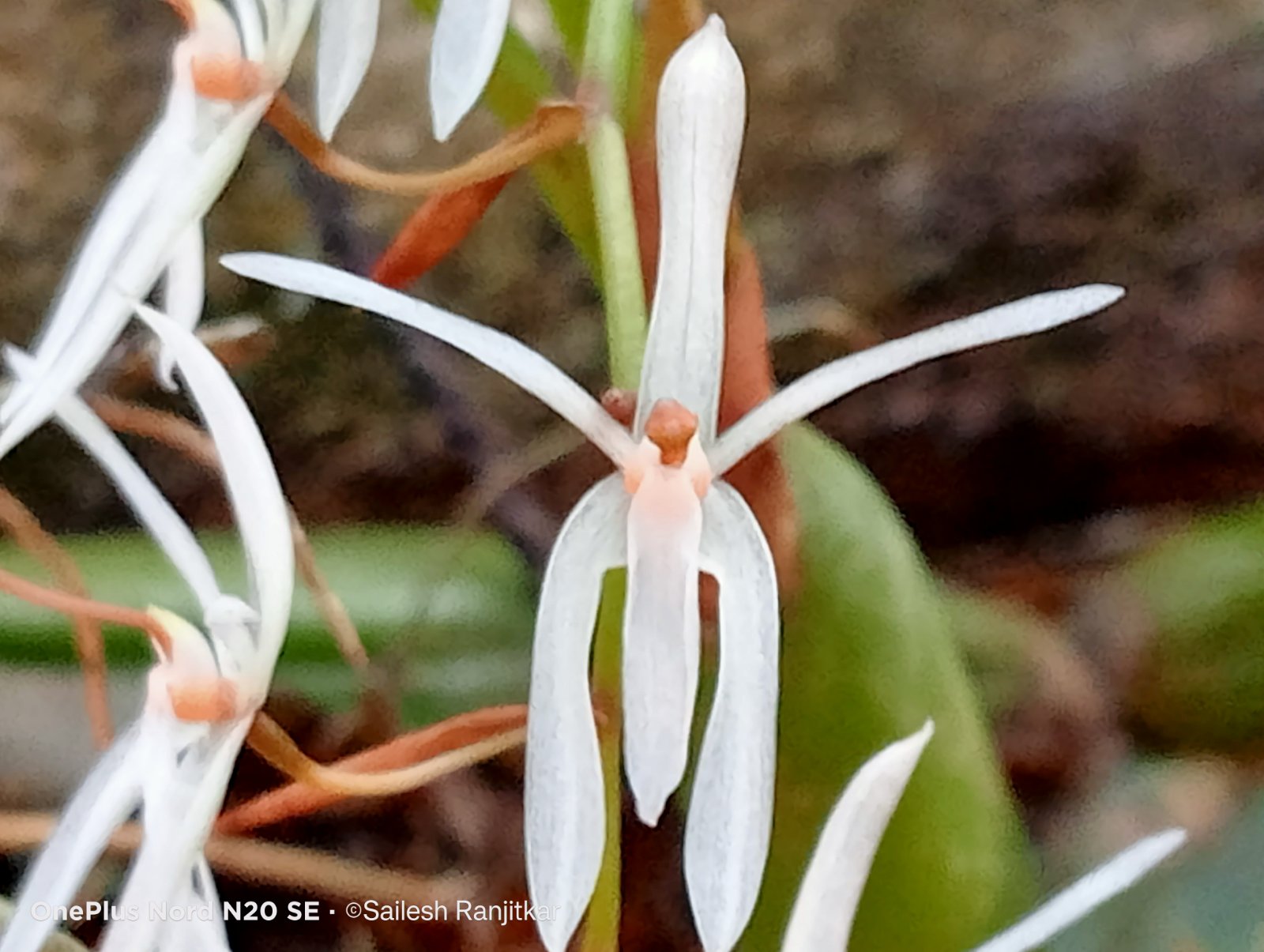
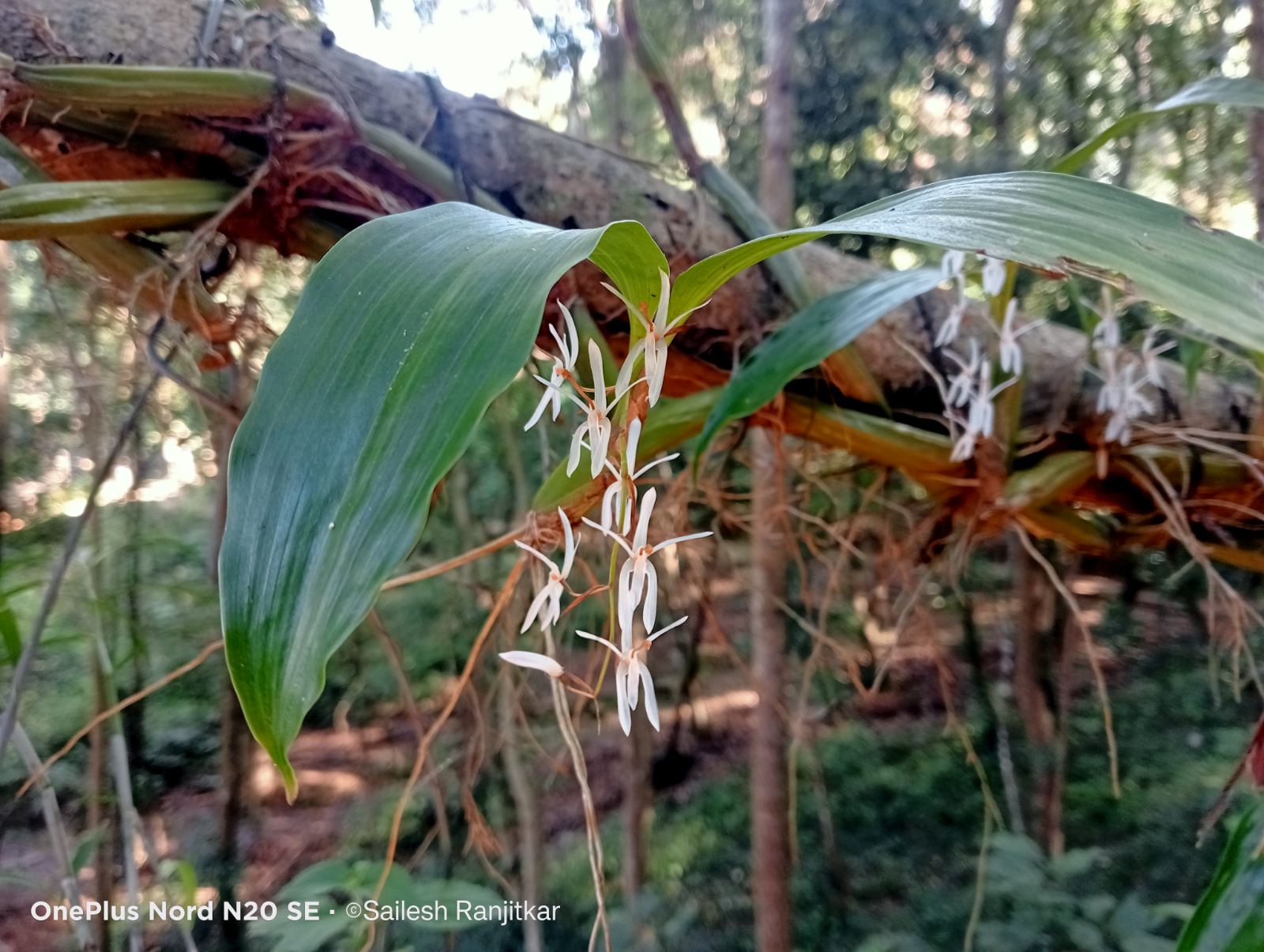
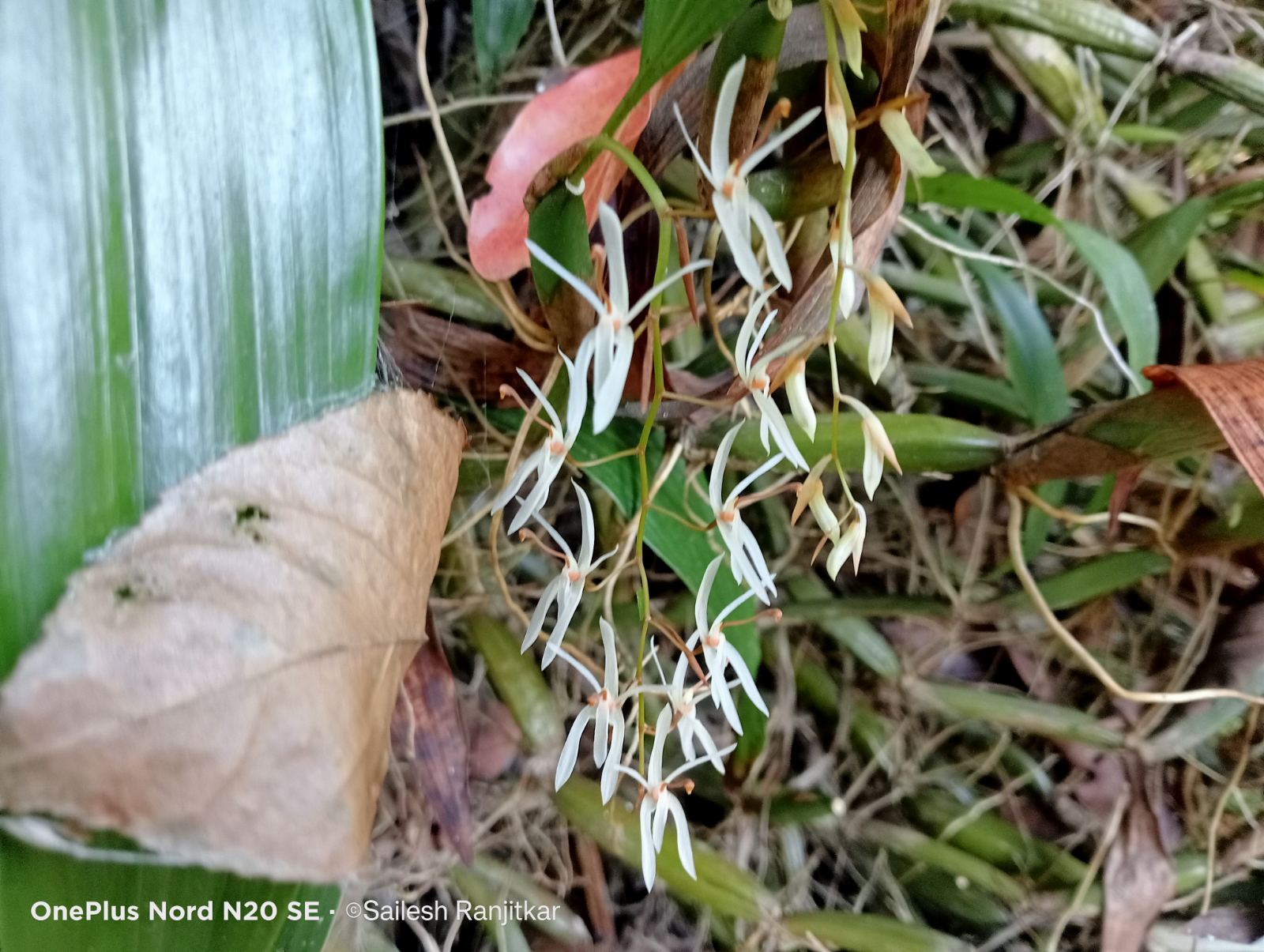
It is primarily used as an ornamental plant. Its medicinal properties have been documented mainly as tonic and anti-fatigue.
Bangladesh, Bhutan, China, India, Myanmar, Nepal
Epiphytic in hill evergreen forests at 900-1,500 meters.

A pseudobulbous epiphyte that often grows on tree trunks in shaded, wet tropical forests. It is one of the few species that blooms in January.
Coelogyne fusca is characterized by a pendulous, drooping growth habit. The plant is an epiphytic plant characterized by pendulous, cylindric-spindle-shaped pseudobulbs that measure 3-6 cm long and 0.8-1.5 cm in diameter. These pseudobulbs are enclosed by fibrous sheaths and become longitudinally wrinkled as they dry. At the apex of each pseudobulb, the plant bears two coriaceous, glossy green leaves. The leaves are narrowly oblong to linear-lanceolate, ranging from 10 to 18 cm long and 0.8 to 1.2 cm wide, with a short petiole. The inflorescence is a slender, ridged raceme that can grow up to 18 cm long and carries 15 to many flowers. The flowers are typically white, sometimes with pale yellow spots at the base of the labellum. The sepals and petals are subsimilar, with the dorsal sepal measuring 7-8 mm long and the petals measuring 5-7 mm. The labellum is prominently 3-lobed and saccate at the base. The fruit is an obovoid-ellipsoid, ridged capsule, measuring 0.7-1 cm long.
Flowering: January - May.