
Scientific Name
Other Names
Life Form
Synonyms
Family
Food - Aerial tubers are cooked and consumed. Medicine - The juice of the roots is taken to expel threadworm.
Bhutan, China, India, Myanmar, Nepal
Mixed forest margins, river banks, valley sides at altitudes of up to 2100 m asl.

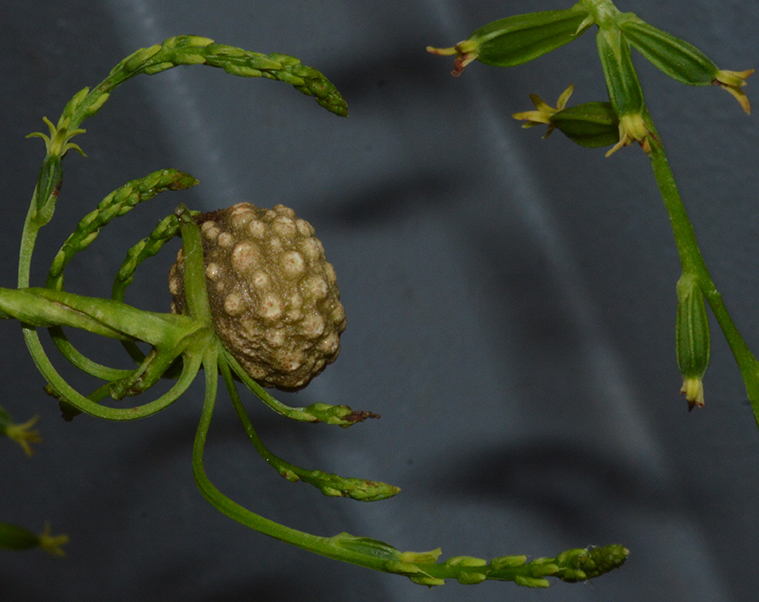
A fast-growing vine with aerial, potato-like bulbs, which can be toxic if consumed raw. Considered invasive in some regions.
Glabrous-leafed, non-spiny, perennial climbing plant producing annual stems up to 10 m long.
Stem twining to left, glabrous, smooth.
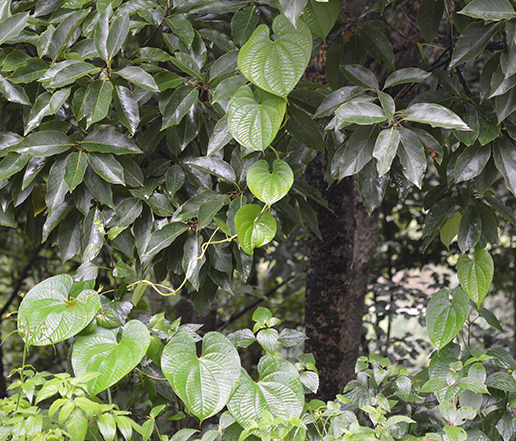
Leaves alternate, simple, rarely pinnately compound, heart-shaped, pointed leaves with smooth margins. These alternate leaves grow 8 to 26 cm long and 2 to 26 cm wide, with a long, slender stalk.
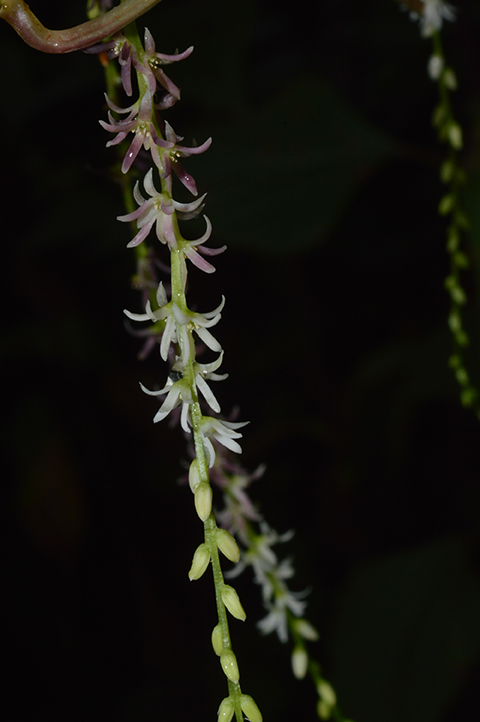
Male flowers: solitary, ± contiguous along rachis; bract and bracteole ovate; perianth purple, lobes lanceolate; stamens 6, inserted at base of perianth, filaments nearly as long as anthers. Female flowers: staminodes 6, ca. 1/4 as long as perianth lobes.
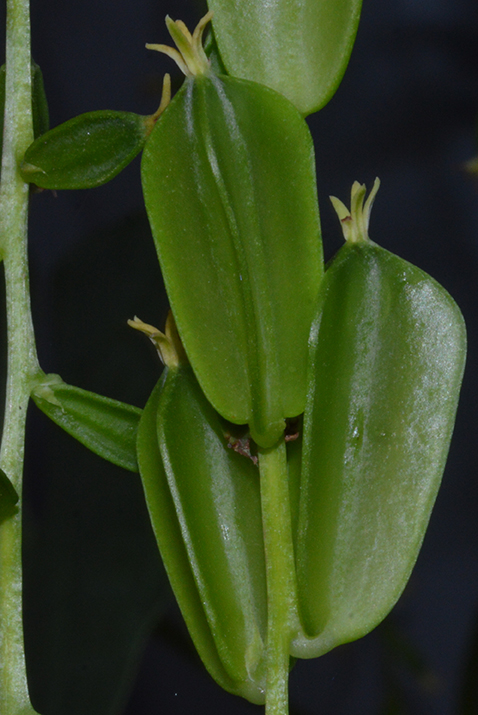
Capsule reflexed or drooping, straw-colored, densely purplish dotted, oblong-globose, 1.5--3 cm, glabrous, base and apex rounded; wings 0.25--0.7 cm wide.
Flowering: July – October
Fruiting: August – November