
Scientific Name
Other Names
Life Form
Family
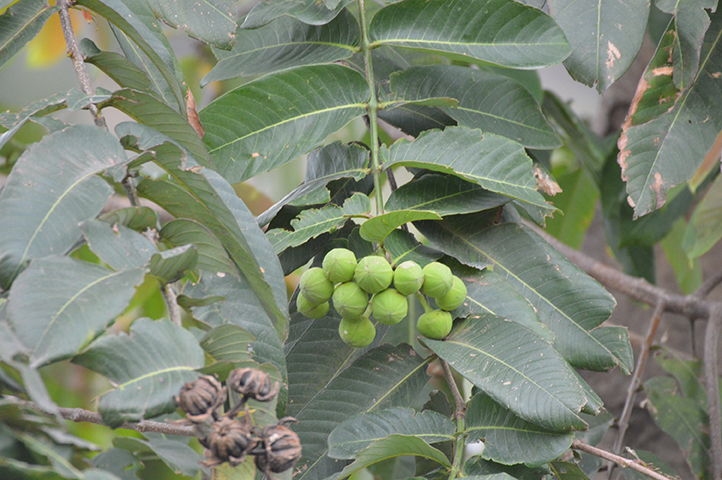
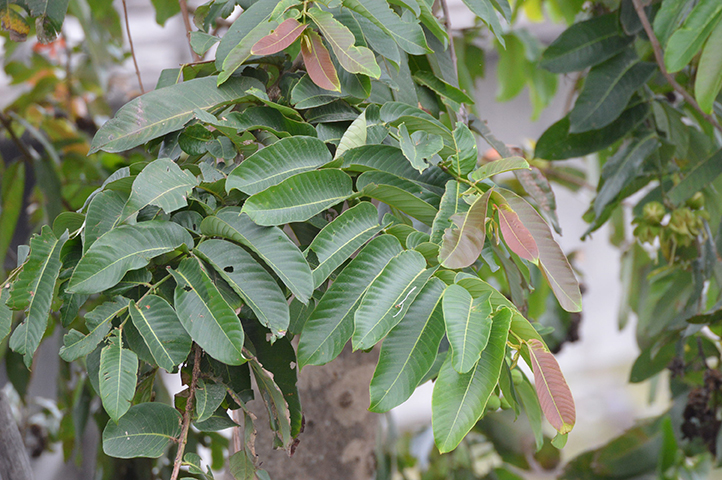
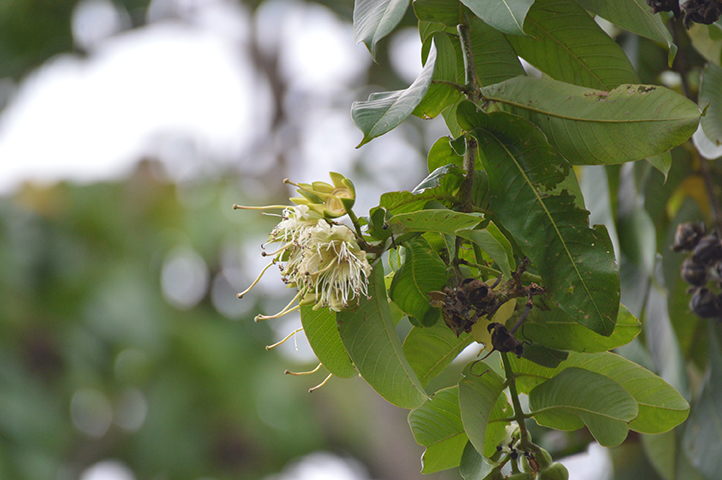
Wood - Construction: A lower quality timber, it is used for purposes such as boxes and crates, tea boxes, furniture components, house and boat building, blockboard, fibre boards and pulp. It is used traditionally for making canoes, household utensils etc. Food- Fruit is eaten raw.Very acid, it can be made into a refreshing drink. It is boiled and used as a vegetable. Dye- The fruits and leaves are boiled to make a black dye.
Bangladesh, Bhutan, China, India, Myanmar, Nepal
Thrives in valley forests, open places, especially on river banks, at an elevation of 900-1500 m.

It is tall deciduous fast-growing tree reaches a height of 12-24 m.
Stem is with erect trunk, often unbranched but may fork at the base. Lower branches are long, slender, drooping, and four-angled.
Leaves are arranged oppositely, oblong shape, 25 cm long and 10 cm wide. Young leaves are red, turning green and shiny on the upper surface, dull on the underside.
Flowers are large, white, and ill-smelling. Arranged in panicles in leaf axils and at branch ends. Each flower is 5-6 cm across with numerous stamens.
Fruit is rounded, leathery capsule, about the size of a small orange.
Flowering: Spring.