
Scientific Name
Other Names
Life Form
Family
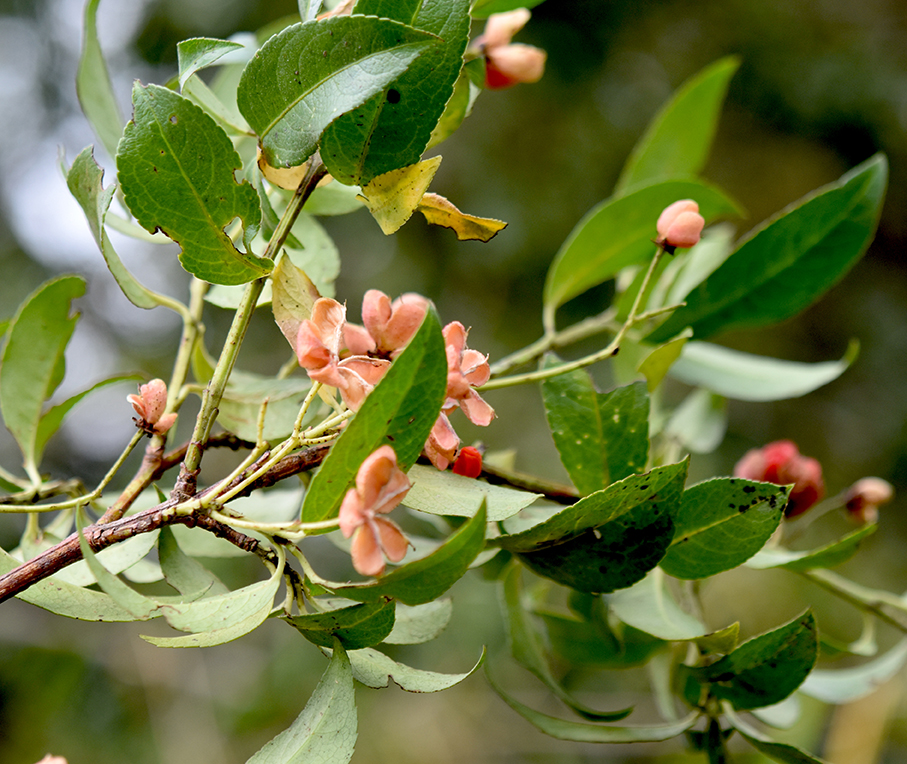
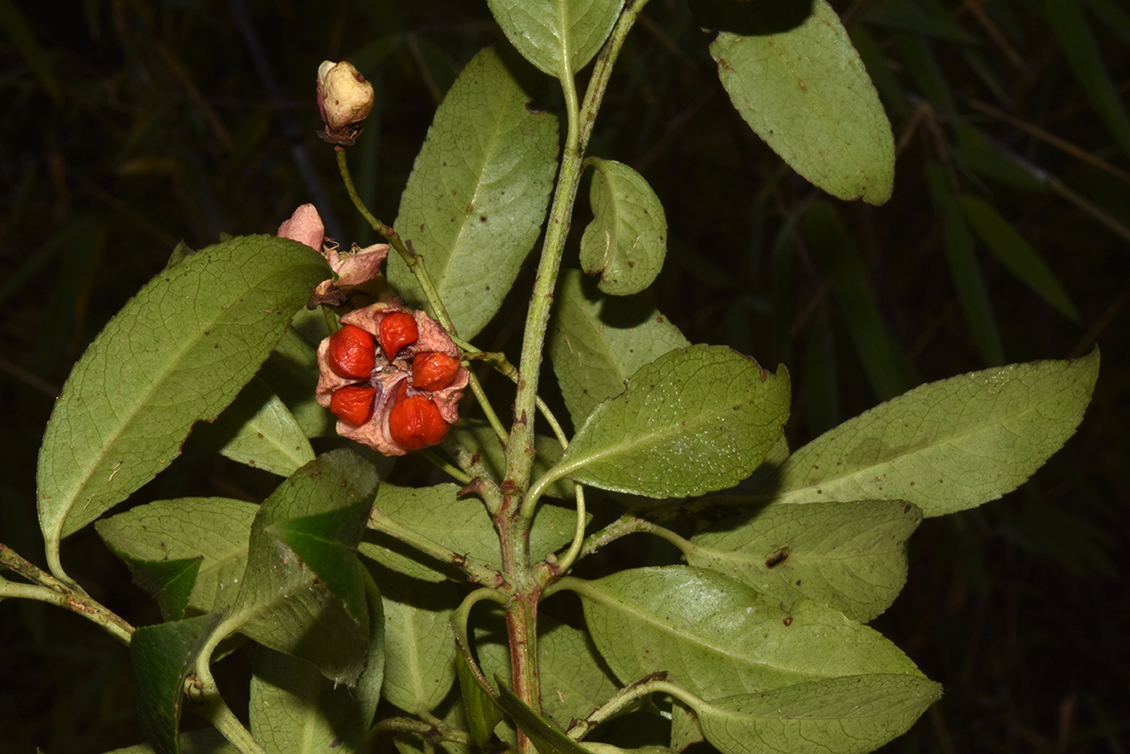
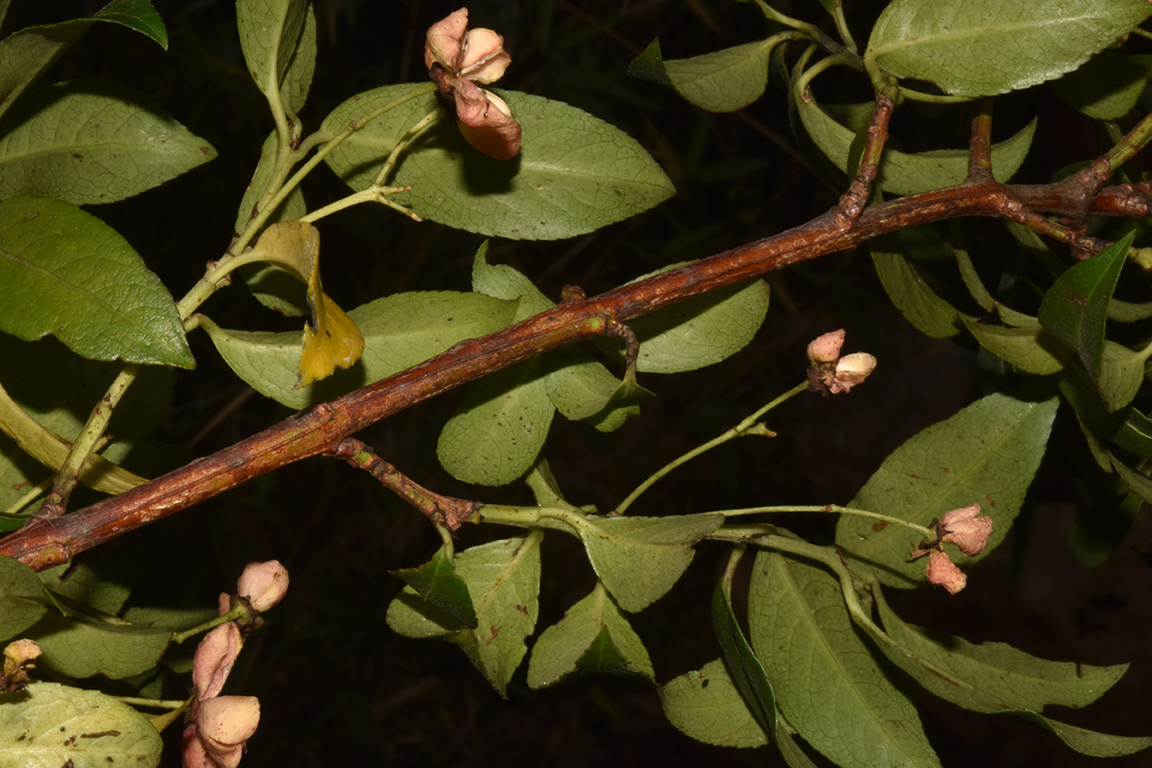
Ornamental - It is an ornamental plant favored for hedges and gardens due to its spiny nature. Medicine - Some parts of the plant are used in traditional medicine. The bark has purgative properties, and its juice is used to treat eye diseases, as well as chronic constipation and dyspepsia (Manandhar, 2002; Chopra et al. 1986).
Bhutan, China, India, Myanmar, Nepal, Pakistan
It grows in forests, scrublands, and along riverbanks, often in hilly or mountainous regions at altitudes of 1300-3000 m asl).

Its berries may be toxic to humans but attract birds, which helps in seed dispersal.
It is a small evergreen tree, reaching a height of 2-6 m.
Stem is woody and branched, with a smooth, grayish-brown bark when young, becoming rough and fissured with age. Stems often bear sharp, woody spines.
Leaves are simple, opposite, and oval-shaped with a pointed tip. They are dark green and leathery, with a smooth margin. Leaves are usually 5-10 cm long and 3-5 cm wide.
Flowers are small, greenish-yellow, and inconspicuous. They are arranged in clusters at the leaf axils. Each flower has four petals and four sepals. Flowering occurs before or with new leaf growth.
A five-lobed capsule, initially green, maturing to a pinkish or reddish hue. When dry, the capsule turns brown or yellow-brown. Each lobe contains one to two orange-red seeds encased in a fleshy aril. The overall shape of the fruit is obovoid-spherical and measures approximately 1.2-1.3 cm.
Flowering: March – April
Fruiting: July – October