
Scientific Name
Other Names
Life Form
Family
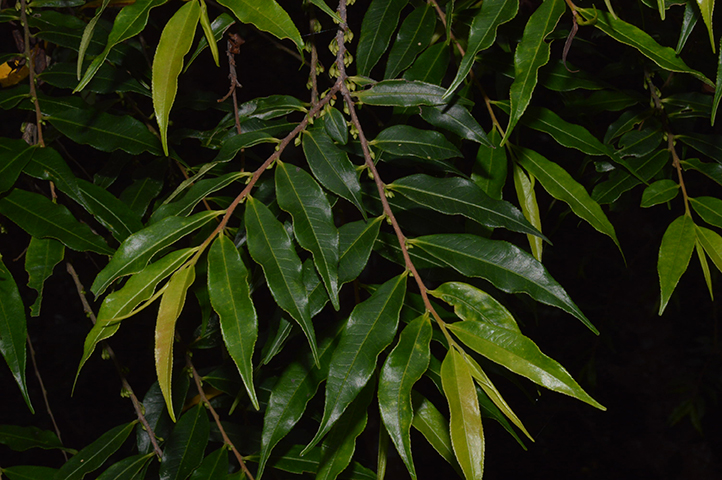
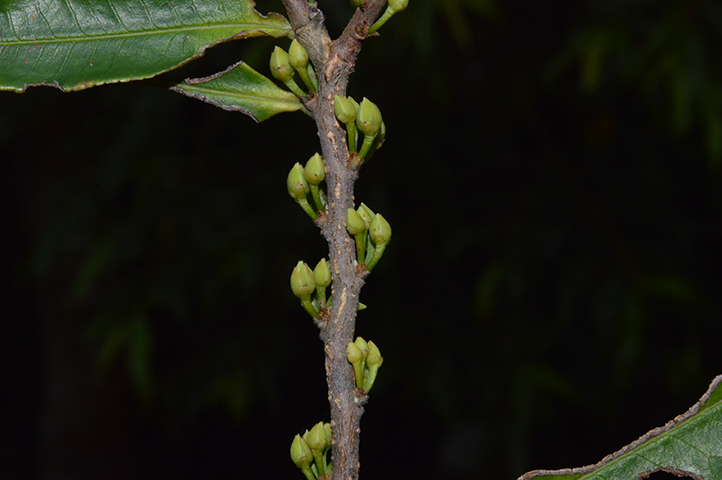
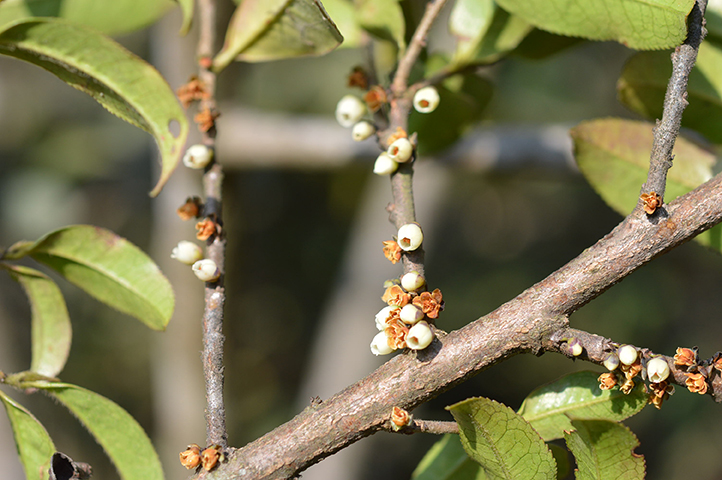
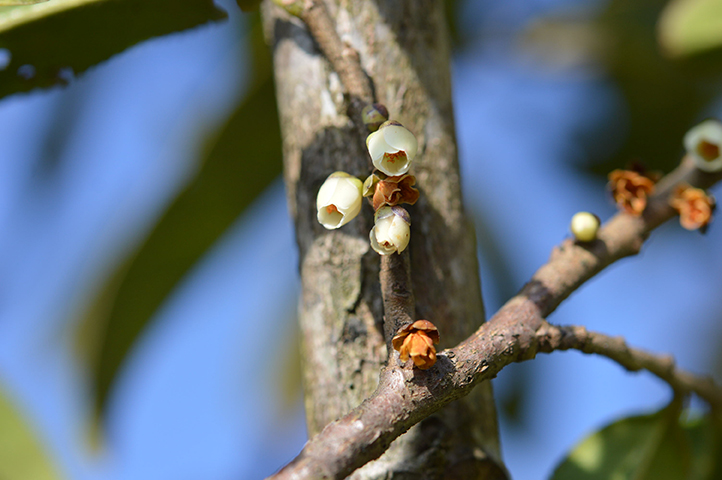
Food - The leaves are used to adulterate tea. Leaves are cooked with meat and eaten in Northeast India. Medicine - A decoction of the leaves is used as herbal medicine for the treatment of cholera, diarrhea, and other stomach diseases. Leaves are used in traditional medicine for various ailments such as wound healing, typhoid, and sore throat.
Bangladesh, Bhutan, China, India, Nepal
Hill forests, especially those of pine at altitudes of 1500 - 2400 m asl.

Its young leaves are often consumed in the form of tea. It is in leaf all year and flowers in May.
Small evergreen tree up to 12 m tall.
Bole straight, or sometimes branched at base, bark reddish-brown, smooth or finely fissured. Twigs round, hairless or finely hairy.
Leaves are simple, alternate and distichous, young leaves long silky woolly-hairy, narrow-oblong, lanceshaped, tip tapering, base pointed, margin finely toothed. Primary vein single, secondary veins blunt, looped at the margin, tertiary veins netveined. Leaf-stalks are hairy, round, stipules absent.
Flowers are arranged in a 2-5-flowered inflorescence, in leaf-axils or along leafless twigs, unisexual, on the same tree. Flower-stalks are 2-3 mm, velvet-hairy. Male flowers: bracteoles round, about 1 mm; sepals 2-2.5 mm, somewhat leathery, outside velvet-hairy, tip blunt. Petals are oblong to ovate, 3.5-4 mm; stamens 15-20; anthers not locellate; pistillode hairless. Female flowers: bracteoles, sepals, and petals similar to those of male flowers but slightly smaller; ovary spherical, hairless, 3-loculed; style 2-3 mm, apically 3-5-lobed or parted.
Fruit is a berry up to 0.6 cm in diameter, thinly fleshy, not splitting open.
Flowering: September-November