
Scientific Name
Other Names
Life Form
Family
Ecological: Provides essential food (figs) for various birds and primates. Medicinal: In some regions, the milky latex or root extracts are used in traditional medicine for skin conditions. Fodder: Leaves are sometimes lopped for livestock feed.
Bangladesh, Bhutan, China, India, Myanmar, Nepal, Pakistan
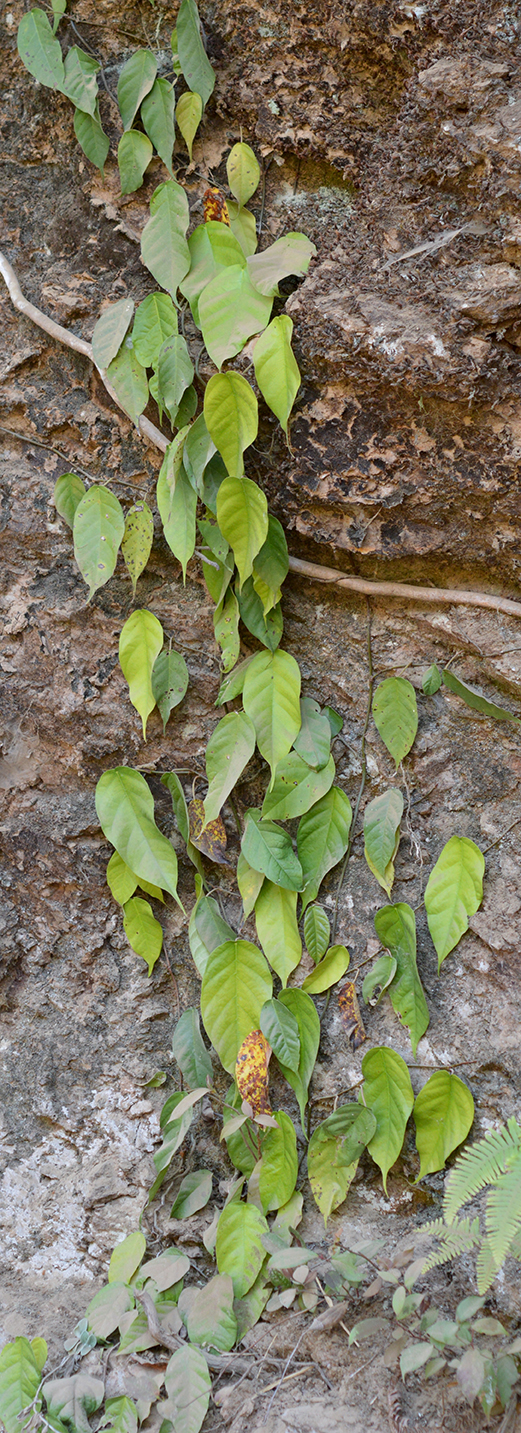
Frequently found on rocky cliffs, stone walls, and trunks of large trees in moist forests at elevations between 500 and 2,500 meters.

Perennial climber
Stems are woody, slender, and frequently scandent or creeping. They branch extensively, often clinging to rocks or trees using adventitious roots. The bark is relatively smooth, brown, and exudes a milky latex.
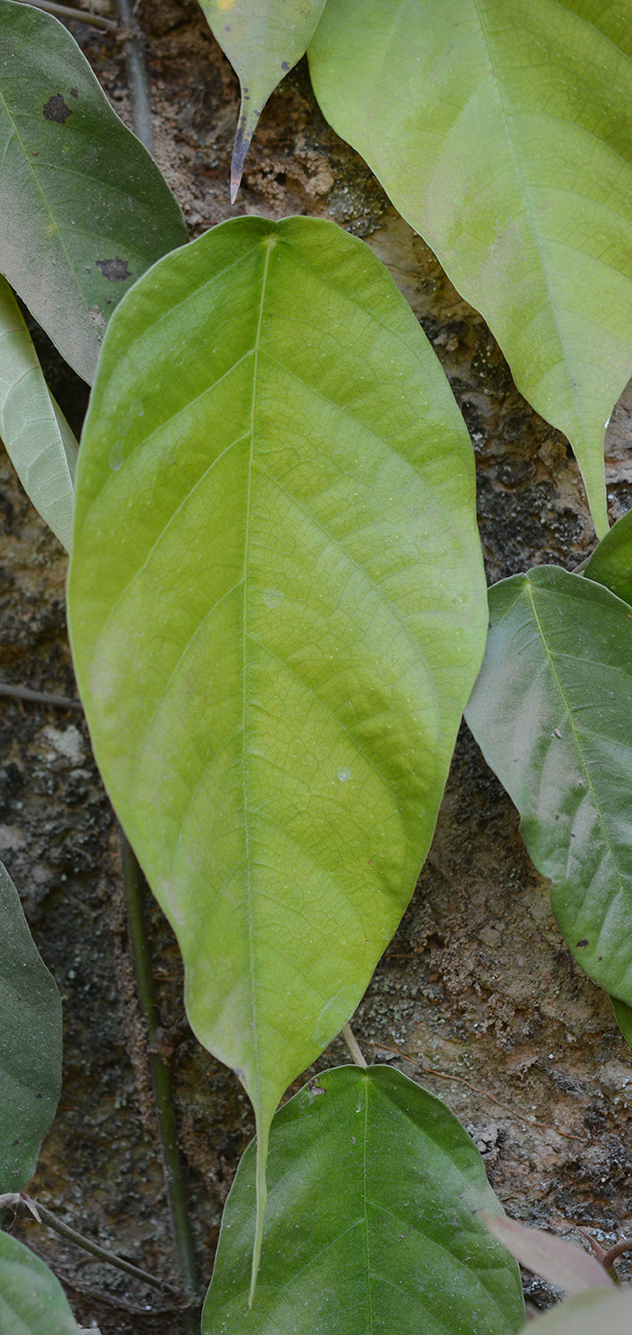
Leaves are alternate, simple, and variable in shape, ranging from ovate to lanceolate. They are typically 5–15 cm long, with a leathery texture. The upper surface is dark green and glossy, while the lower surface is paler and often pubescent. The margins are entire, and the venation is prominent.
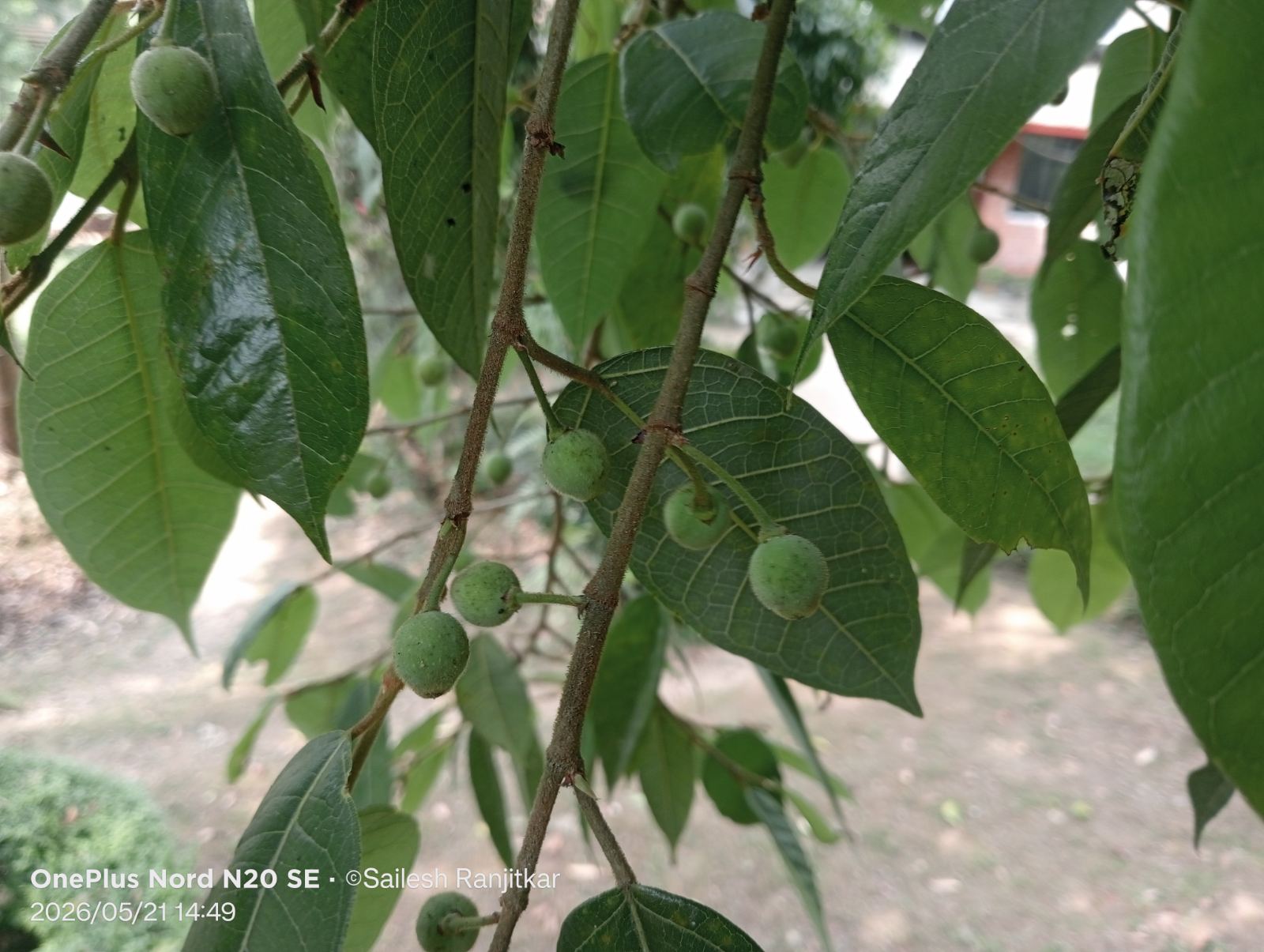
Like all Ficus, the "flowers" are not petals but are contained within a specialized, hollow structure called a syconium (fig). These are small, globose to obovoid, and grow in the leaf axils. The tiny internal flowers are pollinated by specific fig wasps through a small apical opening.
The fruit is a globose or pear-shaped syconium, approximately 1–2 cm in diameter. It turns from green to dark purple or black when mature and is typically speckled with small white dots.
Flowering: Generally throughout the year, peaking in spring.
Fruiting: Throughout the year, maturing sequentially.