
Scientific Name
Other Names
Life Form
Family
Ornamental- It is valued for its ornamental beauty. The large flower clusters make it a popular choice for gardens and landscapes. It can also be used as a hedge or screen plant. Medicine- Parts of the plant contain hydrogen cyanide which may have traditional medicinal uses in local cultures. In small quantities, hydrogen cyanide has been shown to stimulate respiration and improve digestion, it is also claimed to be of benefit in the treatment of cancer. In excess, however, it can cause respiratory failure and even death.
Bhutan, China, India, Myanmar, Nepal
Thrives in dense forests or thickets in valleys or on mountain slopes, at an elevation of 700-4000 m.

It is typically growing as a large shrub it can sometimes develop into a small tree reaching heights of up to 700 cm. It has a bushy appearance with multiple stems.
Stem is thick and sturdy, supporting the plant's structure. Young branches are densely covered with yellowish-brown hairs.
Leaves are large and papery, with an elliptic or ovate shape. They measure between 9-35 cm in length and 5-22 cm in width. The leaf surface is often rough due to the presence of hairs.
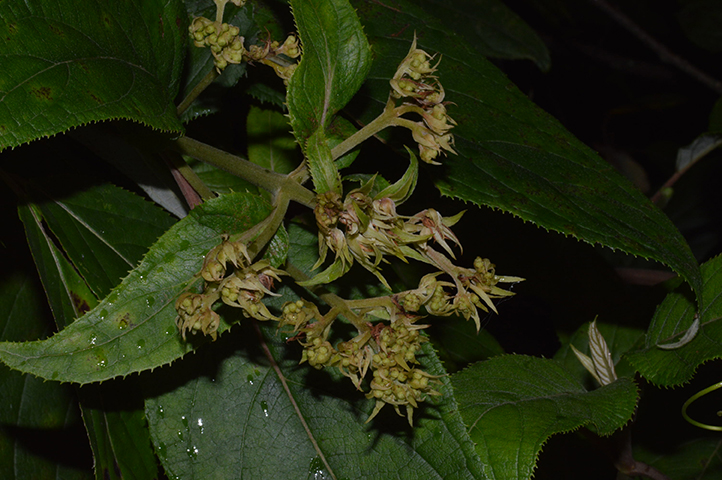
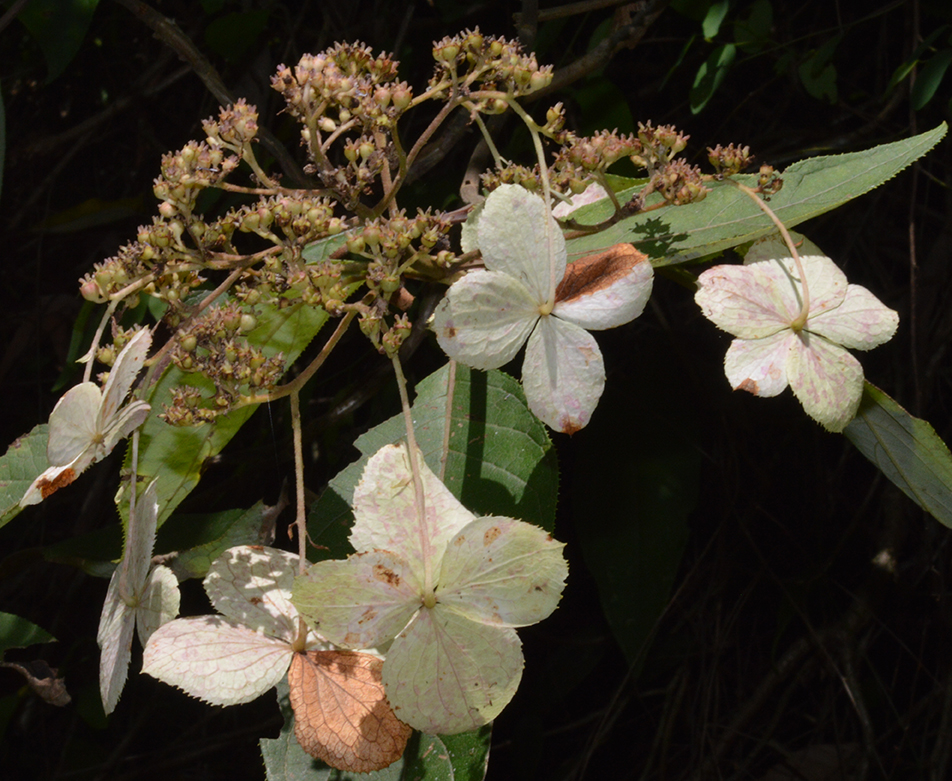
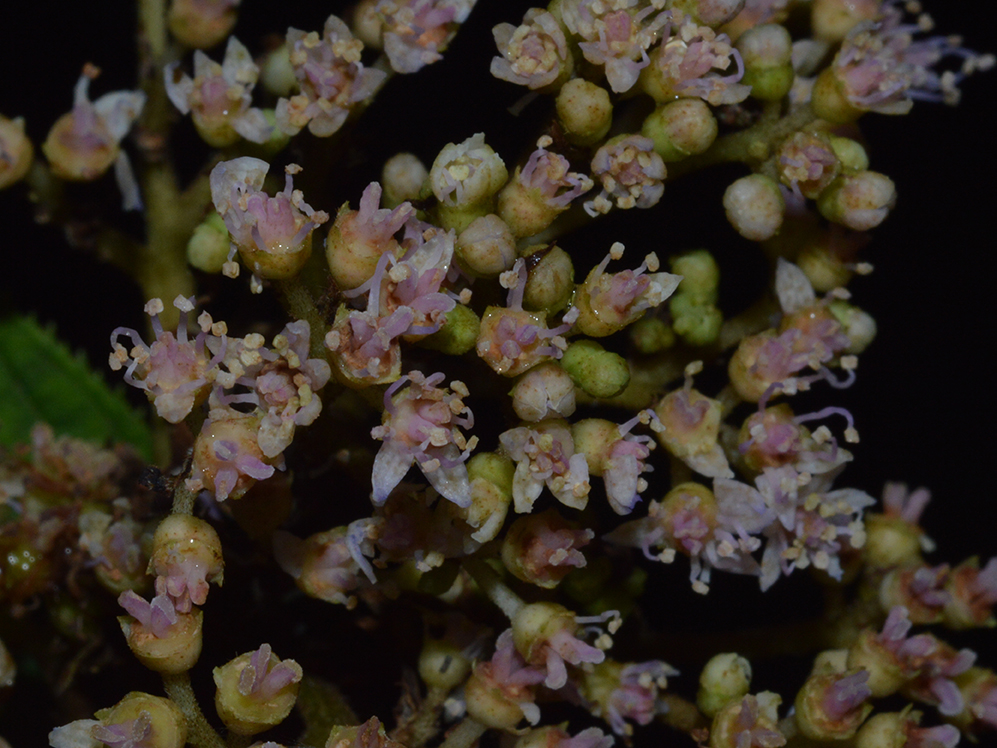
Flowers are showy, in clusters called corymbs, which can reach up to 30 cm in width. These clusters contain both fertile and sterile flowers. The sterile flowers are larger, with conspicuous purplish to white petals.
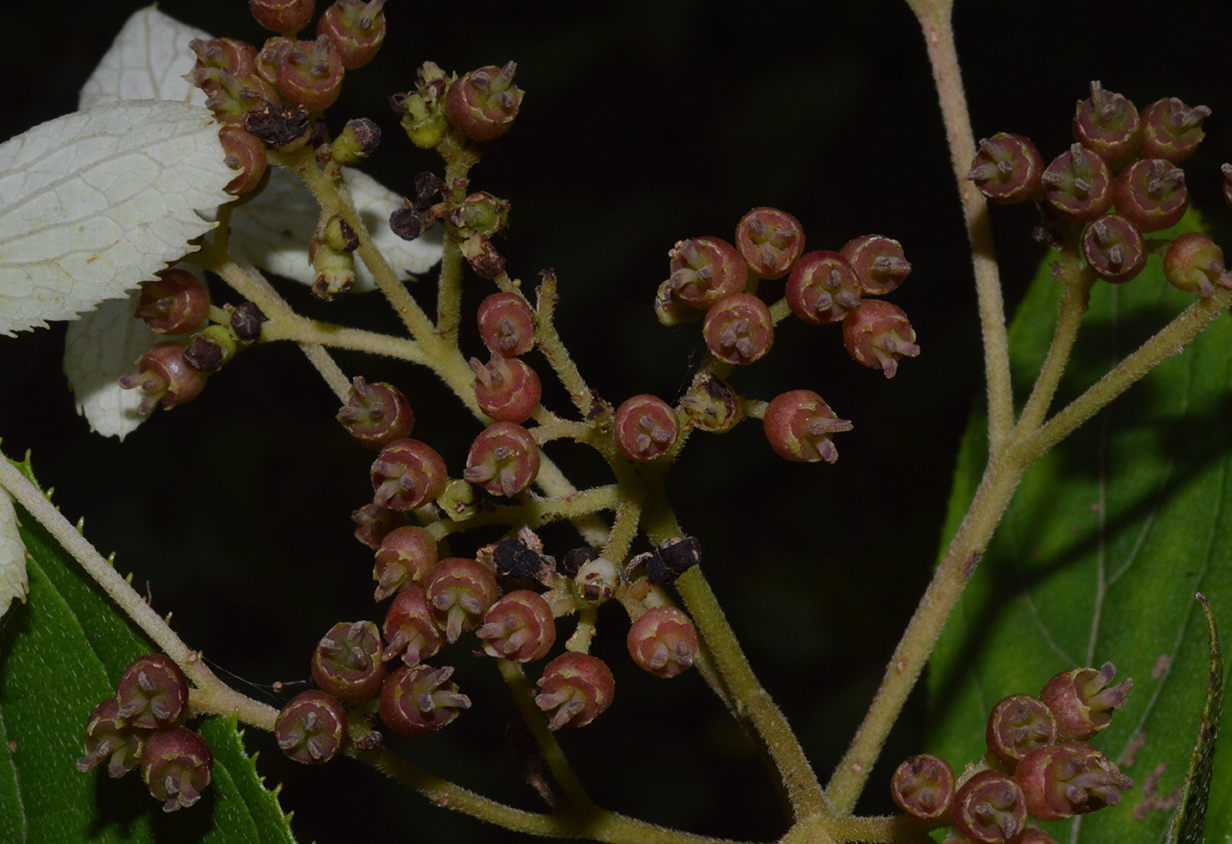
Fruit is small, dry containing seeds.
Flowering: July – September,
Fruiting: September – November.