
Scientific Name
Other Names
Life Form
Synonyms
Family
Medicine-It is an important herb in traditional Chinese medicine, where it is considered one of the 50 fundamental herbs. The active ingredients are febrifugine and isofebrifugine. In traditional preparations it is used in conjunction with other plants such as Glycyrrhiza glabra, Ziziphus jujube and ginger. The roots and leaves are credited with antipyretic, expectorant, cathartic, emetic and diuretic properties. They are used in the treatment of stomach cancer. The juice of the leaves is used in Nepal to treat coughs, colds and bronchitis. Wood - Fuelwood: The wood is used as a fuel.
China, Myanmar, Nepal
Temperate biome, at altitude 900-2400m.

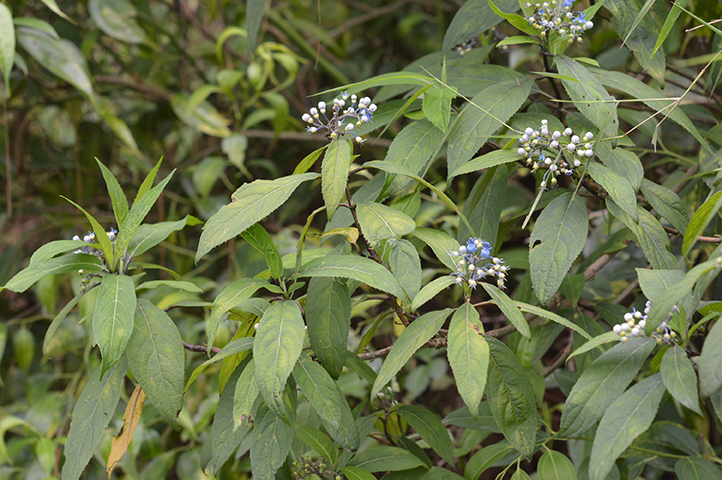
Perennial shrub 1-2 m tall.
Leaf-stalks are 1.5-5 cm; leaf blade sometimes purplish below, elliptic, obovate, elliptic-oblong, or lanceshaped, 6-25 x 2-10 cm, papery, below hairless or crisped velvet-hairy along veins, rarely sparsely hairy, above hairless, secondary veins 8-10 on both sides of midvein, base wedge-shaped, margin sawtoothed to coarsely so, rarely wavy, tip pointed to tapering.
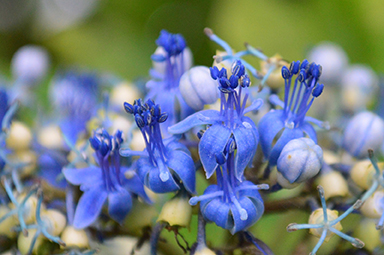
Flower buds are obovoid, 6-10 mm; flower-stalk 3-5 mm. Sepals 4-6, broadly triangular, tip pointed. Petals are turned back at maturity, blue or white, oblong-elliptic, slightly fleshy. Stamens 10-20; filaments fused when young, free at maturity, thread-like; anthers ellipsoid.
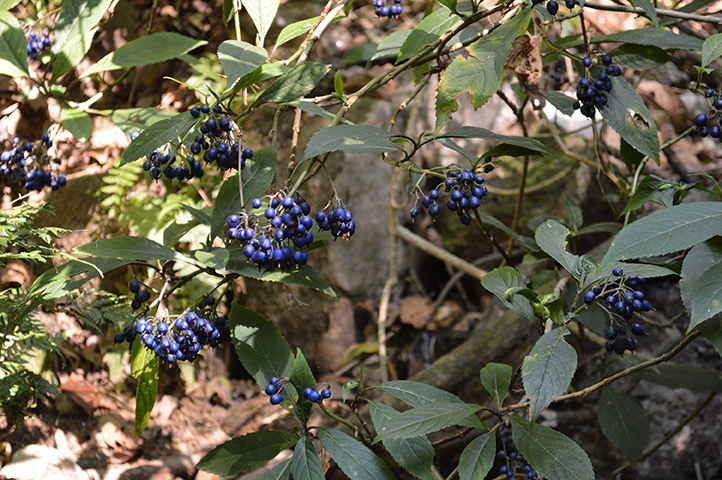
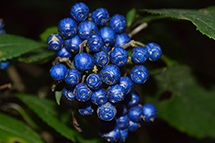
Berry is dark blue when mature, 3-7 mm in diameter. Seeds are about l mm.
Flowering: May-July.