
Scientific Name
Other Names
Life Form
Family
Eco-restoration- Hypericum elodeoides contributes to soil stabilization in wetland habitats, helping to prevent erosion and maintain the integrity of the ecosystem. Medicine- Occasionally used in herbal remedies, skincare products, and teas, primarily based on anecdotal knowledge.
Bhutan, China, India, Myanmar, Nepal
Temperate biome

Perennial herb.
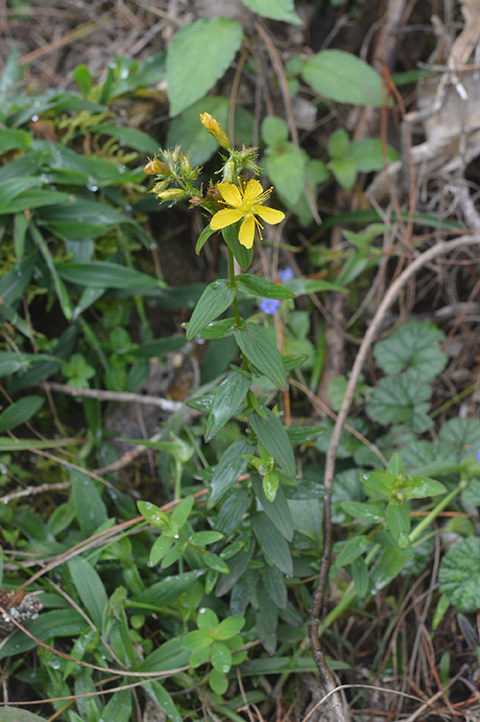
Stems are 15-73 cm long, sometimes from a shortly creeping rooting base, terete, smooth, usually unbranched below inflorescence.
Leaves are stalkless, 1-3.6 cm long, 2-17 mm broad, ovate-lanceshaped, lanceshaped or oblong-lanceolate, tip pointed to blunt or rounded, base heart-shaped-stem-clasping to rounded, lower pairs entire, uppermost pairs with glandular-ciliate ears and base, with intra-marginal black glands.
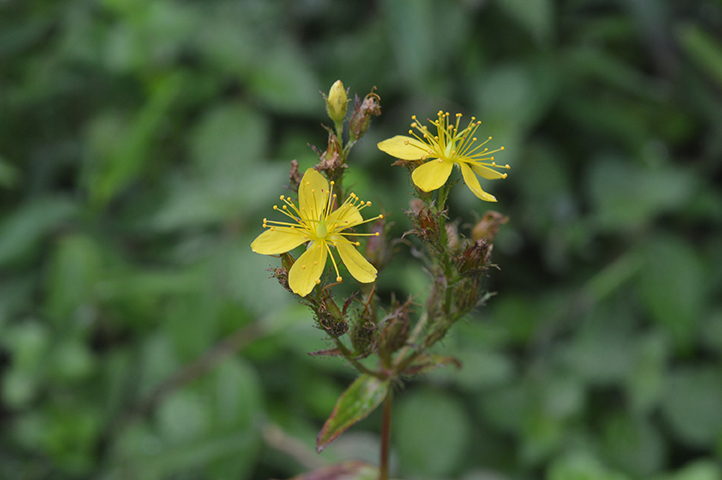
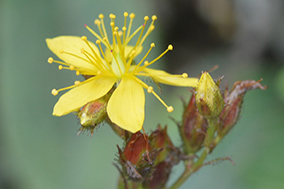
5-30 flowers per inflorescence, but can have as few as one. Arranged in a corymb or cylinder-shaped cluster. Usually grow from one node, but can have up to four nodes. Bright yellow with five petals, each with marginal black dots and sometimes black laminar dots or lines.
Ovoid capsules, 5-8 mm (0.2-0.3 inches) long, with longitudinal stripes.
Flowering: July- September.