
Scientific Name
Other Names
Life Form
Family
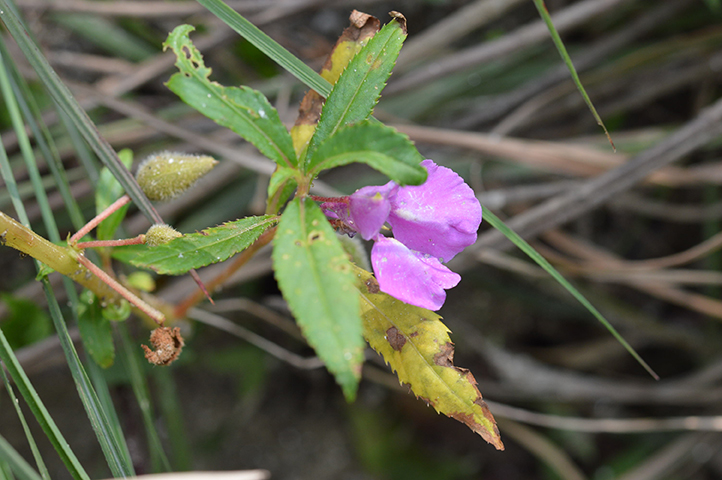
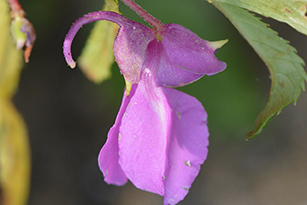
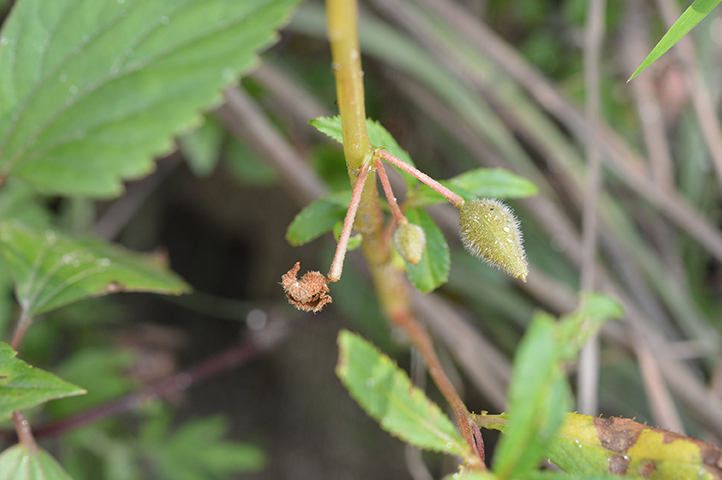
Medicine - The stem and seeds are used medicinally for promoting blood circulation and for relieving pain and sore throats. The plant is cathartic, diuretic and emetic. It is used in the treatment of pains in the joints. The leaf juice is used as a treatment against warts. Dye - The flowers and leaves are often used for coloring fingernails instead of henna.
India, Sri Lanka
Thrives in seasonally dry tropical biome, now widely cultivated in gardens and houses throughout the world.

It is annual herb 60-100 cm tall.
Stem is erect, robust, succulent (fleshy). Simple or branched, smooth or loosely hairy when young, with many fibrous roots. Lower nodes may be swollen.
Leaves are alternate, with some of the lowest ones occasionally opposite. Leaf stalks are 1-3 cm long, with a shallow groove on the upper surface. Both sides have a few pairs of stalked glands. The leaf blade is lanceolate, narrowly elliptic, or oblanceolate. They have a pair of sessile (stalkless) black glands near the base. Both surfaces are smooth or sparsely hairy with 4-7 pairs of lateral veins. The base is wedge-shaped, and the margins are deeply serrated (saw-toothed). The tip is pointed.
Flowers are white, pink, or purple, with single or double petals. They occur singly or in clusters of 2-3 flowers in leaf axils, without stalks (peduncles).
Fruit is broadly spindle-shaped capsule, 1-2 cm long, densely hairy and narrowed at both ends. Contain many black-brown, globose seeds with a bumpy surface.
Flowering: July-October.