
Scientific Name
Other Names
Life Form
Synonyms
Family
Genus Isodon is widely used in folk medicine (e.g., anti-inflammatory and antibacterial properties).
Nepal
Grows in the subtropical biome, found in mountainous regions such as Kathmandu Valley’s Phulchoki and Chandragiri hills, at elevations up to 2500 m.

Erect, perennial herb or subshrub, reaching up to 1 m tall and often strongly aromatic.
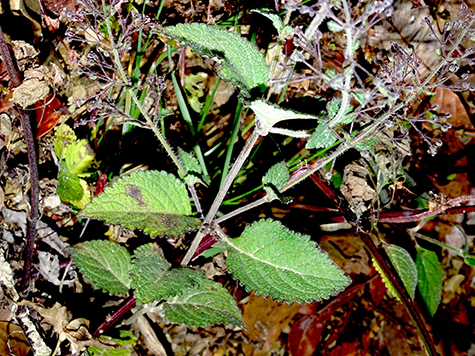
The stem is erect and perennial, taking the form of an herb that is woody at the base. It possesses a distinctly quadrangular (four-sided) structure, characteristic of the Lamiaceae family.
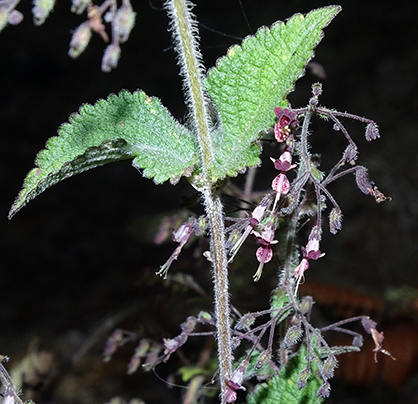
Leaves are oppositely arranged on the stem and are often strongly aromatic when crushed. They are generally simple and ovate in shape, with a tapering tip, prominent venation, and serrated (toothed) margins.
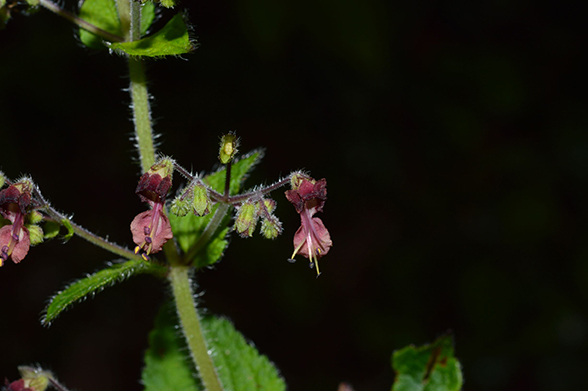
Flowers are small, tubular, and strongly two-lipped, typical of the mint family. They are typically pale violet or purplish in color, borne in clusters (cymes) that form terminal or axillary inflorescences or panicles.
The fruit is a schizocarp that splits at maturity into four small, dry, nut-like segments called nutlets. These nutlets are typically oblong, smooth, and are pale or dark brown.
Flowering: September – November
Fruiting: October – December