
Scientific Name
Other Names
Life Form
Family
Ornamental - Cultivated as an ornamental shrub for its fragrant flowers. Medicine - Used in traditional medicine in some regions. Soil remediation - It contributes to soil stability and habitat structure in mountainous, high-altitude regions.
Bhutan, China, India, Myanmar, Nepal
It is found in moist, shady forests at elevations of 1500-3000 m.

By providing nectar, it supports pollinator populations (such as Apis florea and species of Vespa and Bombus) during times when few other plants are blooming.
It is an evergreen shrub or small tree, typically 2-6 meters tall.
Stems are woody and branched, forming a dense, rounded canopy. The bark is typically smooth and grayish-brown.
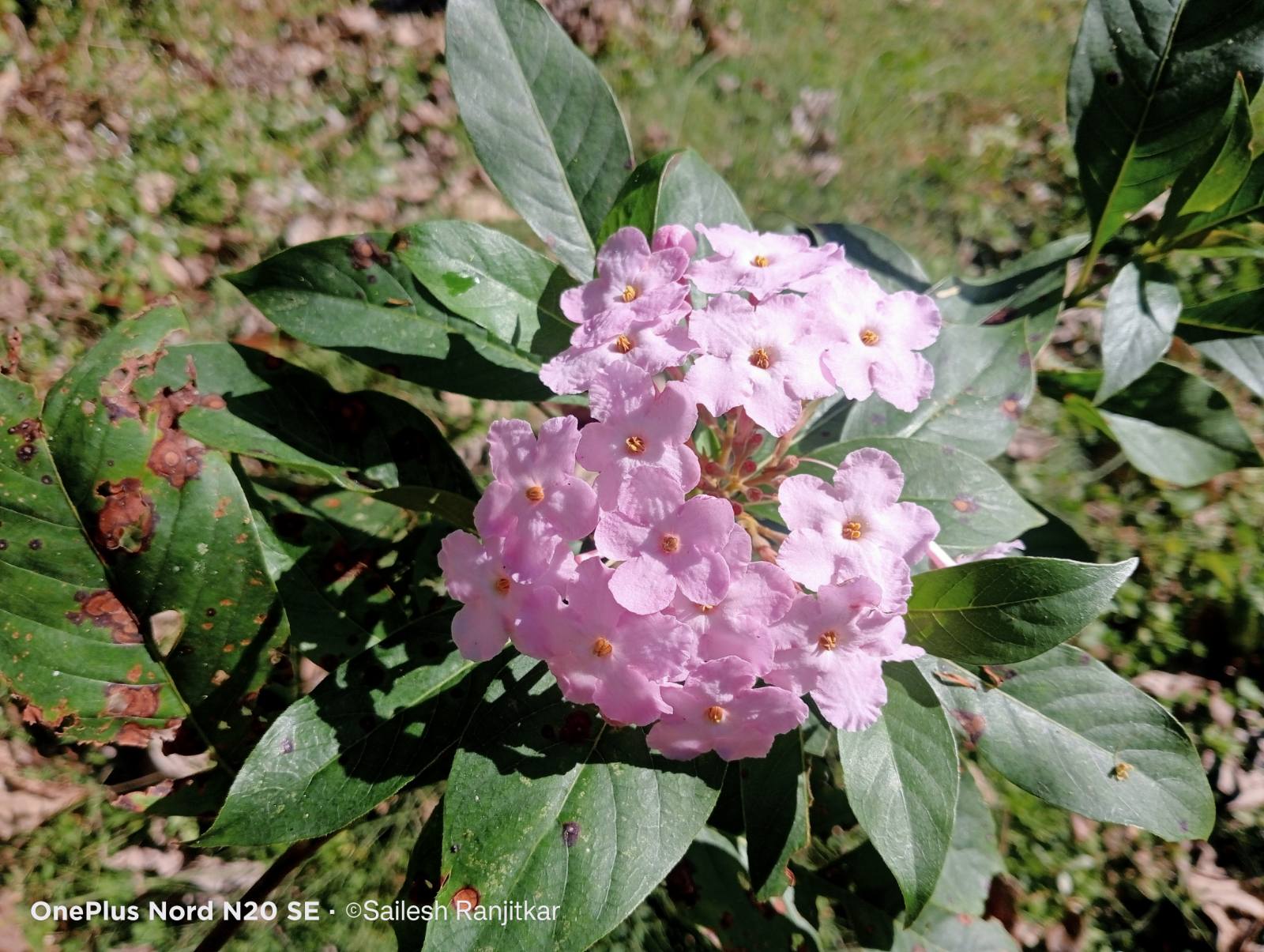
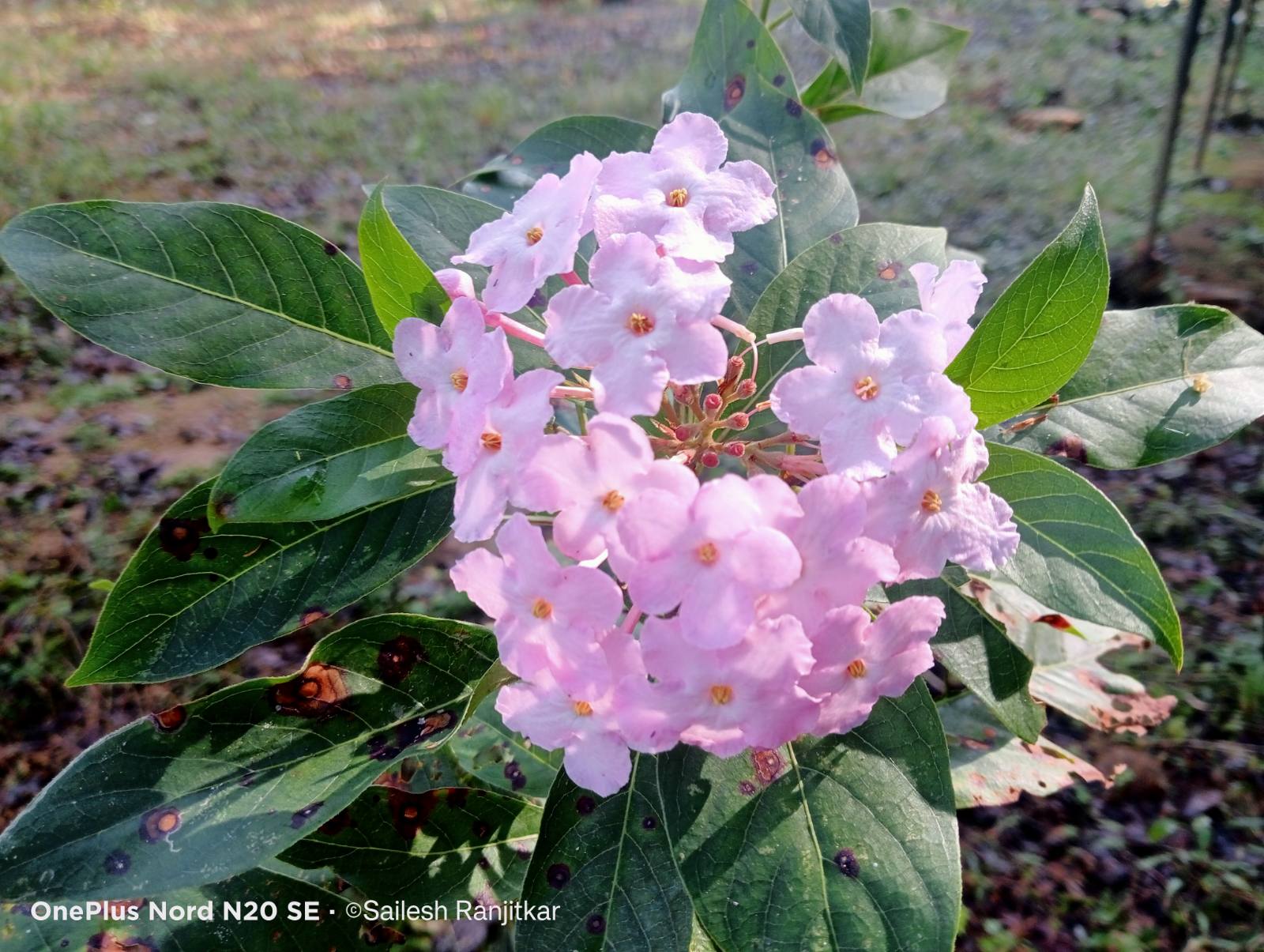
Leaves are opposite, simple, and ovate to elliptic in shape. They are typically 8-20 cm long and 5-12 cm wide, with a leathery texture and a slightly toothed or entire margin. The upper surface is dark green and glossy, while the underside is paler.
Flowers are highly fragrant, producing a strong, sweet scent. They are borne in terminal clusters, with each flower having a tubular corolla with four to five lobes. The flowers are typically pinkish-white in color.
The fruit is a berry, initially green and turning dark blue or black upon ripening. The berries are small and contain several seeds.
Flowering -Typically flowers during the late autumn to mid-winter months Fruiting - After flowering, usually in the winter or early spring