
Scientific Name
Other Names
Life Form
Family
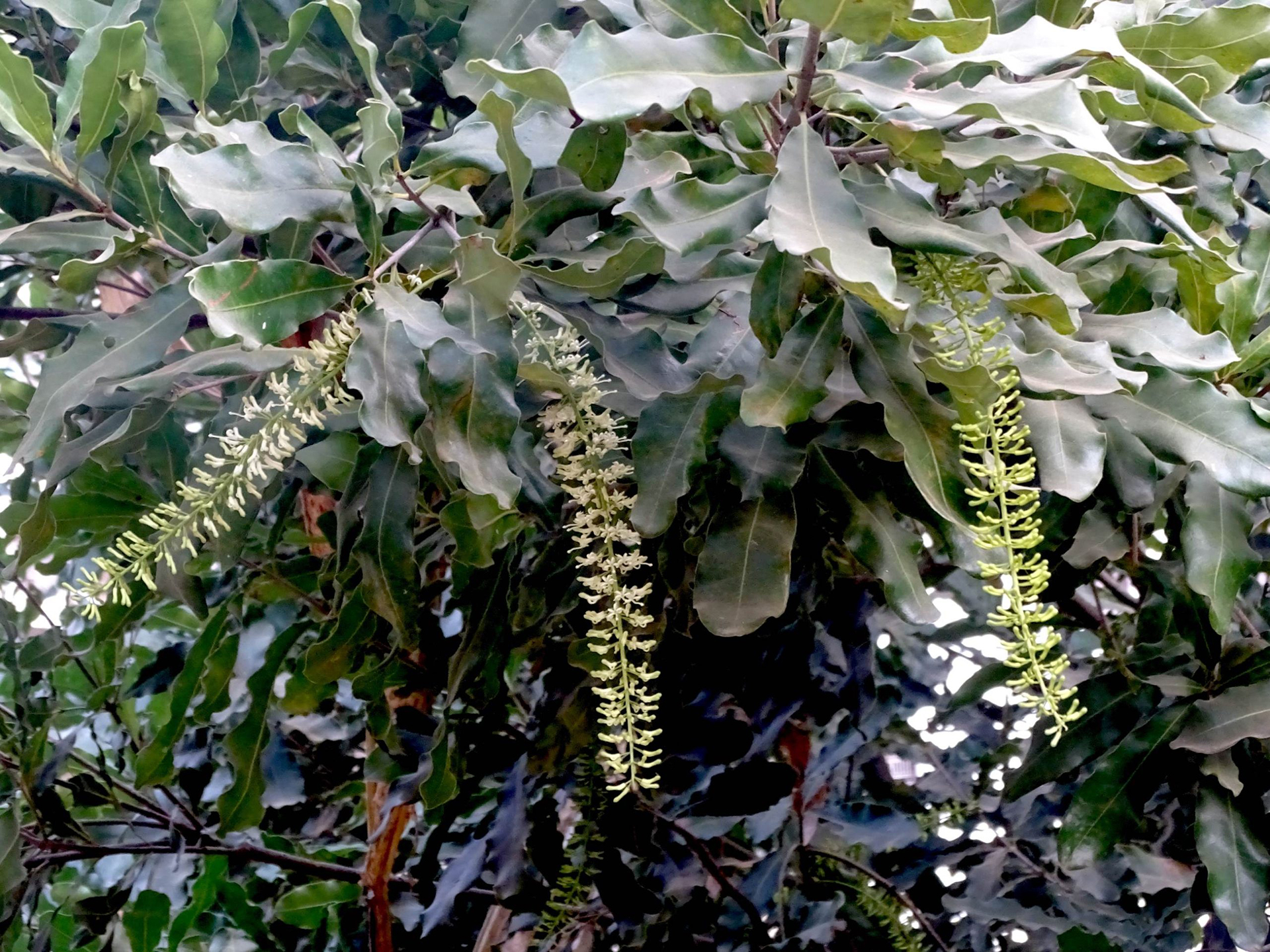
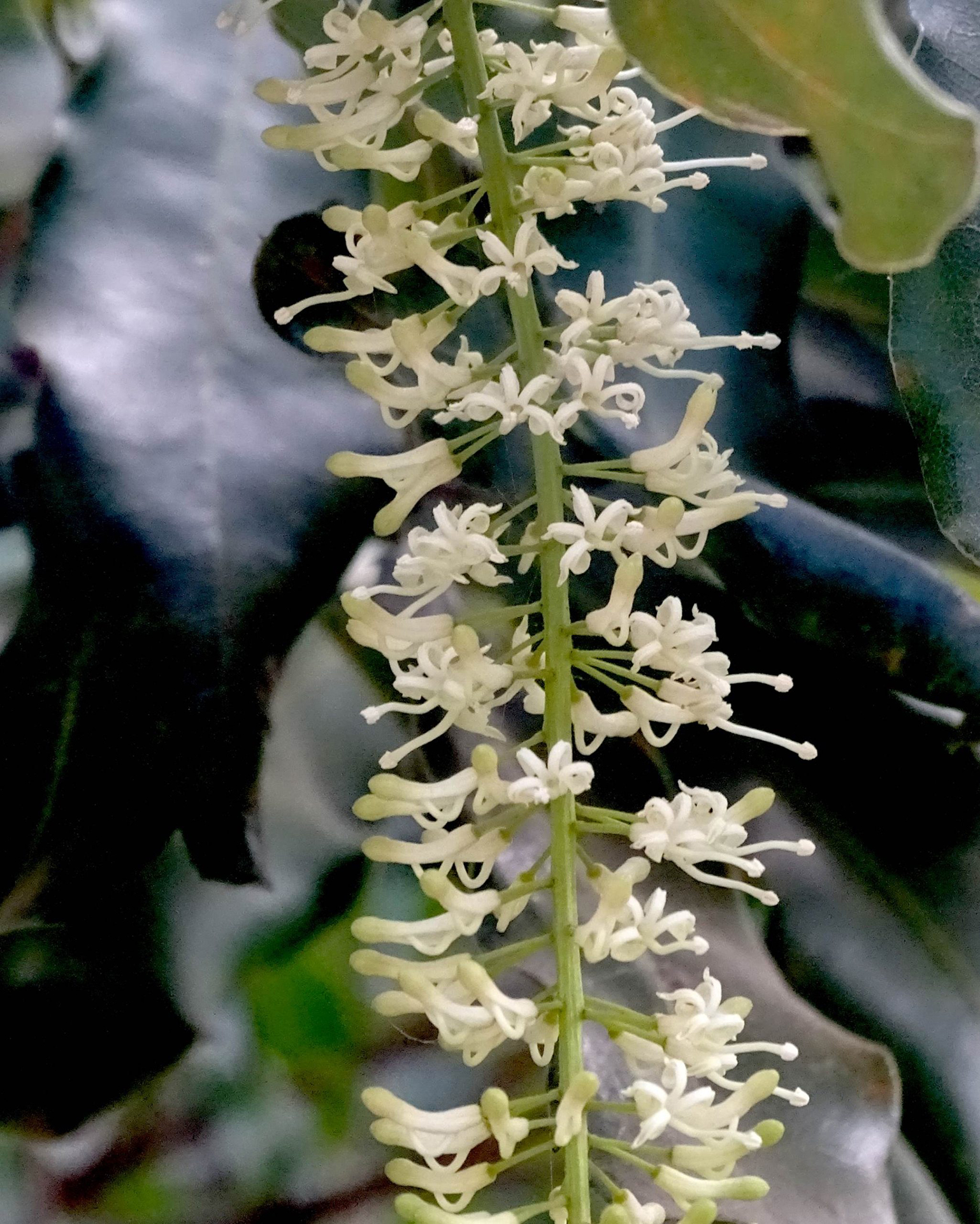
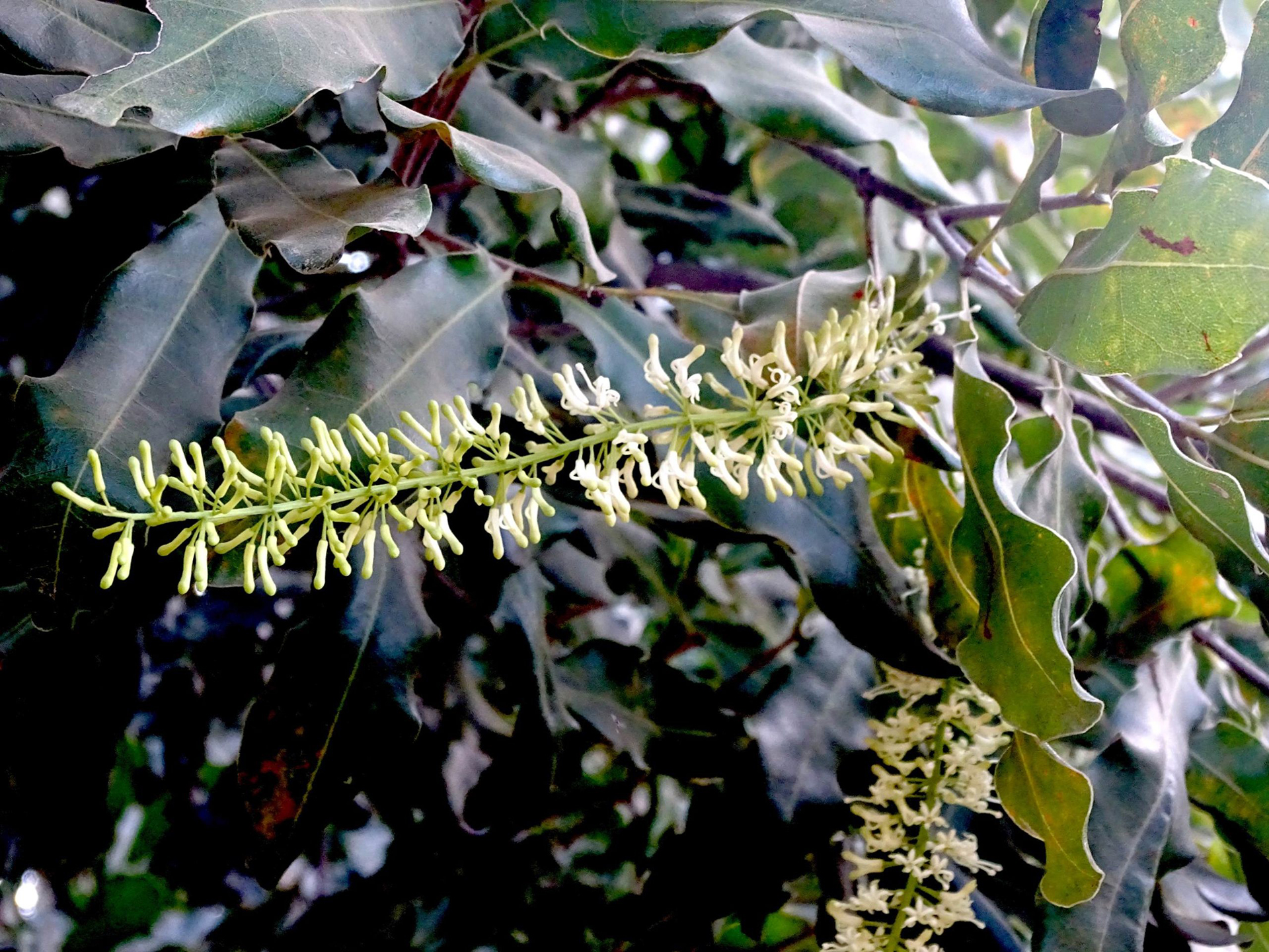
Food - It is primarily cultivated for its commercially valuable macadamia nuts, known for their rich flavor and high nutritional content. Industrial - Oil extracted from the nuts is used in cooking, cosmetics, and other applications. Ornamental - Sometimes used as an ornamental tree due to its attractive foliage.
Australia
It prefers warm, humid climates with well-drained soil.

Renowned for its rich, buttery nuts
It is a medium-sized evergreen tree, growing up to 15 m tall.
It develops with a single, upright stem and as it matures lateral branches develops, forming a spreading canopy. Bark is thick and corky, giving the stem a rough, textured appearance. The color of the bark can range from light brown to gray-brown.
Leaves are arranged in whorls of 3-4 around the stem. Simple, oblong, with a glossy green surface. The length can range from 20 cm to 10 cm. Margin entire (smooth edges) with a slightly wavy appearance in some cases. Texture leathery and tough, well-adapted to the warm, humid climate.
It has a showy white or pink flowers. These fragrant blooms are borne in drooping axillary racemes (clusters) reaching 6 to 12 inches (15-30 cm) long. Each raceme can be a stunning display, containing hundreds of small flowers.
A dehiscent follicle, a type of fruit that splits open along a seam to release seeds. It is commonly referred to as a nut due to its hard shell and edible kernel. Spherical to slightly oblong, typically 1.5 to 3 cm in diameter. The outer shell is very hard and woody, protecting the valuable nut inside.
Flowering: February – April
Fruiting: September