
Scientific Name
Other Names
Life Form
Synonyms
Family
Food - Fruit is consumed fresh, and used in juices, jams, jellies, and other products. Medicine - Leaves, bark, and roots have traditional medicinal uses.
Tropical America
Prefers warm, humid climates and well-drained soils. It can grow in a variety of habitats, including gardens, orchards, and naturalized areas.

Small tree, typically reaching a height of 10 meters.
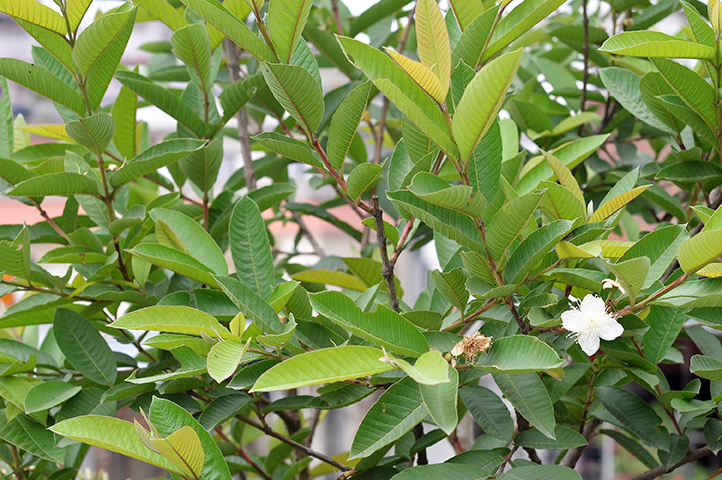
Stems are woody, branched, and often have a grayish-brown bark. Younger stems may have a reddish or purplish hue.
Leaves are simple, opposite, and ovate or elliptic in shape. They are typically 3-15 cm long and 2-7 cm wide. The upper surface is smooth and glossy green, while the lower surface is paler with prominent veins. Leaf margins are serrated or toothed.
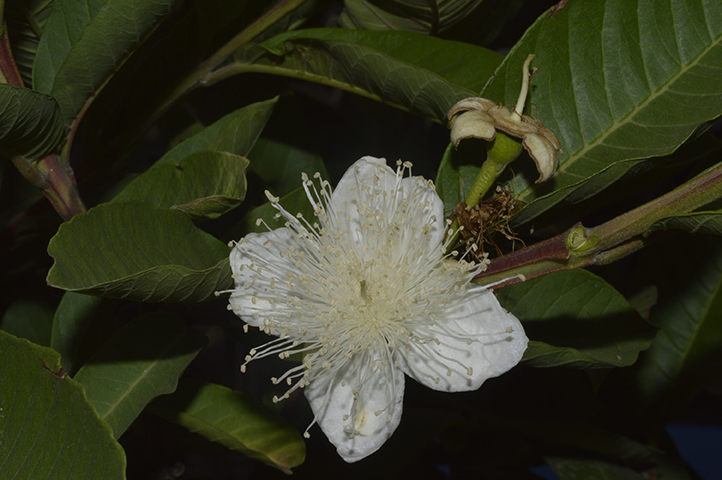
Flowers are small, white or pale pink, and arranged in clusters at the ends of branches or in leaf axils. They have four or five petals and numerous stamens.
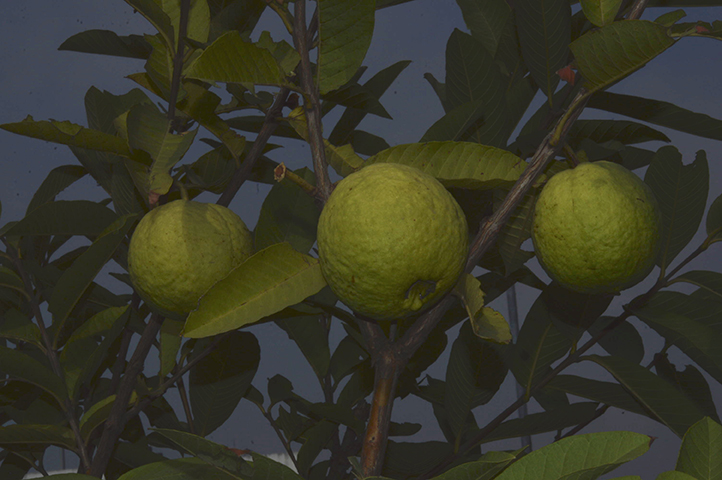
Fruit is a fleshy, round, or pear-shaped berry, typically 3-5 cm in diameter. It is green when immature, turning yellow, orange, or red when ripe. The skin is thin and leathery, while the flesh is soft, juicy, and sweet.
Flowering: throughout the year, with peak in March – May
Fruiting: September