
Scientific Name
Other Names
Life Form
Synonyms
Family
Wood - Fuelwood and Construction: It is used for timber, and fuelwood. Dye - It is a potential source of tannins.
Bhutan, China, India, Myanmar, Nepal
It grows in temperate broadleaf forests at altitudes of 1300-2500 m asl.

Known for its distinctive, large lobed leaves. Used in reforestation projects for its adaptability to various soil conditions.
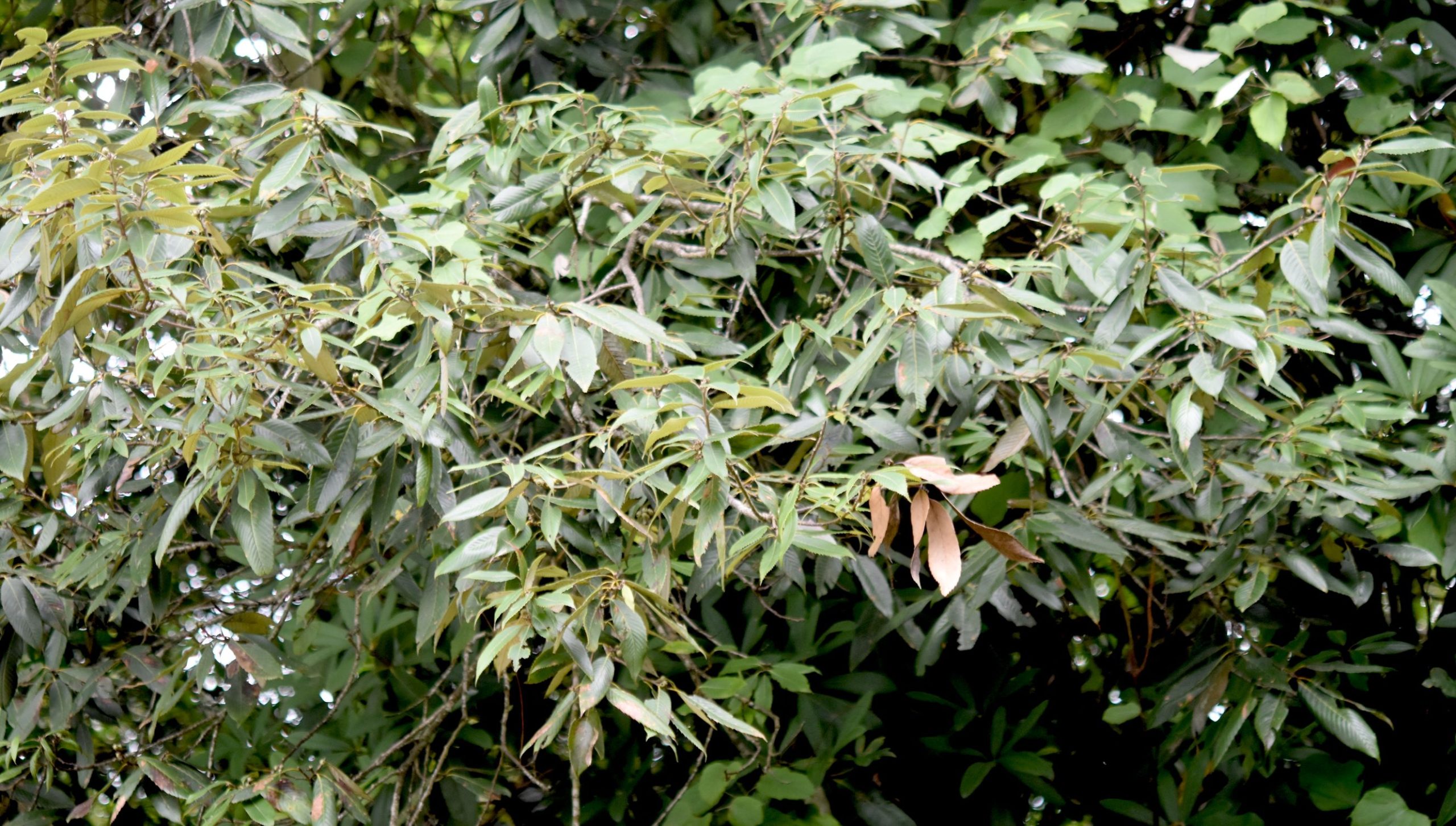
It is a medium-sized to large evergreen tree that can reach up to 40 m tall.
Stem is stout and grayish-brown with age, with shallow fissures. Branches are irregular, forming a broad crown.
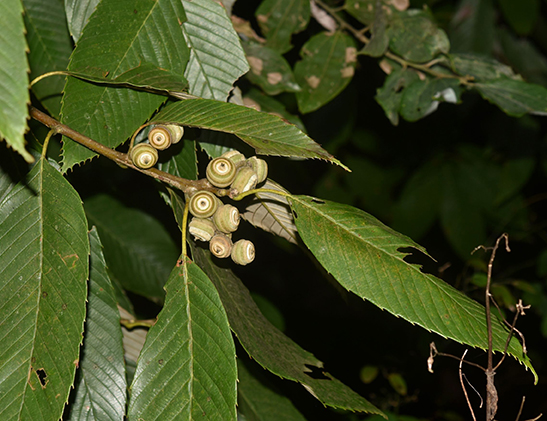
Leaves are simple, ovate-elliptic, leathery, and glossy green above. They are 16-45 cm long and 6-15 cm wide. The margins are sharply serrated. The underside of the leaves is paler green with prominent veins. Leaves are arranged alternately on the stem.
Flowers are inconspicuous, unisexual, and wind-pollinated. Male flowers are borne in catkins, while female flowers are solitary or in small clusters. Both types of flowers appear in spring on the same tree.
Fruit is a broad acorn, 2-3 cm long and 3-4 cm wide. It is set in a deep cupule with concentric rings of woody scales. The acorn nut is brown and ovoid-shaped.
Flowering: March
Fruiting: October – December