
Scientific Name
Other Names
Life Form
Family
Medicine - Ripe fruits are eaten to treat stomach problems and diarrhea.
Bangladesh, Bhutan, India, Myanmar, Nepal
Thrives in seasonally dry tropical biomes, typically at foothill or low mountain with well-drained soils, full sun exposure, and moderate temperatures, at an elevation of 700-1100 m.

It is a much branched shrub deciduous 70-110 cm tall.
Stem is slender to moderately thick, branched. Young branches densely covered with hairs, suggesting a hairy or pubescent surface.
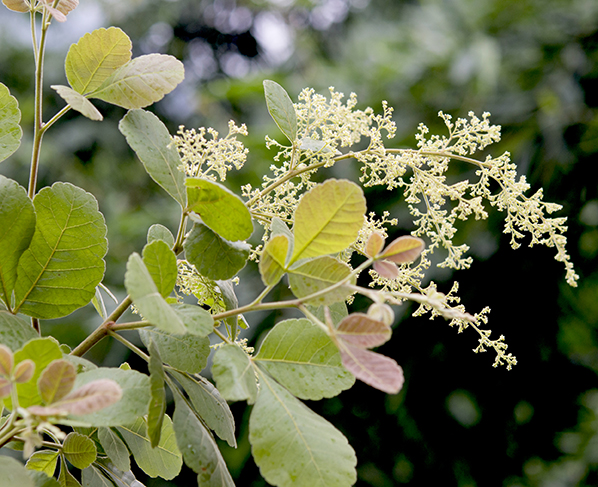
Leaves are found with a unique arrangement. Unlike some plants with numerous leaflets, this shrub features leaves with just 3 individual leaflets. End leaflet is larger than the other two. Leaflets are obovate, with rounded tips, tapering bases, and irregularly toothed margins.
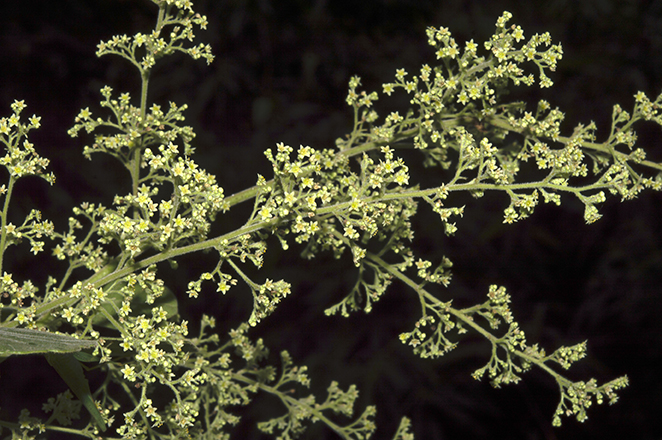
Flowers are tiny, yellowish. They are fragrant and possibly arranged in clusters (closely packed) or panicles (branched inflorescence).
Fruit is small, round, red when ripe.