
Scientific Name
Other Names
Life Form
Family
Medicine - It is a popular herbal medicine in China where it is considered to be depurative, febrifuge and ophthalmic. It is used both internally and externally, either on its own or more commonly in conjunction with other herbs, to treat a wide range of maladies including carbuncles, furuncles, colds, epidemic influenza, fevers, malaria, pruritus, diarrhoea, eczema, upper respiratory tract infections, pneumonia, acute tonsillitis, mumps, acute enteritis, bacterial dysentery, icteric hepatitis, cholecystitis, acute urinary tract infection, erysipelas, ringworm sores, trichomoniasis vaginalis, burns, and swollen red eyes. Cosmetics - The plant is used as an ingredient of soaps, skin lotions and toothpastes, where it provides antibacterial and antiseptic activities.
Bhutan, China, India, Myanmar, Nepal
Thrives in by climbing forests and thickets, on shrubs, over rocks, on buildings, by streams, mountain slopes, sea level to an elevation of 4000 m.

It is vigorous vining climber.
Stem is zig-zag shaped, grooved that can reach up to 400 cm long.
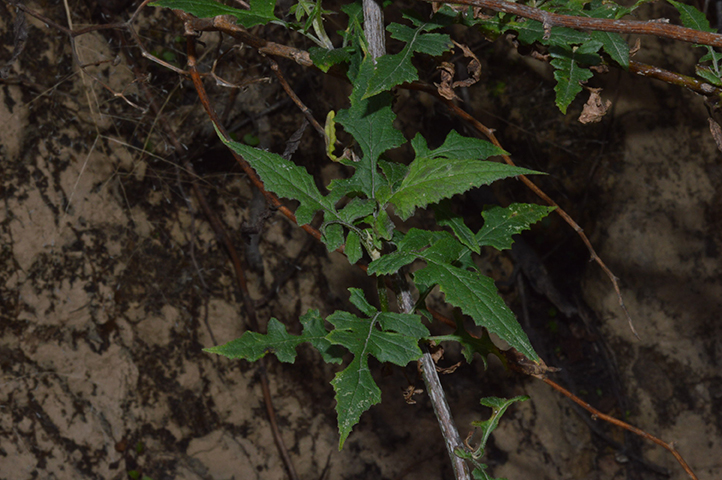
Leaves are arrow-shaped with pointed tips, 7.5-10 cm long. Leaf margins: Entire (smooth) or coarsely toothed. Stalked and arranged alternately on the stem.
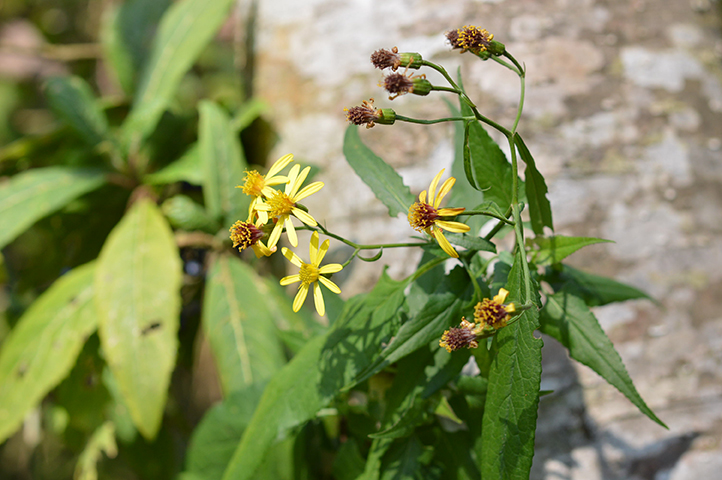
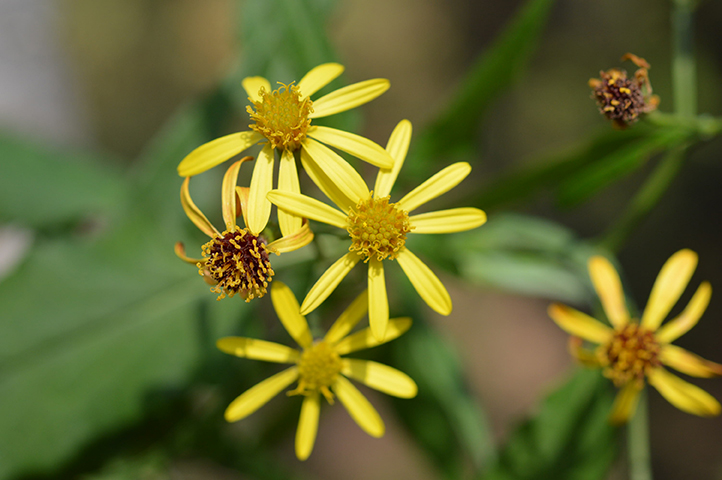
Flowers are numerous, bright yellow flower heads in loose, domed clusters at branch tips and sides. Lower flower heads are smaller with few ray florets (around 0.5 cm). Bracts (involucral bracts): Linear-oblong shaped, pointed, and nearly hairless.
Fruit is dry, single-seeded with a pappus (hair-like structure) for wind dispersal.
Flowering: September-December.