
Scientific Name
Other Names
Life Form
Family
Medicine - The juice of the fresh herb is used as a dressing for wounds, over which, as it dries, it leaves a varnishing coating. A decoction of the leaves and young shoots is used as a lotion for ulcers and parasitic skin diseases.
Bhutan, China, India, Myanmar, Nepal, Pakistan
Thrives in fields, thickets, forest margins, forests, at an elevation of 100-2800 m.

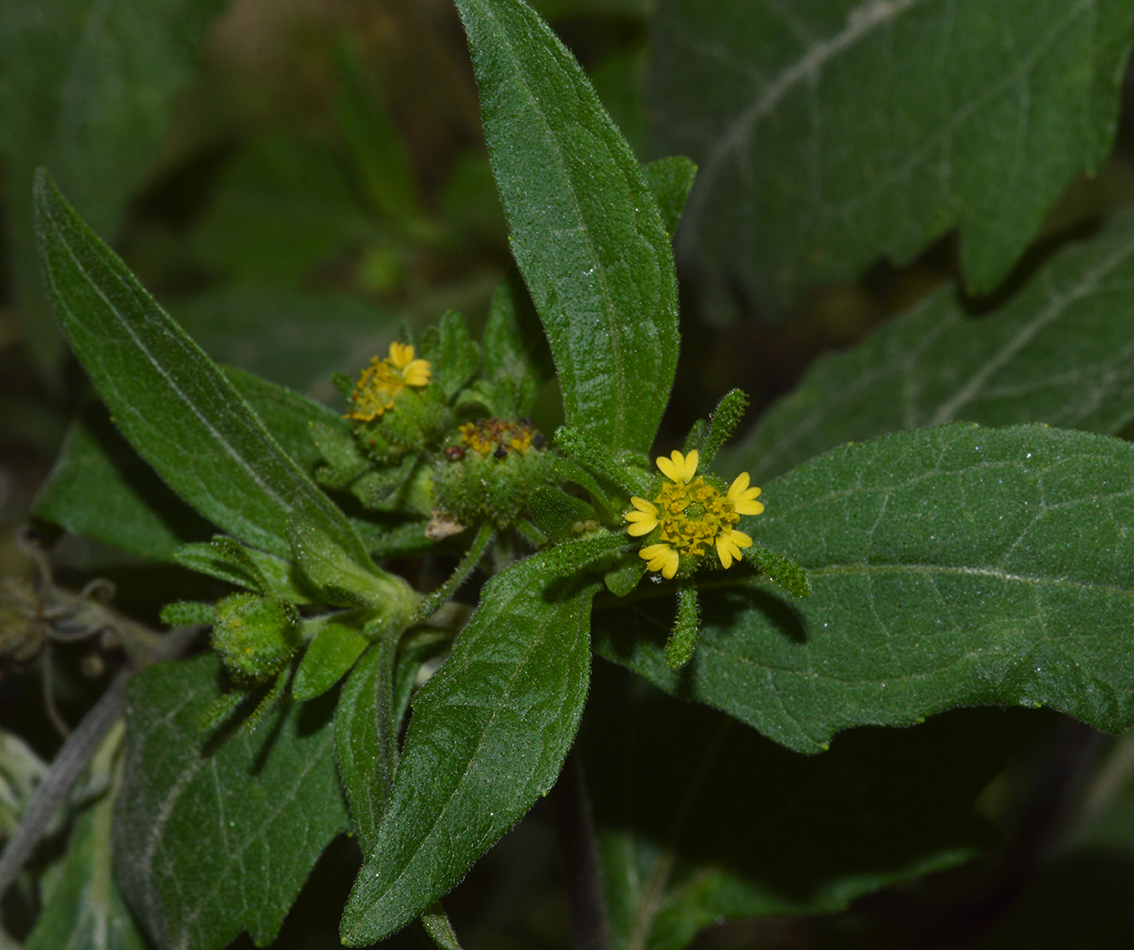
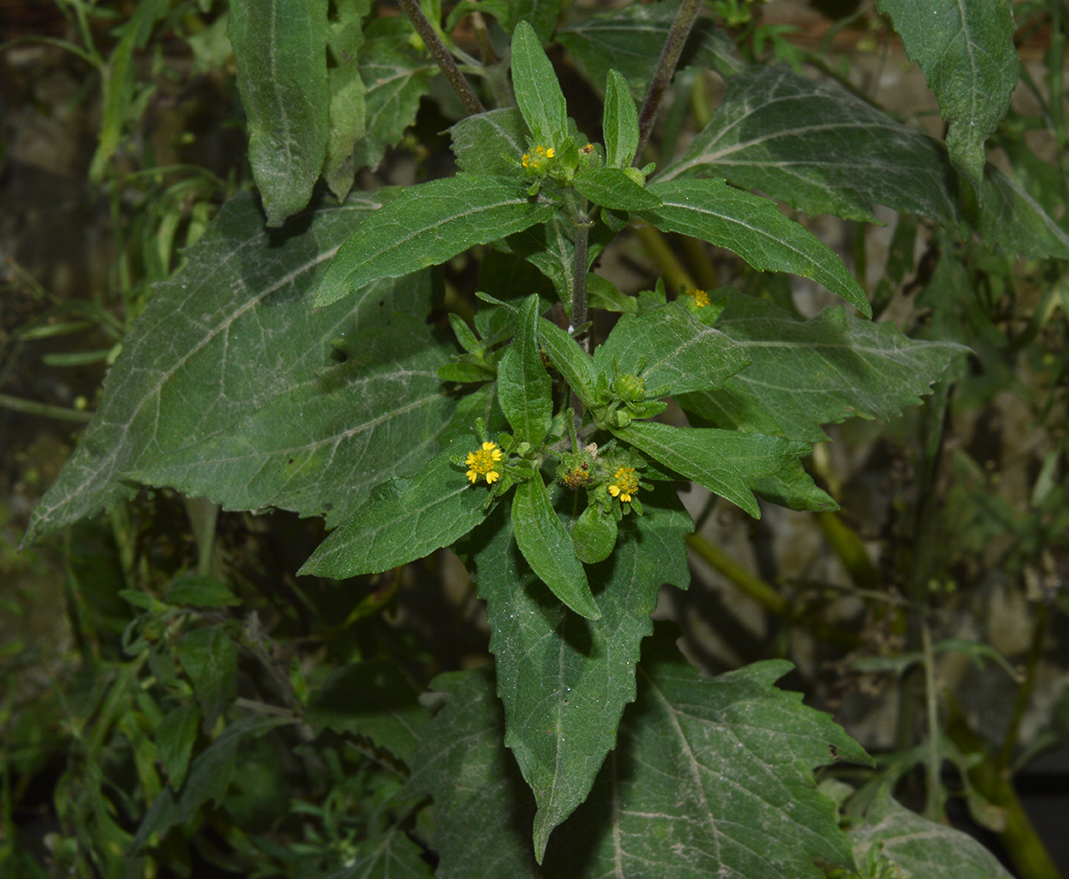
It is small upright annual herb growing in a bushy form.
Stem is single, erect with branches growing towards the top. Stems and branches are velvety and purple in color. Can reach 60-120 cm tall.
Leaves are oppositely arranged on the stem, 5-10 cm long. Triangular-ovate with a pointed tip and toothed margins.
Flowers are small, yellow flower heads with five sticky, glandular bracts just below, 5 in number. Ray florets: Red underneath, very short, curved backwards, and have three teeth at the tip.
Fruit is dry, single-seeded, each enclosed in a boat-shaped bractlet. The bractlet is hairless but slightly rough. The sticky flower head aids in dispersal by attaching to animals as the fruit ripens.
Flowering: April – September,
Fruiting: June – November.