
Scientific Name
Other Names
Life Form
Family
Medicine - The plant is good in chronic fevers. Roots are given in jaundice, cough, bronchitis, asthma and pertussis. Leaves are applied on swellings. The root extract is taken for the relief of stomach pain.
Afghanistan, Bangladesh, Bhutan, China, India, Myanmar, Nepal, Pakistan
Thrives in grasslands on mountain slopes, grasslands in forests, forest margins, thickets, beside fields, moist places or near water, wastelands on mountain slopes, gravelly areas by rivers, at an elevation of 300-2300 m.

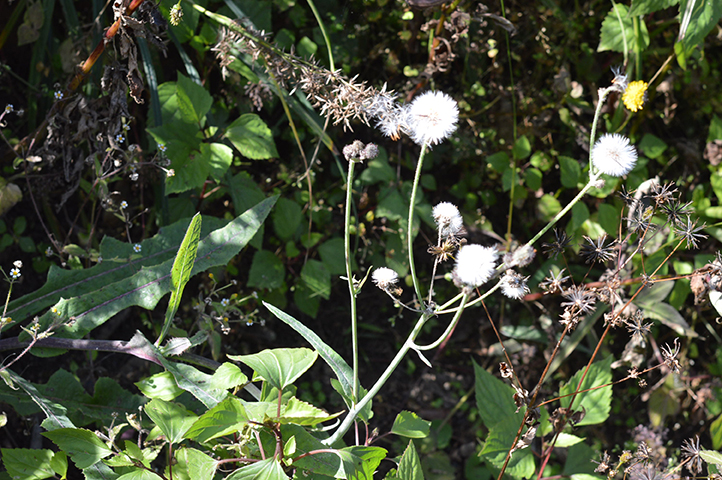
It is tall perennial herb with a clumping growth form reaching 30-90 cm in height.
Stem is erect, single stem with a rosette of leaves at the base.
Leaves are hairless, 15-30 cm ong (Basal leaves). Lower basal leaves: Narrowly inverted-lanceolate shaped, with entire margins (smooth) or pinnately cut or runcinate-pinnatifid (deeply lobed with backward-pointing segments). Stem leaves: Middle and upper leaves become progressively narrower, lance-shaped or linear in the uppermost parts. All stem leaves have spiny-toothed margins.
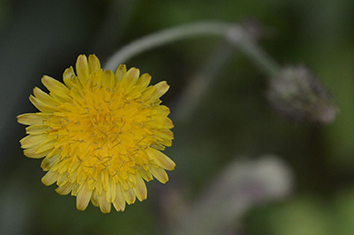
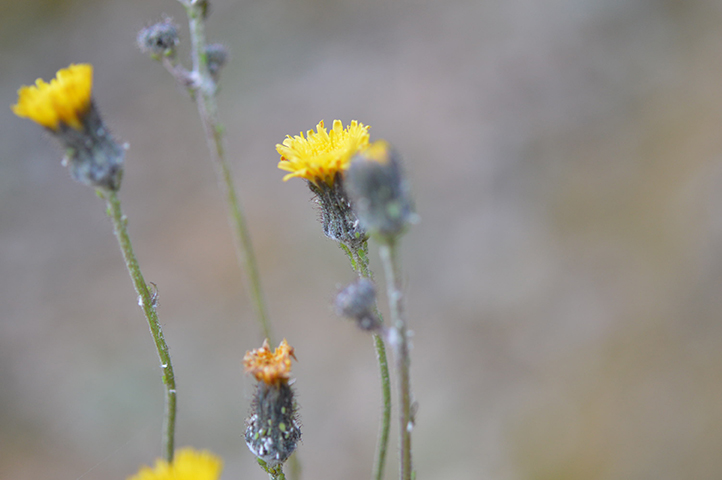
Flowers are bright yellow flower heads clustered in loose, flat-topped groups (umbellately corymbose). Individual flower heads are 2.5-5 cm across.
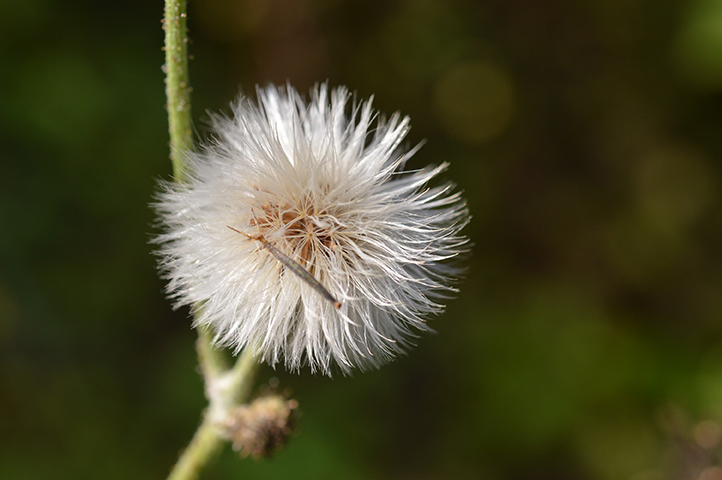
Fruit is dry, single-seeded fruit with a pappus (hair-like structure) for wind dispersal.
Flowering and Fruiting: January-October.