
Scientific Name
Other Names
Life Form
Family
Ornamental - Commonly used in landscaping. Medicinal - Used in traditional medicine to treat various ailments, such as fever, colds, and headaches.
Bhutan, China, India, Myanmar, Nepal
Thrives in forests, scrub, grassy slopes, roadsides in the Himalayas, at an elevation of 2000-4000 m.

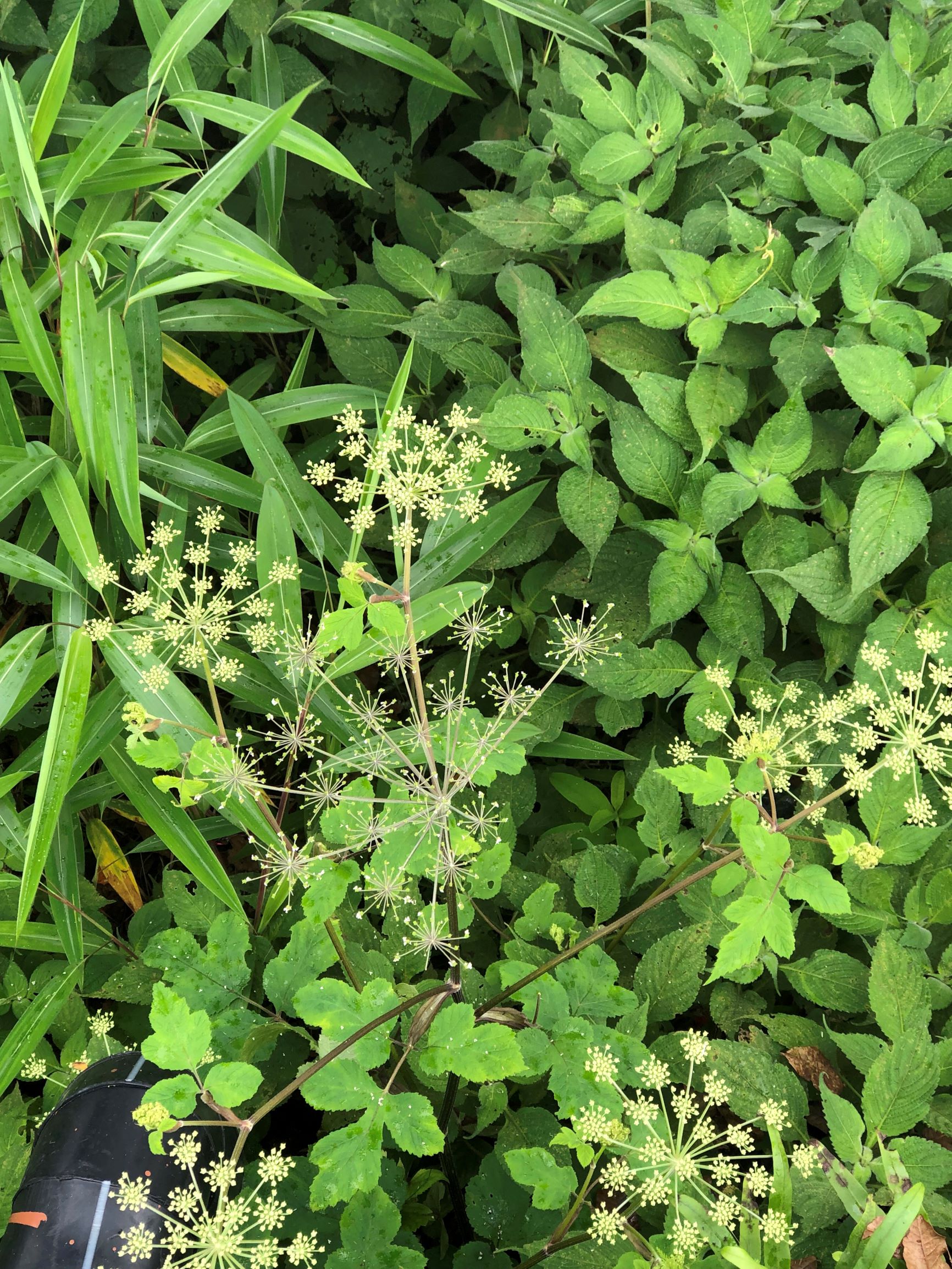
It is perennial herb a stout plant up to 200 cm tall.
Stem is single, upright stem covered in fine, velvety hairs. This woody stem provides support for the plant's leaves and flowers.
Leaves are particularly at the base of the plant.These leaves have long stalks and are shaped like wide ovals, measuring up to 45 cm long and 35 cm wide. Interestingly, they can be either divided into three leaflets (trifoliolate) or have even finer divisions with multiple leaflets arranged on either side of a central stalk (1-2-pinnate). The leaflets themselves are also broadly oval, ranging from 9-20 cm long and 5-12 cm wide. Both the top and underside of these leaves are covered in fine, velvety hairs, especially along the veins. The edges are serrated, meaning they have jagged teeth like a saw.
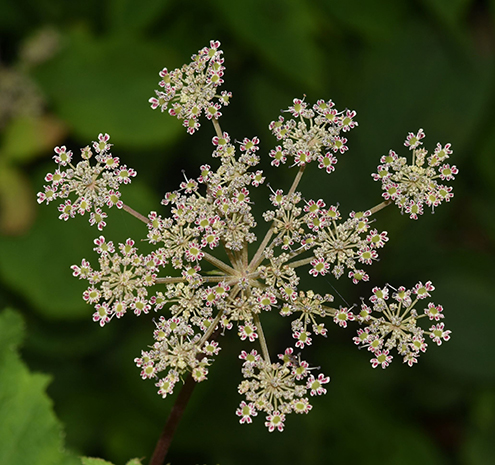
Flowers are borne in umbrella-shaped clusters called umbels , 15-30 cm wide. Numerous flower rays, with some clusters having between 15 and 60 (or even more). These rays are not all the same size, and some even stick out beyond the cluster after the flowers turn into fruit. Each ray holds even more tiny flowers (8 to 30) with pointed calyx teeth and white petals, although sometimes the petals can be slightly pink. The outer flowers in the cluster tend to be the most noticeable, with some petals even having two lobes. The ovary, is covered in fine hairs when young.
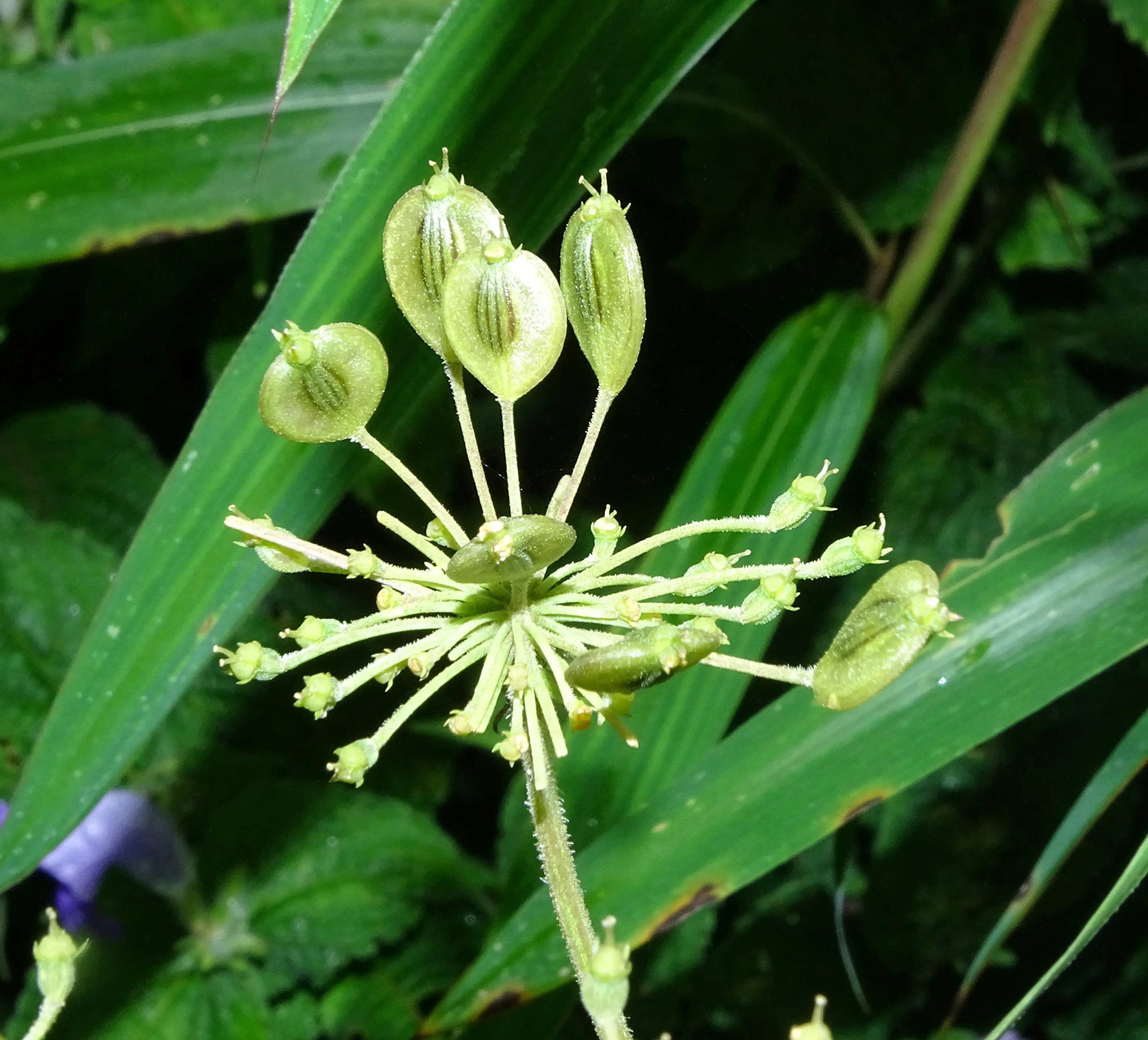
Fruit is obovoid (like an upside-down egg). They have several ridges: thin ones on the back and wider, winged ones on the sides. This fruit also have tiny channels running along their back, containing thread-like oil glands. The fruit is roughly two-thirds the size of the seed it contains. Seed face plane.
Flowering: June-August.