
Scientific Name
Other Names
Life Form
Synonyms
Family
Dye - The leaves contain tannin, which can be used as a brown dye or as a mordant (Buchanan, 1987). The wood is utilized for tools, musical instruments, and in crafting the handles of the Khukuri, the Nepalese curved knife (Gamble, 1972; Manandhar, 2002). Medicine - The leaves of Toxicodendron wallichii are used to treat allergies, wounds, and constipation.
Bhutan, China, India, Nepal
It grows in shady and open places in forests and shrubberies at altitudes of 300-2500 m asl.

Well-known for its toxic sap, which contains urushiol—a compound that can cause severe skin irritation and allergic reactions.
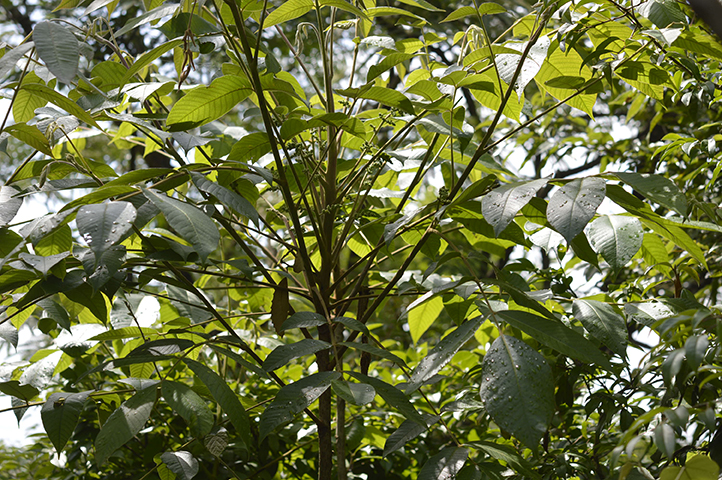
Deciduous tree with a sparse, open crown; it usually grows around 5-7 m tall, but can reach 15 m.
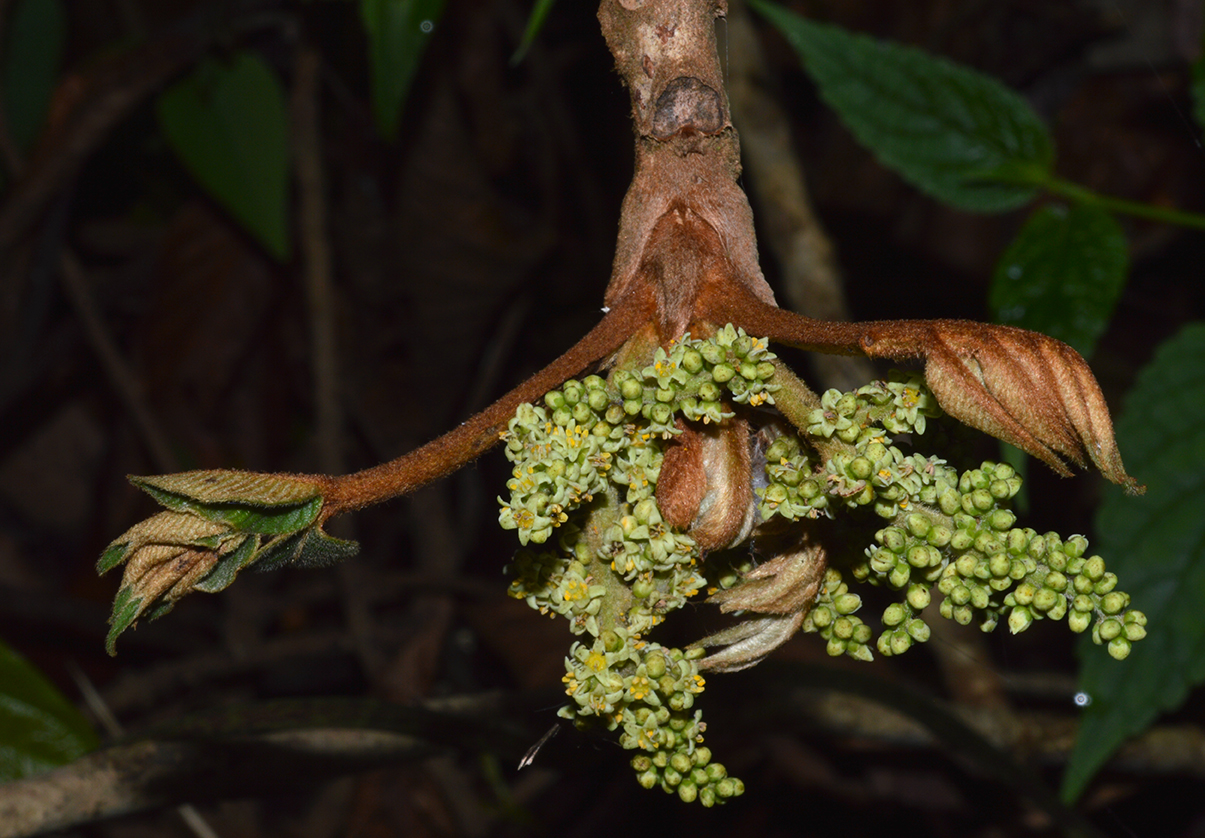
Branches are sparse, robust, coated in rusty velvet-hairs, ridged, with prominent leaf scars. Young stems and immature leaves are densely woolly.
Leaves are 20-60 cm long, imparipinnate, leaflets 7-15, ovate-oblong, 2.7-24 x 0.4-1.8 cm, upper surface dark green, lower surface pale green and with rusty tomentum, margins entire, tip tapering; axis woolly, without wings; leaf-stalk distinct, 8-20 cm long.
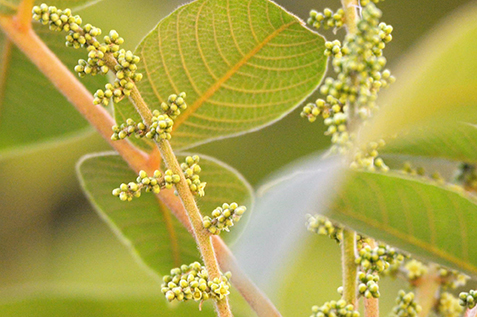
Flowers are borne in leaf-axils or in branch-end panicle, densely woolly, much shorter than the leaves. Flowers are insignificant, dirty white.
Fruit a spherical drupe, 5-7 mm long, rusty, woolly.
Flowering: May-November