
Scientific Name
Other Names
Life Form
Family
Fiber - A strong bast fiber obtained from the inner bark is used in making rope, sacks, and paper. Medicine - The stem is used for the treatment of rheumatism and injury. The flowers yield perfumed oil.
Japan to Vietnam
Thrives in sunny edges of forests, brushwoods, at an elevation of 200-1300 m.

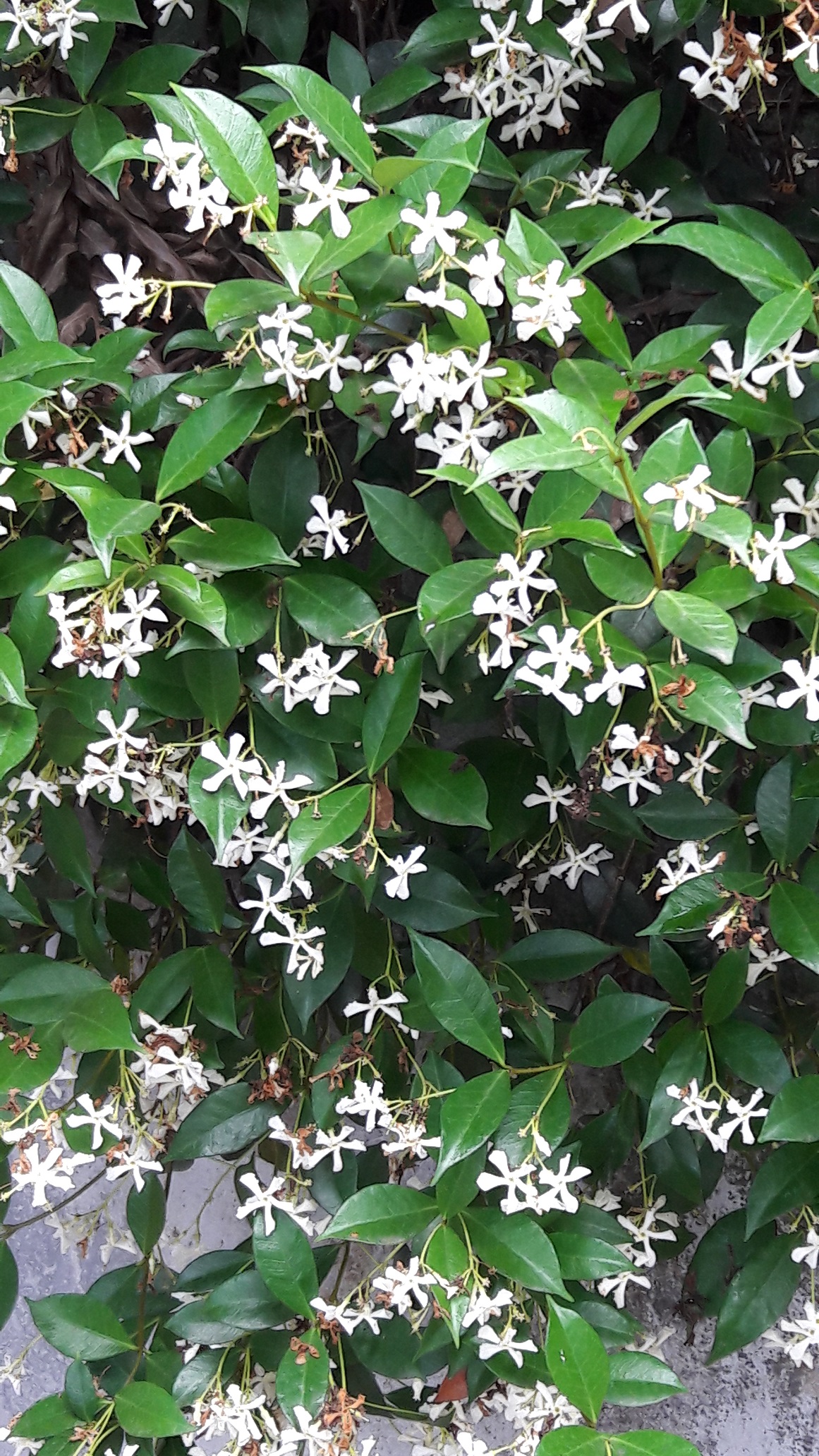
It is an evergreen woody vine can reach heights of up to 300 cm exhibits a fascinating climbing growth habit. When they meet a wet surface they emit aerial weed roots otherwise they twine around the support.
Stem is the foundation for the climbing habit . Initially pubescent (hairy) when young, they mature to become glabrous (smooth) and woody. tune share more_vert
Leaves are opposite, oval to lanceshaped, 2-10 cm long and 1-4.5 cm broad, with an entire margin and an tapering tip.
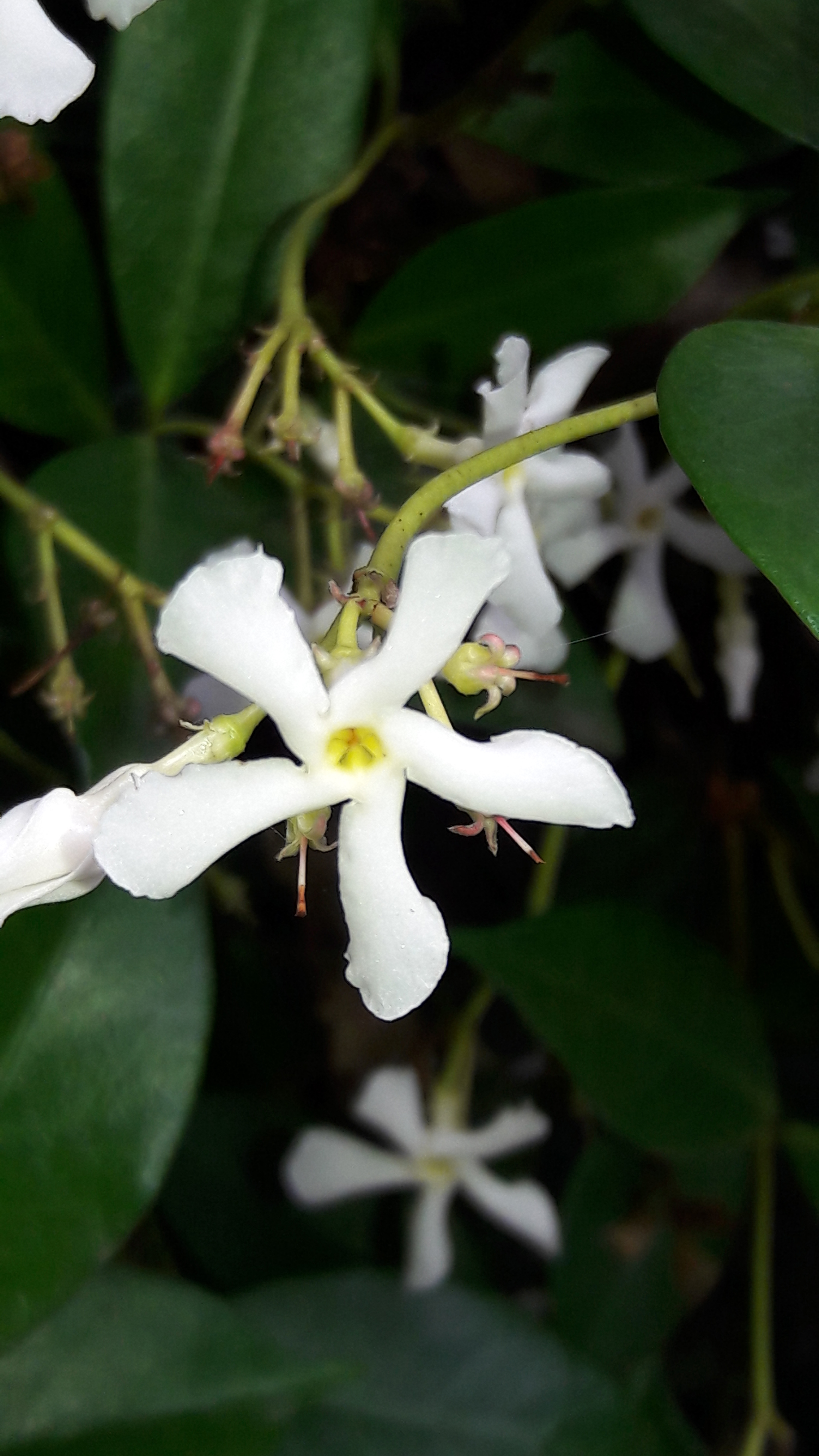
Flowers are white, 1-2 cm in diameter, pinwheel shaped, with five twisted petals. The flowers have a sepal-cup formed by five narrow, smooth, reflexed sepals , much shorter than the flower tube. The five stamens are inserted in the middle of the flower tube. If cut, like most Apocynaceae, they exude a white latex, resembling sticky milk.
Fruit is paired capsule called follicle. This slender capsule can reach up to 3 cm in length and are quite thin, typically only around 1 cm wide. They mature from green to a brown color and may split open when fully dry, revealing numerous flat, wind-dispersed seeds inside.
Flowering: March – August,
Fruiting: June – December.