
Scientific Name
Other Names
Life Form
Family
Medicine - The plant is sedative and tonic. The leaves are bitter, detergent and stomachic. Taken internally, they are used in the treatment of internal bleeding, heavy menstrual bleeding and nosebleeds. When crushed and applied to wounds they have astringent and healing properties. A mouthwash is used to treat gingivitis, sore throats and mouth ulcers.
Europe to Caucasus
Thrives in shade or partial shade, tolerant of various soil conditions. Often found in woodlands and along stream banks.

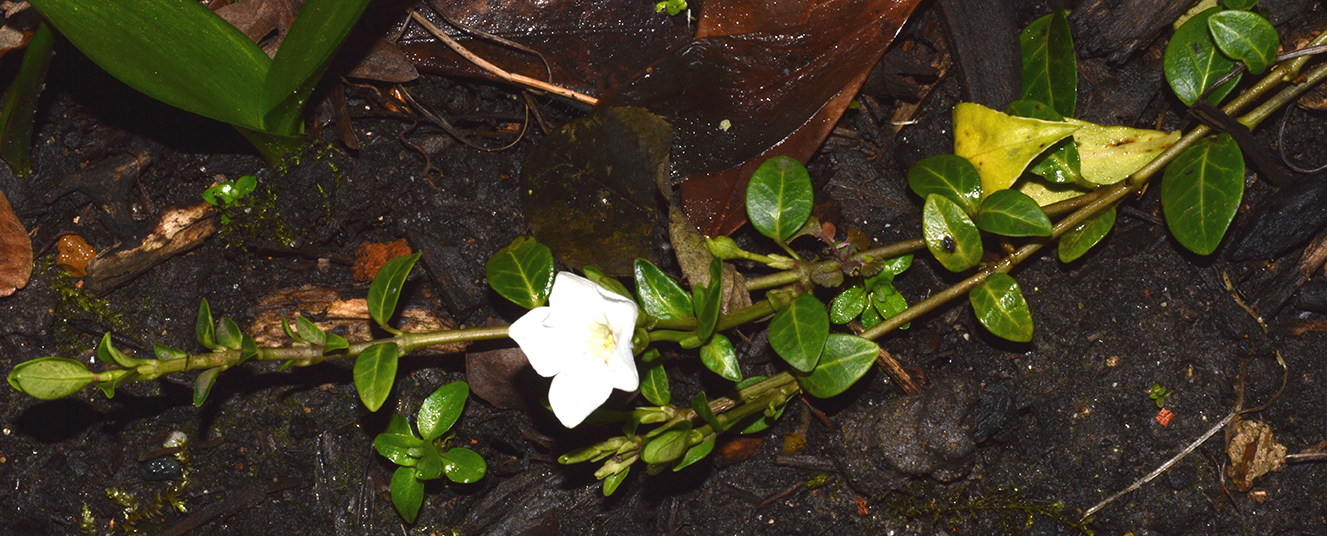
It is trailing subshrub spreading along the ground rooting at nodes to form dense mats. Occasionally reaches 40 cm height but doesn't climb.
Stem is creeping, rooting at nodes.
Leaves are evergreen, opposite. Each leaf is 2-4.5 cm long and 1-2.5 cm wide, dark green, glossy, and leathery.
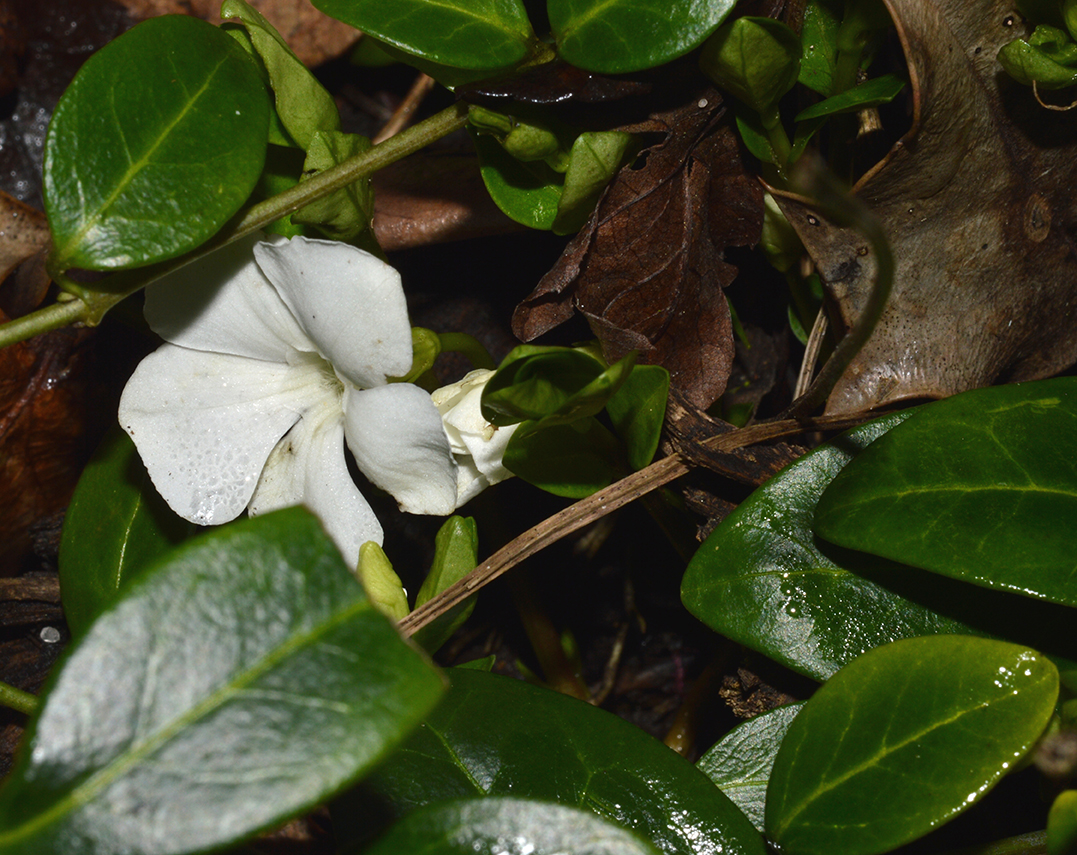
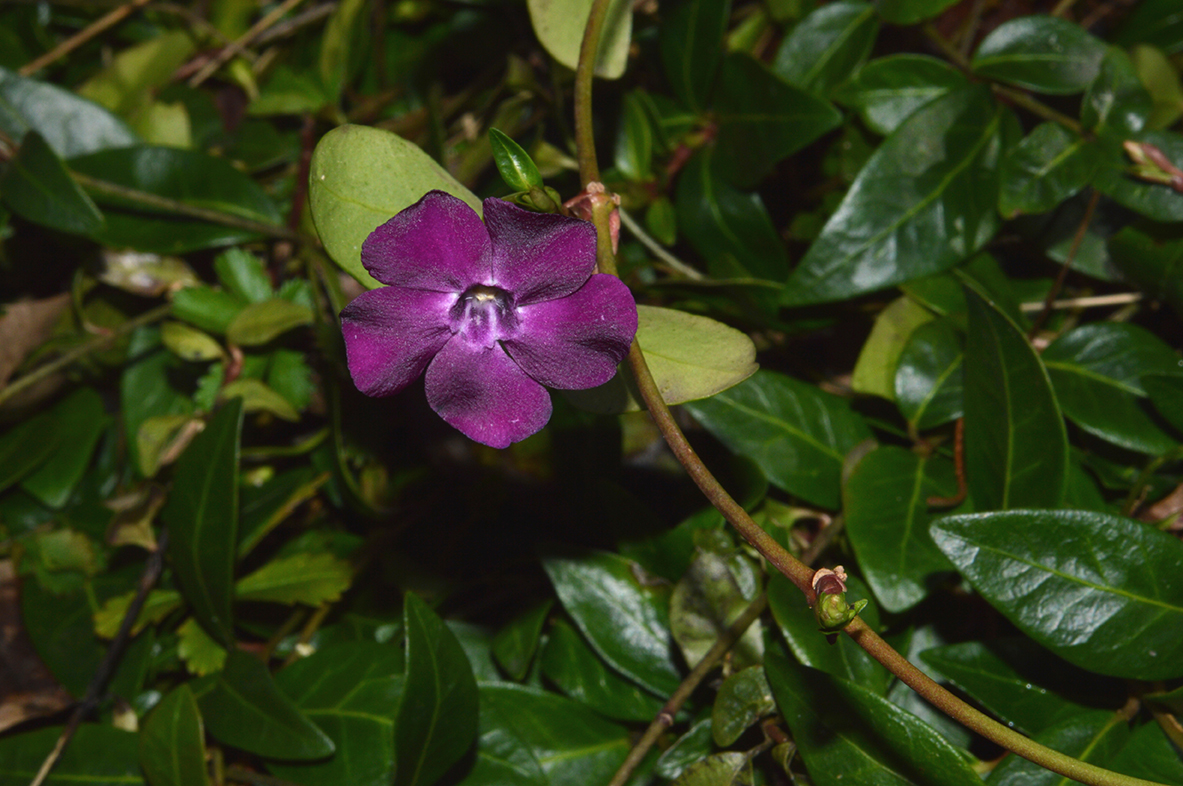
Flowers are solitary in leaf axils, mainly from spring to mid-summer but can bloom into autumn. Violet-purple (sometimes white or pale purple), 2-3 cm in diameter.
Fruit is pair of follicle, each about 2.5 cm long, containing numerous seeds.
Flowering: May.