
Scientific Name
Other Names
Life Form
Family
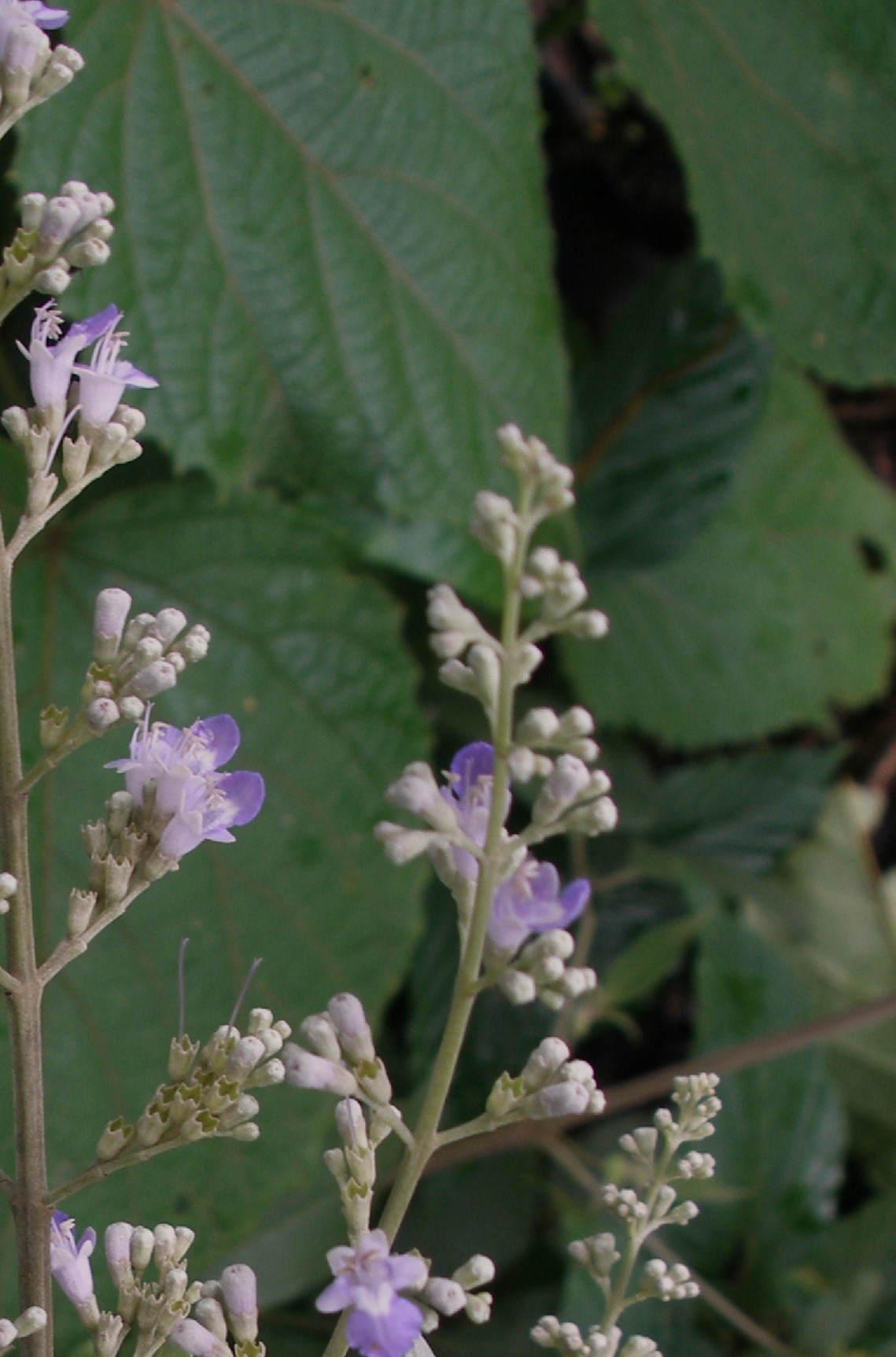
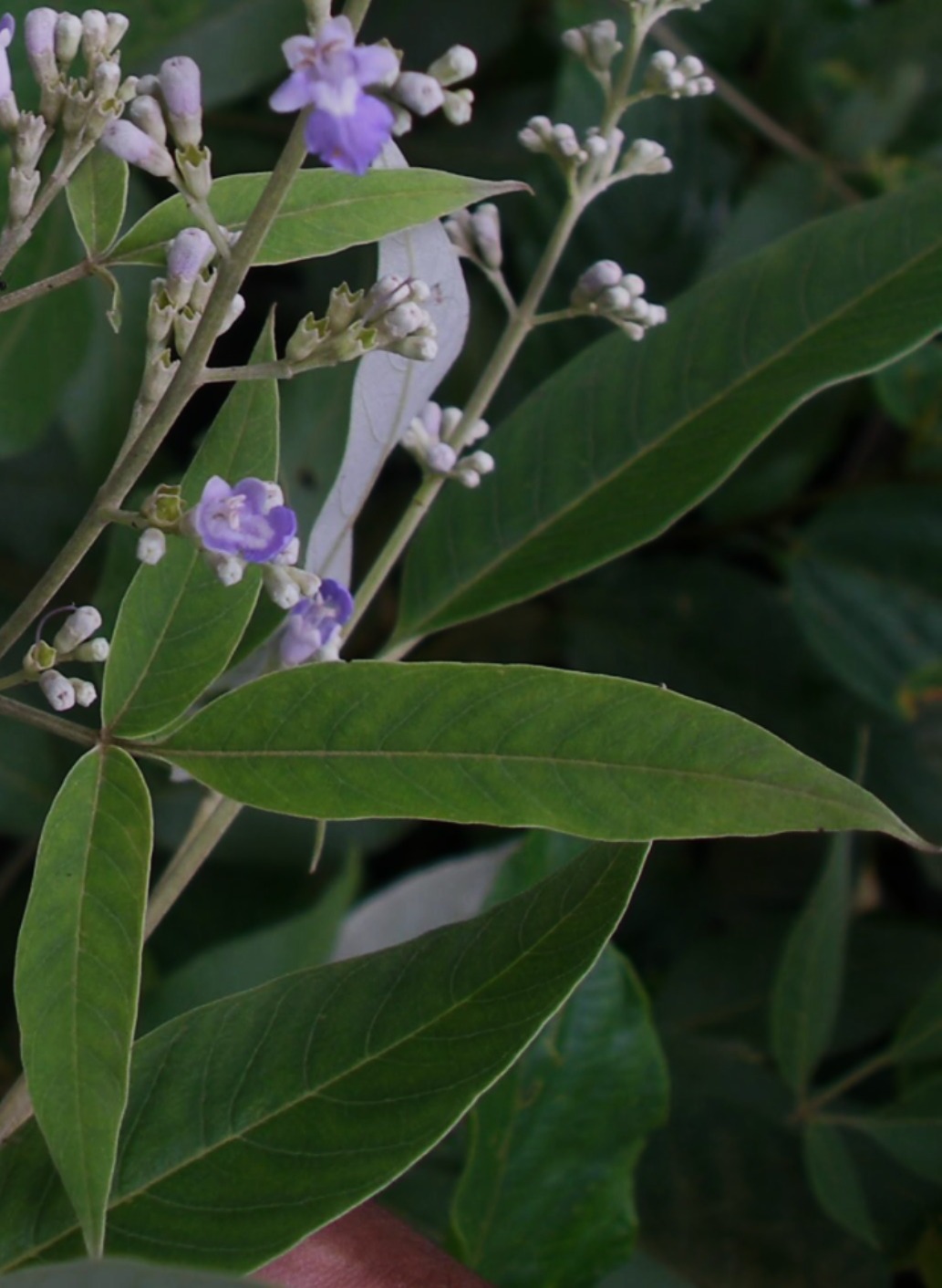
Medicine - It has been clinically tested to be effective in the treatment of colds, flu, asthma and pharyngitis. Studies have shown that it can prevent the body's production of leukotrienes which are released during an asthma attack.
Afghanistan, Bangladesh, Bhutan, China, India, Myanmar, Nepal, Pakistan
Thrives in the seasonally dry tropical biome, at an elevation of 100-3200 m.

It is aromatic tree typically growing 2-8 m tall. It has a bushy appearance with multiple stems branching out from the base.
Stem is woody and quadrangular, densely covered with whitish hair. The bark is reddish-brown.
Leaves are compound with 3-5 lanceolate leaflets. Each leaflet is 4-10 cm long, with the central one being the largest. Leaf edges are toothed or serrated, and the underside is hairy.
Flowers are small, lilac or violet, arranged in panicles 10-20 cm long. Each flower is about 0.6-0.7 cm long.
Fruit is small, round and dry containing seeds.
Flowering: June-September.